The DJI Flip Fly More Combo Delivers Professional Aerial Footage Without the Complexity
The DJI Flip Fly More Combo with RC 2 Screen Remote Controller is a compact, capable drone with a 4K camera, intelligent flight modes, and a premium screen controller. At $619, it offers serious value for content creators who want professional aerial footage without professional complexity.
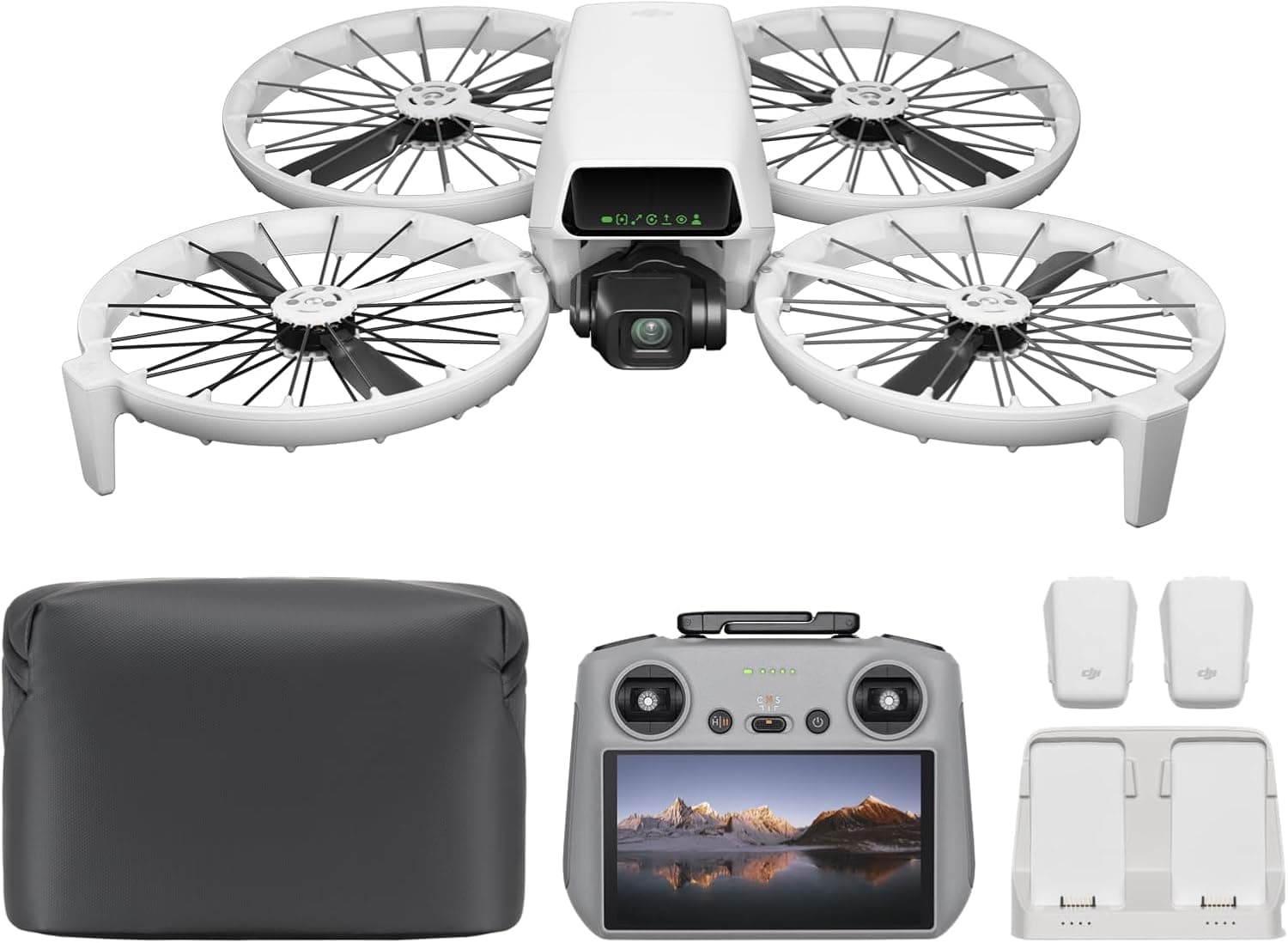
Drones have democratized aerial photography in ways that would have seemed impossible a decade ago. What once required expensive equipment, specialized training, and significant regulatory hurdles can now be accomplished by almost anyone with a few hundred dollars and a willingness to learn. The DJI Flip Fly More Combo with RC 2 Screen Remote Controller represents DJI's latest attempt to bridge the gap between beginner-friendly consumer drones and more capable professional models, offering a feature set that should appeal to content creators, hobbyists, and anyone who wants high-quality aerial footage without the complexity traditionally associated with flying a drone.
At $619 for the Fly More Combo bundle, the DJI Flip occupies a mid-premium position in DJI's consumer drone lineup. It sits below flagship models like the Mavic 3 Pro but well above entry-level options like the DJI Mini series. The question is whether the Flip's combination of 4K camera, intelligent flight modes, three-battery setup, and included screen remote controller justifies the price — and whether it is the right drone for your specific needs and skill level.
This review examines the DJI Flip in detail across every dimension that matters: camera performance, flight characteristics, intelligent modes, controller quality, battery life, portability, and how it compares to the broader drone market. Whether you are upgrading from an older consumer drone or entering the hobby for the first time, this review will give you a thorough understanding of what the DJI Flip offers and where it fits in the current landscape of consumer drones.
Design and Build Quality: Compact but Substantial
The DJI Flip does not look like most consumer drones on the market. Its design is distinctive — a compact quadcopter with a body that feels substantial and well-engineered rather than cheap or fragile. The arms fold in toward the body for transport, and the overall package is small enough to fit in a decent-sized backpack or messenger bag. The included carrying case in the Fly More Combo makes transport even more convenient, with custom-cut foam that holds the drone, controller, and accessories securely.
The build quality is immediately apparent when you handle the device. The plastic shell feels dense and impact-resistant, the propeller mechanism locks positively into place, and the battery clicks in with a satisfying snap. This is a drone that feels like it can survive the inevitable bumps and bruises of regular use without falling apart. DJI has been building consumer drones for years, and the Flip reflects that accumulated expertise in its construction.
One notable design element is the propeller guards, which are included and can be attached for indoor flying or flying in tight spaces. The guards do add some weight and slightly reduce flight time, but they provide valuable protection for the propellers and, more importantly, for people and objects around the drone. For beginners especially, keeping the guards on during initial flights is highly recommended.
The camera housing sits on a three-axis motorized gimbal at the front of the drone. The gimbal is responsible for stabilizing footage, and it does an excellent job — even when the drone is moving through turbulent air or executing quick directional changes, the camera remains steady and the resulting footage looks smooth and professional. Gimbal stabilization is one of the key technologies that separates quality drone footage from the shaky mess you would get from a non-stabilized camera, and the Flip's gimbal performs at a level that exceeds what you might expect at this price point.
The drone's LED status lights are bright and visible even in daylight, showing battery level, GPS lock status, and flight mode at a glance. The body also features auxiliary lights on the landing gear, which help with orientation during flight and make it easier to keep track of the drone's position when it is flying at distance or in low-light conditions.
Camera Performance: 4K That Earns Its Name
The DJI Flip features a 4K UHD camera with a sensor that delivers genuinely impressive image quality. At 4K resolution (3840 by 2160 pixels), footage is crisp and detailed, with accurate color reproduction and good dynamic range that preserves highlight and shadow detail in high-contrast scenes. The camera aperture and sensor size are tuned for good low-light performance, which means you can get usable footage in conditions that would challenge many competing drones.
Color science is one of the areas where DJI has made significant improvements in recent generations. The Flip's camera produces colors that look natural and pleasing straight out of the camera, without the oversaturated, artificially punchy look that plagued earlier consumer drone cameras. If you want to do color grading in post-production, there is enough dynamic range and color information in the footage to work with. If you prefer to use the footage as-is, it looks great without any post-processing.
The 4K recording is available at multiple frame rates, including 24, 25, 30, 48, 50, and 60 frames per second. This gives you flexibility in how you capture and later use your footage. Slower frame rates like 24 and 25 fps produce footage with a more cinematic look, while higher frame rates like 60 fps give you smooth motion and the ability to slow down footage in post-production for slow-motion effects. The ability to shoot at 48fps in 4K is a nice option for those who want high-quality slow-motion capability without dropping to lower resolutions.
Photo quality is equally solid. The Flip can capture 12-megapixel still images in both JPEG and DNG (raw) formats. The raw format is particularly valuable for photographers who want maximum flexibility in post-processing, as it preserves significantly more image data than JPEG compression. The camera's still image performance is good enough that the drone can double as an aerial photography tool for landscapes, real estate, and event coverage.
One thing to note is that the Flip does not offer the larger sensors and higher bitrates of DJI's more expensive Mavic series. If you are a professional cinematographer who needs the absolute highest image quality for commercial work, the Mavic 3 Pro or Inspire series would be more appropriate. But for most users, the Flip's camera is more than sufficient for creating content that looks professional and polished.
Intelligent Flight Modes: Automation That Makes Flying Easier
DJI has built an impressive suite of intelligent flight modes into the Flip, and these automated features are one of the main reasons to choose this drone over a simpler, cheaper option. Intelligent flight modes use the drone's sensors and computing power to execute complex maneuvers automatically, allowing even inexperienced pilots to capture footage that would be very difficult or impossible to achieve manually.
ActiveTrack is DJI's subject-tracking system, and on the Flip it works by detecting and following a subject — a person, vehicle, animal, or object — while the drone maintains a consistent frame and distance. Once you select a subject on the controller screen, the drone takes over the piloting and keeps the subject in frame as it moves. ActiveTrack is genuinely impressive in practice — it handles subject occlusion (when the subject briefly moves behind an object) gracefully, and it generally keeps tracking even in moderately challenging conditions. For solo content creators who want to film themselves hiking, biking, or performing, ActiveTrack removes the need for a separate pilot and camera operator.
QuickShots are pre-programmed flight patterns that capture dramatic footage with a single tap. Options include Rocket (which ascends straight up while keeping the camera pointed down), Dronie (which flies backward and upward in a curved path), Circle (which orbits the subject at a constant distance and height), Helix (which spirals outward while ascending), Boomerang (which flies away in an oval path and returns), and Asteroid (which creates a effect combining a panorama with a zoomed-in view at the end). QuickShots are fun and produce shareable content with minimal piloting skill required.
The Flip also supports Waypoints, which let you pre-program a flight path by setting specific GPS coordinates and altitudes. The drone will then fly that path automatically, letting you focus entirely on controlling the camera rather than piloting. Waypoints are useful for capturing consistent footage of the same location across multiple flights — for example, a real estate agent filming a property on a regular basis or a filmmaker who needs to replicate shots across different weather conditions or times of day.
Return to Home is a critical safety feature that every drone should have, and the Flip implements it well. If the drone loses signal, runs low on battery, or you trigger the feature manually, it will automatically navigate back to its takeoff point and land. The system uses GPS to track the takeoff location and combines data from multiple sensors to navigate back safely even in moderately complex environments. In practice, RTH has saved many a drone from being lost or crashed when something went wrong during flight.
Controller: The Screen Remote Changes the Experience
The Fly More Combo includes the DJI RC 2 remote controller with a built-in screen, and this accessory is a significant part of why the bundle is worth the premium over the standard package. The screen is a 5.5-inch FHD display that shows the drone's camera feed in real time, along with flight telemetry, battery status, GPS coordinates, and other essential information. Having a dedicated screen means you do not need to attach your smartphone to the controller — the extra step of mounting and connecting your phone, with its battery drain and notification interruptions, is eliminated entirely.
The screen is bright enough to be visible in direct sunlight, which is essential for outdoor drone flying where glare can make a phone screen difficult to see. The controller itself is comfortable to hold, with well-placed control sticks and buttons that fall naturally under your fingers. The sticks have a nice tension that makes precise inputs feel controlled without being stiff. Shoulder buttons provide quick access to common functions like returning home, pausing the current flight mode, and adjusting camera settings.
The controller runs DJI's Fly app interface, which has been refined over multiple generations and is now clean and intuitive. Critical information is easy to read at a glance, and the on-screen controls are logical and responsive. The screen also displays warnings and alerts when the drone encounters issues like strong wind, low battery, or signal interference, giving you time to react before a situation becomes critical.
Battery life on the controller is rated at several hours of continuous use, and in practice it lasts through multiple drone battery packs without needing to be recharged. The controller charges via USB-C, which is convenient if you already have USB-C chargers for your other devices. The ability to use a standard USB-C cable rather than a proprietary charger is a small but meaningful quality-of-life improvement.
One thing to appreciate about the RC 2 is that it runs a dedicated operating system just for the DJI Fly app, rather than sharing resources with a phone running other apps and services. This means the video feed is more stable and responsive, without the potential for background apps to interfere or cause lag. For anyone who has flown a drone with a smartphone controller and experienced dropped frames or stuttering video feed, the dedicated controller is a revelation.
Flight Performance: Confidence-Inspiring Handling
Out of the box, the DJI Flip is designed to be approachable for beginners while still offering the performance and precision that experienced pilots expect. The flight controls are responsive but not twitchy, with enough smoothing built in that you feel like you are piloting a refined aircraft rather than an unwieldy toy. The drone handles well in calm conditions, and it manages wind reasonably well for its size — though as with any consumer drone, extremely windy conditions will limit your options.
Maximum flight speed is impressive for a drone in this class. The Flip can reach speeds that make it genuinely fun to fly in Sport mode, which disables some of the safety assists and lets you push the performance envelope. Sport mode is useful for capturing dynamic footage where you want to follow a fast-moving subject or simply enjoy the thrill of piloting at speed. That said, Sport mode should be used with caution — the safety assists are there for a reason, and disabling them means the drone will not automatically avoid obstacles or maintain stable hover if you get disoriented.
The drone's GPS and GLONASS satellite positioning work together to provide accurate position holding, which means the Flip will hover in place reliably when you release the control sticks. This is essential for capturing stable footage, and the system works well enough that even in moderate wind, the drone maintains its position without drifting noticeably. The downward-facing vision sensors also assist with position holding when flying at low altitude indoors or in areas where GPS signal might be blocked or degraded.
Obstacle sensing on the Flip uses forward and downward sensors to detect obstacles in the drone's flight path. The forward sensors can prevent collisions when flying forward, while the downward sensors help with precise landing and low-altitude position holding. It is worth noting that the obstacle sensing is not omnidirectional — objects to the side or above the drone may not be detected — so pilots should still exercise caution and maintain situational awareness rather than relying entirely on the sensors.
Battery Life and Charging: Three Batteries Changes Everything
The Fly More Combo includes three batteries, and if you have ever flown a drone, you know why this is important. A single battery might give you 30 to 40 minutes of flight time depending on conditions and how aggressively you fly, which sounds reasonable until you are in the field and watching the battery counter tick down while you still want to get more shots. With three batteries, you can fly for well over two hours total before needing to stop and recharge.
Each battery charges via USB-C, and the included charging hub can charge all three batteries sequentially from a single power source. The hub charges batteries in order from highest to lowest remaining charge, so you always get a fully charged battery first. A full charge takes around an hour per battery with a compatible PD charger, which is reasonably quick. With three batteries rotating through, you can effectively fly continuously as long as you have charging access between sessions.
The DJI Fly app displays estimated remaining flight time based on current power consumption and conditions, which helps you plan your flights and avoid the stress of watching the battery drain faster than expected. The app also warns you when battery levels get low, giving you time to bring the drone back safely before it is forced to land automatically.
One practical consideration is that extra batteries add weight and bulk to your kit. The Fly More Combo case is designed to hold the drone and all three batteries, but if you are traveling light, you might opt for just the standard package with one battery. For most users, though, the Fly More Combo is the better value — the convenience of extended flight time more than justifies the additional cost and bulk.
Portability: Can You Actually Take It Places?
For a drone to be useful, you need to be able to take it places, and portability is one of the Flip's genuine strengths. The folded dimensions are compact enough that the drone fits easily in a camera bag, backpack, or even a large jacket pocket. This is not a drone that requires a dedicated Pelican case or a dedicated carrying bag — it can tag along on hikes, road trips, beach days, and vacations without being a significant burden.
The overall weight is reasonable for a drone with this feature set and capability. It is not the lightest drone on the market — DJI's Mini series weighs less — but the Flip is still light enough to be portable for most people. The included carrying case in the Fly More Combo is well-designed and protective without being overly bulky, making it easy to justify bringing the drone along on any outing where you might want aerial footage.
One thing to consider is that the drone's portability comes with regulatory implications. In the United States, drones over 250 grams are subject to additional regulations from the FAA, including registration requirements and restrictions on flying over people. The Flip weighs in above this threshold, so you will need to register it before flying outdoors. This is a minor inconvenience but worth knowing before you buy — lighter drones like the DJI Mini series avoid this threshold entirely.
Comparison to the Competition and DJI Lineup
Within DJI's own product lineup, the Flip sits between the Mini series and the Mavic series. The Mini drones are lighter and avoid regulatory thresholds, but they have smaller sensors and fewer features. The Mavic drones offer higher image quality and more advanced capabilities, but they cost significantly more. The Flip occupies a practical middle ground that delivers excellent value for most users who want professional-quality footage without the Mavic price tag.
Compared to drones from other manufacturers, the Flip holds its own in terms of feature set, build quality, and camera performance. Autel Robotics offers some competitive alternatives, but DJI's ecosystem advantages — including the mature Fly app, extensive dealer and support network, and broad third-party accessory compatibility — give the Flip an edge in practical terms. DJI also has a proven track record of supporting its products with firmware updates and new features over time, which is not always the case with smaller manufacturers.
The Fly More Combo pricing at $619 is competitive when you factor in what you get. Separately, the drone, controller, and two extra batteries would cost significantly more, so the bundle represents a meaningful savings. If you are serious about drone flying and content creation, the Fly More Combo is the obvious purchase — the extra batteries and the screen controller add substantial value that makes the bundle the clear choice over the base package.
Who Is the DJI Flip For?
The DJI Flip Fly More Combo is best suited for content creators who want high-quality aerial footage without the complexity or cost of professional-grade equipment. YouTubers, TikTokers, travel vloggers, real estate professionals, and hobbyist photographers will all find a lot to like about the Flip. Its combination of 4K camera, intelligent flight modes, and included screen controller makes it a versatile tool that can handle a wide range of shooting scenarios.
Beginners will appreciate the Flip's approachable controls and automated flight modes, which make it easier to capture great footage while learning to fly. The obstacle sensing and Return to Home features provide safety nets that reduce the risk of crashes during the learning process. That said, beginners should still invest time in learning to fly in Sport mode-disabled Beginner mode and in open areas before tackling more challenging environments.
Experienced pilots will find the Flip responsive and capable enough to capture the shots they want. The 4K camera is a significant step up from what you get with entry-level drones, and the intelligent flight modes add creative possibilities rather than just being crutches for beginners. The screen controller is genuinely nice to use, and the overall flight experience feels polished and refined.
The Flip is less ideal for users who need the absolute highest image quality — cinematographers working on commercial projects should look at the Mavic 3 Pro or Inspire series. It is also less ideal for travelers who prioritize ultralight weight — the DJI Mini series might be a better fit in that case. And if your primary concern is price and you are not sure if drone flying is for you, starting with a cheaper entry-level model might make more sense before investing in the Flip.
Regulatory Considerations and Responsible Flying
Before you fly the DJI Flip, you need to be aware of the regulatory environment in your area. In the United States, the FAA requires registration for drones over 250 grams, and there are rules about where you can fly — generally prohibiting flight over people, near airports without authorization, and above certain altitudes. Similar regulations exist in most other countries, and it is your responsibility as a pilot to know and follow the rules in your jurisdiction.
Beyond legal requirements, responsible drone flying involves common-sense practices that keep both your drone and other people safe. Fly in open areas away from crowds and buildings. Keep the drone in visual line of sight. Check for any flight restrictions in your area before flying. Be mindful of noise levels and privacy concerns — flying a drone over someone's property or near people without their knowledge can raise legal and ethical issues.
DJI's GEO geofencing system attempts to prevent you from flying in restricted areas like airports and military bases, though it is not foolproof. Use it as a guide rather than a guarantee, and always verify that you are in a legal location to fly. The FAA's B4UFLY app is a useful resource for US pilots to check airspace restrictions before each flight.
The Verdict: A Drone That Earns Its Place
The DJI Flip Fly More Combo with RC 2 Screen Remote Controller is one of the most compelling consumer drones available at its price point. It delivers a genuine combination of 4K camera quality, intelligent flight modes, a premium screen controller, and three-battery convenience that makes it practical for real-world use rather than just theoretical capability. The drone is well-built, easy to fly, and produces footage that looks professional and polished.
The $619 price of the Fly More Combo is not trivial, and it requires a genuine commitment to drone flying and content creation to justify. But when you factor in what you get — a capable drone, the RC 2 screen controller, three batteries, a charging hub, spare propellers, and a carrying case — the bundle represents solid value. Each of these items would cost significantly more if purchased separately, and the screen controller in particular is a game-changer for the flying experience compared to using a smartphone.
For content creators who want to add aerial footage to their toolkit, the DJI Flip is easy to recommend. For hobbyists who want a drone that is fun to fly and produces great results, it is also easy to recommend. For beginners who are serious about learning to fly and are willing to invest the time and money, it is a good choice — though cheaper options exist for those who just want to try the hobby before committing.
What the Flip offers is not revolutionary or groundbreaking in the drone industry — DJI has been building drones like this for years. What it offers is refinement and value: taking everything that works well in the consumer drone category and delivering it in a well-engineered package at a price that is accessible to serious enthusiasts and professionals who need a capable secondary drone. If that matches your needs, the DJI Flip will serve you well.
Related: DJI Mini 5 Pro Review · DJI Mavic 4 Pro Review · DJI Osmo Action 5 Pro Review
Pros
- 4K UHD camera with excellent stabilization and natural color reproduction
- ActiveTrack subject tracking works reliably for solo content creators
- RC 2 screen remote controller eliminates smartphone dependency entirely
- Three batteries in Fly More Combo provide over 2 hours of total flight time
- Intelligent flight modes (QuickShots, Waypoints, RTH) are genuinely useful
- Compact folding design is genuinely portable for travel and outdoor use
- Obstacle sensing and comprehensive GPS position holding for safe flying
Cons
- Over 250g weight requires FAA registration in the United States
- No 4K at 120fps for advanced slow-motion capability
- Obstacle sensing is forward/down only, not omnidirectional
- Camera sensor smaller than Mavic series for professional-grade image quality
Final Verdict
The DJI Flip Fly More Combo with RC 2 Screen Remote Controller is a compact, capable drone with a 4K camera, intelligent flight modes, and a premium screen controller. At $619, it offers serious value for content creators who want professional aerial footage without professional complexity.