Smart Rings Deep Dive: Pebble Index O1 vs. Oura Ring 4 — Two Completely Different Visions for Your Finger
The Pebble Index O1 ($75 voice memo ring with a 2-year battery) and the Oura Ring 4 ($349 health tracker with titanium build) represent opposite poles of the smart ring market. We compare design, features, pricing, and real-world value.
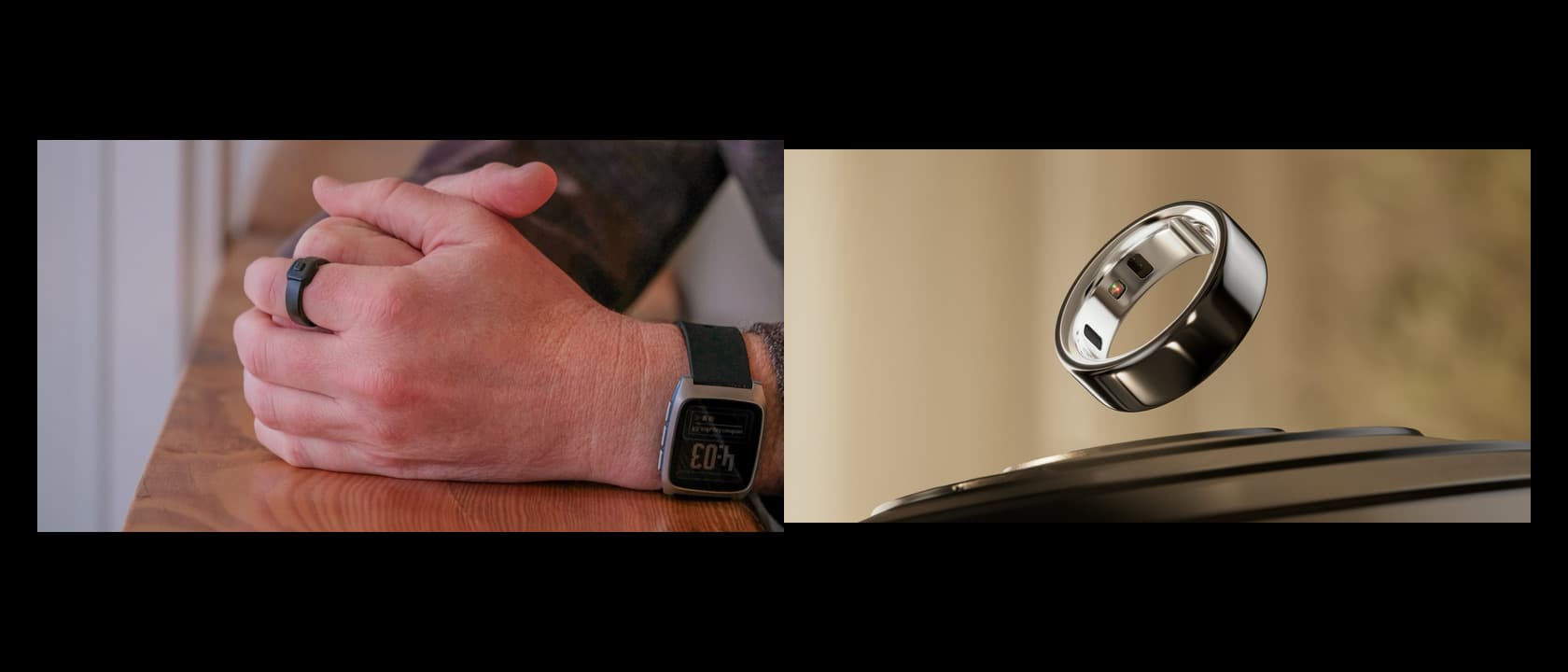
The smart ring market has quietly undergone a fascinating transformation in 2026. What was once a niche category dominated by a single player — Oura — has exploded into a diverse ecosystem of wearable computers that wrap around your finger. But here's the twist: the most interesting new entrant isn't trying to beat Oura at its own game. It's not even playing the same sport.
The Pebble Index O1, created by Eric Migicovsky — the same mind behind the original Pebble smartwatch that kickstarted the smartwatch revolution on Kickstarter — takes a radically different approach to what a smart ring should be. Instead of packing in every sensor imaginable, the Index O1 has exactly one job: capturing your thoughts before they vanish. It's a $75 voice memo ring with a battery that lasts years and never needs charging. Meanwhile, the Oura Ring 4 continues to refine its position as the gold standard for wearable health tracking, packing advanced sensors into a titanium shell with a $5.99 monthly subscription for detailed insights.
These two devices could not be more different, yet they represent the two poles of where wearable technology is heading. One says your finger should track your body. The other says it should capture your mind. One is expensive and subscription-based. The other costs less than a dinner for two and never asks for another penny. One requires weekly charging. The other doesn't even have a charging port.
In this deep dive, we're going to put both smart rings under the microscope — comparing their design philosophies, real-world utility, build quality, and the very different lifestyles they're built for. By the end, you'll know exactly which one belongs on your finger, or whether you might actually want both.
The Design Philosophies: Two Completely Different Bets on the Future
The Oura Ring 4 is the product of years of iterative refinement. Oura has been in the smart ring game since 2013, and the Gen 4 represents everything the company has learned about making a health-tracking device that people actually want to wear 24/7. The ring is made from Grade 2 titanium — lightweight, hypoallergenic, and durable enough to survive the gym, the shower, and the occasional run-in with a dumbbell. The interior has been redesigned with recessed sensors, eliminating the raised bumps that annoyed Gen 3 users and left indentations on their fingers. It comes in six finishes (Silver, Black, Brushed Silver, Stealth, Gold, Rose Gold) and sizes 6 through 15, with a weight that varies by size but averages around 4 to 6 grams.
The Pebble Index O1, by contrast, is a deliberate act of subtraction. Where Oura adds sensors, Pebble removes them. The Index O1 has no heart rate monitor, no accelerometer, no temperature sensor, no SpO2 sensor. It has a button, a microphone, a wireless chip, memory, and a silver-oxide battery that lasts for years. That's it. The ring is made from stainless steel 316 (not titanium, but still highly durable and corrosion-resistant), comes in three finishes (Matte Black, Brushed Silver, Polished Gold), and weighs just 4.7 grams in a size 10. It's 2.95mm thick and 6.6mm wide — comparable to the Oura Ring 4 in profile but significantly lighter in approach.
The decision to use a non-rechargeable battery is the most controversial and most brilliant thing about the Index O1. Migicovsky has been refreshingly honest about why: adding a charging circuit, a larger battery, and a charging cradle would make the ring bigger, heavier, and more expensive, and you'd probably lose the charger before the battery died anyway. The silver-oxide battery provides roughly 12 to 15 hours of total recording time. For someone who captures 10 to 20 short voice notes per day (3 to 6 seconds each), that translates to up to two years of use. When the battery eventually dies, you send the ring back to Pebble for recycling and buy a new one.
This is either refreshingly honest environmentalism or a single-use device dressed up in stainless steel, depending on your perspective. What's undeniable is that it solves the single biggest pain point of wearable devices: charging fatigue.
Fit, Finish, and Daily Wearability
If you're going to wear something on your finger 24/7, it needs to disappear into your daily life. Both rings succeed at this, but in different ways.
The Oura Ring 4's titanium construction gives it a premium feel that's hard to beat. The brushed surfaces resist scratches well, and the recessed sensor design means the inside of the ring is smooth against your skin. Users who wear it to sleep — which you absolutely should, since that's when Oura collects its most valuable data — report that it becomes unnoticeable after a few nights. The ring is water-resistant to 100 meters, so you can swim, shower, and wash dishes without thinking about it. The battery life of 5 to 8 days means you only need to think about charging about once a week, ideally during a shower or while reading before bed.
The Pebble Index O1, at 4.7 grams, is actually lighter than the Oura Ring 4's 5 to 8 grams (depending on size). But the real story here is the total absence of charging anxiety. You never think about the Index O1's battery. You never wonder if you have enough charge for the night. You just wear it. The water resistance is rated to 1 meter, which covers hand washing, dish duty, and showering, but not swimming. The liquid silicone rubber (LSR) button on top is tactile and clicky — satisfying to press, and easy to locate by touch without looking at your hand.
For daily wear, the Pebble has one clear advantage: because it doesn't track anything while you sleep (it has no sensors to do so), you don't need to wear it to bed if you don't want to. But ironically, you might want to anyway, because the Index O1 is at its most useful during those twilight moments between waking and sleeping when ideas float by and threaten to disappear forever.
The Pebble Index O1: A Dedicated Thought-Capture Machine
Let's dig deep into what the Index O1 actually does, because its functionality is so focused that it demands careful consideration.
When you press the button on the Index O1 with your thumb — and the ergonomics here are excellent, since the ring naturally sits on your index finger with the button facing your thumb — the ring begins recording audio to its internal memory. It captures everything through a tiny microphone embedded in the ring body. The recording is stored locally on the ring itself, so even if your phone isn't nearby, nothing is lost. When your phone comes back into range (via Bluetooth), the audio is streamed to the Pebble app on your device.
Here's where the real magic happens. The app converts your recording to text using on-device speech recognition — no cloud required, no data leaving your phone. Then an on-device large language model (LLM) processes the text and decides what action to take. It might create a note, add a reminder, append to an existing list, or trigger a webhook that connects to your broader productivity system. The entire pipeline runs locally, end to end. This is the kind of on-device AI processing we've been promised for years, finally delivered in a form that actually makes sense.
The ring also supports MCPs (Model Context Protocols), which means developers can extend its functionality by routing processed text to custom applications. If you use Obsidian, Notion, Todoist, or any other productivity tool with an API, you can wire the Index O1 to feed directly into your existing workflow.
Forbes called it "a smart ring with one job and a 2-year battery life," and that one job — capturing fleeting thoughts — is something every knowledge worker struggles with. How many brilliant ideas have you lost because you didn't have a recording device within arm's reach? How many shopping list items, task reminders, and creative sparks have slipped through the cracks because pulling out your phone was too much friction?
The Index O1 reduces the friction of thought capture to almost zero. Press, speak, release. That's it. Your thought is saved, transcribed, and organized without ever looking at a screen.
The Oura Ring 4: Your Health Dashboard on Your Finger
The Oura Ring 4 is a far more complex device, packing a sophisticated sensor array into a form factor that's smaller than most wedding bands. The ring features red and infrared LEDs for blood oxygen (SpO2) monitoring, green and infrared LEDs for 24/7 heart rate and heart rate variability (HRV) tracking, a digital temperature sensor for skin temperature trends, and an accelerometer for movement and activity tracking.
What sets the Oura Ring 4 apart from its predecessor — and from most competitors — is the Smart Sensing platform. Instead of firing all sensors continuously and draining the battery, Smart Sensing adaptively selects the optimal signal pathways based on your activity and physiology. If you're sitting still, it uses more precise measurement pathways. If you're exercising, it switches to motion-tolerant modes. The result is a 120% improvement in blood oxygen signal quality during daytime hours and a "significant improvement" in overnight heart rate accuracy compared to the Gen 3.
The membership (which costs $5.99 per month or $69.99 per year) unlocks the full picture: Readiness Scores, Sleep Stages, Stress Management, Heart Health insights, Activity tracking, and Women's Health features. Without the subscription, you get a baseline experience that's still useful but far less detailed. This subscription model has been controversial since Oura introduced it with the Gen 3, but the data it unlocks is genuinely valuable for anyone serious about understanding their body's patterns at scale.
The Oura Ring 4 integrates with over 40 partner apps including Apple Health, Google Fit, Strava, Natural Cycles, and Headspace, making it a genuine hub for your personal health data ecosystem.
Sleep Tracking: Where Each Ring Completely Withdraws
Sleep is where smart rings traditionally shine, and it's the area where these two devices diverge most dramatically.
The Oura Ring 4 is arguably the best consumer sleep tracker on the market, period. It tracks your sleep stages (light, deep, REM), provides a Sleep Score each morning, monitors blood oxygen saturation throughout the night, measures your respiratory rate, and tracks your heart rate variability trends. The Bedtime Guidance feature learns your optimal sleep schedule and helps you wind down at the right time. Users who have spent months with the Oura Ring 4 report that the biggest impact isn't any single metric — it's the cumulative effect of understanding how your evening decisions (that glass of wine, that late workout, that 11 PM screen session) manifest in your sleep quality.
The Pebble Index O1, by contrast, does not track sleep at all. It has no sensors for it. But here's an interesting perspective: because the Index O1 is always on your finger and never needs charging, it's actually more ready to capture a 3 AM insight or a pre-dawn idea than any wearable that spends its nights on a charging cradle. For creative professionals, writers, and anyone whose best ideas arrive at inconvenient hours, the Index O1's always-ready, never-dead design philosophy is actually a meaningful advantage.
If you're choosing between these two specifically for sleep tracking, the decision is clear: the Oura Ring 4 is the winner by a wide margin. But if you already have a sleep tracking solution (maybe an Apple Watch or a Whoop band), the Index O1 fills a completely different gap in your wearable setup.
Activity and Stress: The Complete Picture vs. The Single Tool
For fitness tracking, the Oura Ring 4 provides automatic activity detection for walking, running, and cycling, plus the ability to manually log workouts from a library of over 75 activity types. It calculates an Activity Score based on your daily movement, exercise frequency, and recovery status. The Stress Management feature tracks daytime stress through HRV, heart rate, and temperature trends, giving you a Stress Score and offering guided breathing exercises when you need them. The Resilience feature, introduced in 2025 updates, shows how well your body is recovering from and adapting to stress over time — a metric that becomes more useful the longer you wear the ring.
The Pebble Index O1 doesn't track any of this. But the Index O1 serves a different kind of productivity: cognitive load management. By externalizing your memory — capturing ideas, tasks, reminders, and random thoughts as they occur — the Index O1 actually reduces mental clutter in a way that no health tracker can. There's a reason David Allen's Getting Things Done methodology emphasizes capturing everything in an external system: the brain is terrible at storage but excellent at processing. The Index O1 is the capture tool for the era of AI-assisted productivity.
For knowledge workers, the Index O1's thought-capture capability may actually contribute more to daily well-being than step counting ever could, simply by reducing the cognitive load of "remember to remember."
Hardware Deep Dive: Sensors, Materials, and Engineering Tradeoffs
Oura Ring 4:
- Materials: Grade 2 titanium outer shell, PVD coating, non-allergenic inner molding
- Sensors: Red/IR LEDs (SpO2), Green/IR LEDs (HR/HRV), NTC thermistor (temperature), 3D accelerometer (movement)
- Battery: 5–8 days rechargeable (proprietary charger)
- Water resistance: 100 meters (swim-proof)
- Weight: 5–8 grams depending on size
- Connectivity: Bluetooth LE
- Subscription: $5.99/mo or $69.99/yr for full insights
Pebble Index O1:
- Materials: Stainless steel 316, liquid silicone rubber (LSR) button
- Sensors: One MEMS microphone. That's it.
- Battery: Silver-oxide, non-rechargeable, 12–15 hours of recording time (~2 years of typical use)
- Water resistance: 1 meter (splash-proof, shower-safe, not swim-safe)
- Weight: 4.7g (size 10)
- Connectivity: Bluetooth LE
- Subscription: None. No ongoing costs. Not ever.
- Price: $75 (pre-order) / $99 (retail)
The engineering philosophy behind each device tells you everything about who it's for. Oura's ring is a feat of miniaturization — packing medical-grade sensors into a ring while maintaining a 5–8 day battery life is genuinely impressive engineering. Pebble's ring is a feat of simplification — achieving a multi-year battery life by eliminating everything that drains power and then optimizing the remaining components ruthlessly.
The Price Question: Subscription vs. No Subscription
The pricing gap between these two devices is enormous and worth breaking down carefully.
The Oura Ring 4 starts at $349 for the basic Silver finish and goes up to $399 for the Gold and Rose Gold options. On top of that, the full membership costs $5.99 per month or $69.99 per year. Over three years of ownership, that's $349 + (3 × $69.99) = $558.97. That's a significant investment in your health data infrastructure.
The Pebble Index O1 costs $75 if you pre-ordered (now shipping since March 2026) or $99 at retail. There are no ongoing costs. Over three years, you might go through one or two replacement Index O1 rings (assuming you use the battery up), totaling $150–$200 across the same period. That's roughly one-third the total cost of Oura ownership.
But these aren't really competitors in price, because they're not competitors in function. You're not cross-shopping a $75 voice memo ring against a $349 health tracker and picking the cheaper one. You're deciding whether your wearable budget goes toward health optimization or cognitive productivity — or whether you can justify both.
Five Products in the NewGearHub Database That Pair With These Rings
Before we reach the verdict, let's connect these smart rings to the broader wearable ecosystem we've already reviewed at NewGearHub.
The Oura Ring 4 pairs exceptionally well with the Apple AirPods Pro 3 — the combination gives you comprehensive health tracking on your finger and premium audio on the go. For Android users, the Samsung Galaxy Ring is the natural competitor to Oura's offering, though Oura remains ahead on sleep tracking accuracy.
If you're building a productivity stack around the Pebble Index O1, the Clicks Keyboard Case for iPhone 17 Pro complements the ring's quick-capture philosophy with a physical keyboard for longer-form input. And for smart home integration, the Echo Show 21 serves as an excellent central display for both health data from Oura and task lists populated by Pebble voice notes.
The Verdict
The smart ring market in 2026 is no longer a one-horse race, but it's also not a head-to-head competition because these two devices serve fundamentally different purposes.
Choose the Oura Ring 4 if: You're serious about understanding your sleep patterns, optimizing your recovery, tracking your long-term health trends, and you're willing to pay a premium for medical-grade sensor accuracy in a comfortable form factor. The Oura Ring 4 is the best health-tracking wearable that doesn't look like a wearable. It's for people who want to live longer, sleep better, and understand their body's signals before those signals turn into symptoms. It pairs beautifully with an existing fitness routine and offers insights that genuinely compound over months of use.
Choose the Pebble Index O1 if: You're a knowledge worker, creative professional, or anyone who struggles with capturing ideas at the moment they arrive. The Index O1's zero-friction thought capture is genuinely transformative for anyone whose work depends on having good ideas and not losing them. The fact that it costs $75, never needs charging, and processes everything on-device makes it the most accessible and privacy-respecting thought-capture device ever created. It's not a health tracker, and it doesn't pretend to be one. And that honesty is refreshing.
Choose both if: You can justify the investment and you're serious about optimizing both your physical health and your cognitive productivity. The Oura Ring 4 goes on your right hand for health tracking (or your non-dominant hand for best sleep accuracy), and the Pebble Index O1 goes on your dominant index finger for thought capture. Together, they form the most powerful wearable combo available today — one tracks your body, the other captures your mind, and neither compromises on its core mission.
The smart ring wars aren't about one winner taking all. They're about specialization creating better tools for different jobs. And right now, both Oura and Pebble have built genuinely excellent tools for the jobs they chose to solve.