The Bowers & Wilkins PX8 S2 Makes a Compelling Case That Premium Sound Deserves a Premium Price
The Bowers & Wilkins PX8 S2 delivers the finest wireless sound quality in any noise-canceling headphone, but its $799 price and imperfect ANC mean it is best suited for audio purists who prioritize musical detail over maximum silence.
Bowers & Wilkins has never been shy about charging a premium for its flagship wireless headphones, and the PX8 S2 continues that tradition at $799 — a full $100 more than the original PX8 launched at. But in a market saturated with excellent $450 noise-canceling options from Sony and Bose, can any headphone justify nearly double the price? After spending extensive time with the PX8 S2 across commuting, office work, and critical listening sessions, the answer is more nuanced than a simple yes or no — but it leans affirmative if you care deeply about sound quality.
What Makes the PX8 S2 Different
The wireless headphone market has settled into a predictable rhythm. Sony releases a new WH-1000XM flagship every couple of years, Bose refines its QuietComfort formula, Apple iterates on AirPods Max, and most other manufacturers chase the same features at lower prices. Bowers & Wilkins occupies a different lane entirely. Rather than competing on the breadth of smart features or the raw decibel reduction of its noise cancellation, B&W focuses on what audiophiles have always cared about most: how the music actually sounds.
The PX8 S2 represents the second generation of B&W's flagship over-ear headphones, succeeding the original PX8 that launched in 2022. The naming convention might suggest a minor revision, but the changes run deeper than a simple spec bump. B&W has redesigned the 40mm Carbon Cone drivers from the ground up, updated the chassis, voice coil, and magnet assembly, and refined the overall aesthetic with new Nappa leather finishes and exposed cabling details. The result is a headphone that looks, feels, and — most importantly — sounds appreciably different from its predecessor.
Design and Build Quality
Bowers & Wilkins has always understood that luxury audio products need to feel as premium as they sound, and the PX8 S2 delivers on that front in spades. The headphones arrive in a slim, zippered carrying case that is noticeably more compact than the original PX8's pouch — a welcome improvement that makes the S2 more travel-friendly despite not folding into a smaller footprint itself.
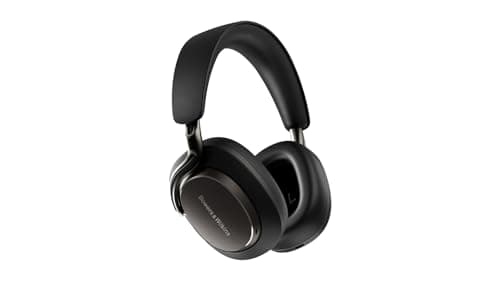
The Nappa leather ear pads and headband feel genuinely luxurious against the skin. This is not the synthetic leather that most manufacturers use at lower price points; this is the real deal, soft and supple from day one and likely to develop a beautiful patina over years of use. B&W offers the PX8 S2 in two finishes: Onyx Black, which features deep black pads with silver-toned aluminum arms, and Warm Stone, which pairs cream-colored leather with gold-toned hardware. Both options look sophisticated, though the Warm Stone variant stands out more in a market saturated with black headphones.
The cast aluminum arms provide structural rigidity while remaining lightweight, and the exposed braided cable running through the headband serves as both a design accent and a functional element. It is a nod to B&W's heritage — the original P5 from 2010 featured a similar design language — and it gives the PX8 S2 a distinctive look that sets it apart from the sea of minimalist plastic headphones dominating the market.
At 310 grams, the PX8 S2 is 10 grams lighter than the original PX8 and competitively weighty against the Sony WH-1000XM6 (250g) and Apple AirPods Max (384g). The weight distribution is excellent thanks to the generous headband padding, though the clamping force is on the firmer side. Some reviewers with larger heads have noted mild pressure after extended sessions, but most users should find the fit comfortable for hours at a time. The tilted earcup design with angled drivers helps the headphones sit naturally on the head while ensuring a consistent seal.
The replaceable ear pads and headband are a particularly welcome feature for a headphone at this price. While replacement requires visiting a trained B&W service engineer — you cannot simply snap new pads on at home like you can with many competitors — the fact that these components can be replaced at all means the PX8 S2 is built to last years rather than months. This is a headphone you invest in for the long haul, and the replaceable components reflect that philosophy even if the process is less convenient than magnetically attaching new pads like on the AirPods Max.
One notable design choice: the PX8 S2 does not fold up into a compact ball like many competitors. The earcups lay flat for storage in the included case, and magnets on the case lid create a dedicated compartment for the included USB-C and USB-C-to-3.5mm cables. It is a thoughtful touch that keeps everything organized, but if you need headphones that compress down to the size of a softball, the PX8 S2 is not your best option.
Controls and Connectivity
Bowers & Wilkins has opted for physical buttons over touch controls on the PX8 S2, and that decision deserves praise. The left earcup houses the power and Bluetooth slider (push up to power on, hold for pairing) along with a Quick Action button that can be configured for ANC modes or voice assistant access. The right earcup features volume up/down buttons and a multifunction button for play, pause, track skip, and call management.
The buttons are tactile and responsive, with satisfying clicks that provide clear feedback. However, their placement on the slim inner edge of the earcups makes them slightly fiddly to locate when you are wearing the headphones, especially if you are walking or multitasking. What Hi-Fi specifically called the controls "slightly awkward to locate when on the move," and that assessment aligns with my experience. You will learn the layout quickly enough, but it is not as intuitive as the touch-swipe gestures on Sony's headphones.
Connectivity is where the PX8 S2 truly shines. Bluetooth 5.3 provides a stable connection with minimal dropout, and the codec support is among the best you will find in any wireless headphone. The PX8 S2 supports SBC, AAC, aptX, aptX HD, aptX Adaptive (up to 24-bit/96kHz), and aptX Lossless via Snapdragon Sound. That aptX Lossless support is particularly noteworthy — it delivers CD-quality audio wirelessly, provided your source device supports it. Apple users are limited to AAC, which is perfectly adequate for most listening, but Android users with compatible Qualcomm chipsets can take full advantage of the higher-quality codecs.
Multipoint pairing allows simultaneous connection to two devices, and switching between them is seamless. I had the PX8 S2 connected to both my laptop and phone, and audio switched automatically when a call came in or I started a video on the other device. The headphones also support both USB-C digital audio (bypassing the phone's DAC for the PX8 S2's superior onboard processing) and analog audio via the included USB-C-to-3.5mm cable.
The USB-C wired connection deserves special mention. When you plug in via USB-C, the PX8 S2 bypasses your source device's digital-to-analog converter entirely, using its own internal processing to deliver audio. This is genuinely useful for critical listening sessions where you want the purest possible signal path. In my testing, USB-C audio provided a marginal but audible improvement in dynamic range and detail retrieval compared to Bluetooth, even with aptX Lossless engaged. Purists will appreciate having this option.
One notable omission: there is no 3.5mm jack directly on the headphones themselves. You must use the included cable, which converts USB-C to 3.5mm — an understandable decision given the slim earcup design, but it means you cannot use any old headphone cable you have lying around.
Active Noise Cancellation
Here is where the conversation gets complicated. Bowers & Wilkins has improved the ANC on the PX8 S2 compared to the original PX8 and the PX7 S3, and the results are genuinely good — but they are not class-leading, which is a tough pill to swallow at $799.
The PX8 S2 uses an eight-microphone array (four per earcup) for active noise cancellation and voice call clarity, up from six in the original. Two microphones monitor what the drivers are outputting, four capture ambient noise from the outside world, and two focus on voice clarity during calls. It is a comprehensive system, and it performs well in most everyday scenarios. Train rumble, air conditioning hum, and the general din of a coffee shop all get reduced to manageable levels.
But the PX8 S2 struggles in the critical 400Hz to 2kHz range — exactly the band where human voices and office chatter live. On a recent flight from New York to San Francisco, low-frequency engine drone was handled capably, but nearby conversations and the clatter of service carts seeped through more than they would on the Sony WH-1000XM6 or the Bose QuietComfort Ultra Headphones. Lawn mowers and other high-frequency noise also proved more penetrating through the B&W than through those leading competitors.
The Transparency mode (what B&W calls "Pass-Through") works well for quick interactions — ordering coffee, hearing gate announcements — but it introduces a slight artificial quality to ambient sound that the best transparency modes avoid. SoundGuys noted that this mode sacrifices some clarity compared to the best implementations from Apple and Sony.
Voice call quality is a bright spot. The ADI Pure Voice processing does an excellent job of isolating your voice from background noise, and callers reported clear, natural-sounding speech even in noisy environments. B&W's microphone array handles wind and environmental noise better than most, making the PX8 S2 a solid choice for professionals who take a lot of calls on the go.
Battery Life
Bowers & Wilkins rates the PX8 S2 at 30 hours of playback with ANC enabled, and real-world testing confirms this is achievable at moderate volume levels. The SoundGuys lab test recorded approximately 28 hours at medium iPhone volume with ANC on, which is impressive and competitive with the best in the category. Sony claims 40 hours for the WH-1000XM6, but the B&W number is more than enough for long-haul flights and extended work sessions.
Quick charging is well-implemented: 15 minutes of USB-C time gives you roughly 7 hours of playback. A full recharge takes approximately 3 hours. There is no charger included in the box — just a USB-C cable — which feels stingy at this price point but is increasingly common across the industry.
The auto-shutoff feature is enabled by default and works reliably, turning off the headphones after a period of inactivity to preserve battery. You can also toggle a wear sensor in the app that pauses playback when you remove the headphones and resumes when you put them back on — a convenience feature that works as advertised.
Sound Quality
This is the reason you buy the PX8 S2, and it is here that B&W justifies every penny of its premium price tag. The redesigned 40mm Carbon Cone drivers deliver sound quality that genuinely approaches what you would expect from a high-end wired headphone — a remarkable achievement for a wireless, noise-canceling model.
The bass response is emphatic without being overwhelming. There is genuine punch and impact here — kick drums slam with authority, bass guitars have texture and definition rather than just rumble, and electronic music bass drops hit with satisfying depth. But B&W keeps things controlled; the low end never bleeds into the mids or muddies the overall presentation. This is bass that serves the music, not bass designed to impress in a thirty-second demo at Best Buy.
The midrange is where the PX8 S2 truly distinguishes itself. Female vocals have a breathy, intimate quality that makes you feel like the singer is in the room. Amy Winehouse's smoky contralto on "Back to Black" gains a tangible sense of space and presence. Piano recordings benefit from the headphones' precise timing and transient response — each note has a clear attack and natural decay that lesser headphones blur together. The mids are clear and communicative without ever sounding artificial or processed. Jazz recordings sound especially rewarding through the PX8 S2; the separation between piano, upright bass, and brush drums creates a convincing sense of instruments occupying a real acoustic space.
Treble presentation is airy and extended, adding sparkle and liveliness to well-recorded material. Hi-hats and cymbals have proper shimmer and decay. However, this is also the area where some listeners might find the PX8 S2 slightly polarizing. B&W has given the upper frequencies a gentle lift that adds detail retrieval and energy but can occasionally edge toward brightness on hot recordings. If you are sensitive to treble, you may find extended listening sessions at higher volumes fatiguing on certain tracks. The five-band EQ in the B&W Music app provides some room for adjustment, though the range of correction is limited to subtle tweaks rather than dramatic reshaping.
What struck me most during testing was the PX8 S2's sense of scale and dynamics. The headphones present music with a believable, spacious soundstage that closes the gap between over-ear wireless and proper open-back wired cans. Orchestral recordings benefit enormously — strings have body and texture, brass sections deliver appropriate weight and bite, and the overall presentation has a concert hall quality that most wireless headphones simply cannot replicate. The ecoustics review described it as "like listening to an orchestra in a modest, well-proportioned hall," and that characterization feels spot on.
Male vocals fare slightly less well. Deeper male voices like Sam Cooke and Nick Cave lose some of the warmth and chest resonance they possess on reference-grade wired headphones. The PX8 S2 pulls these vocals back slightly compared to the forward instrument presentation, which can make male vocal-centric tracks feel less intimate. It is not a deal-breaker by any means — most listeners would not notice without direct comparison — but it is worth noting for vocal purists.
One surprising strength: the PX8 S2 handles poor recordings gracefully. Badly mastered MP3s and compressed streams avoid the harshness and fatigue that many detail-oriented headphones impose. B&W's tuning seems to round off the rough edges without sacrificing the quality of well-produced material, which is a genuinely valuable trait in an era when most of us stream music from services with variable audio quality.
The B&W Music App
The Bowers & Wilkins Music app has improved significantly with the PX8 S2. The previous generation offered only basic bass and treble adjustments, but the S2 introduces a proper five-band equalizer with Scheiber-derived frequency bands. You can save custom presets, and there is a True Sound mode that locks the headphones to B&W's reference tuning — a sensible default for most listeners who want to hear what the engineers intended.
The app also provides battery status, ANC mode switching, wear sensor sensitivity adjustment, and firmware updates. B&W has promised spatial audio and Bluetooth LE Audio support via future firmware updates, though these features were not available at launch and their timeline remains uncertain.
I did encounter occasional quirks where the app failed to recognize sound mode changes, requiring a restart. It is not a deal-breaking issue, but it does suggest B&W's software stack needs further refinement — a recurring theme with B&W headphones over the years.
Sound With ANC On vs. Off
Most wireless headphones exhibit some tonal shift when ANC is activated. The PX8 S2 is no exception. With ANC engaged, there is a subtle low-end reverberation that adds warmth but can reduce definition in the bass. Some listeners may actually prefer this presentation — it adds body to thin recordings — but purists seeking the most accurate sound will want to cycle between ANC modes or listen with ANC off when in quiet environments.
The good news is that passive isolation is strong enough for most moderate environments. The Nappa leather ear pads create an effective seal without active assistance, and I found myself reaching for ANC only in genuinely noisy settings like flights and busy cafes.
Comparison With Key Competitors
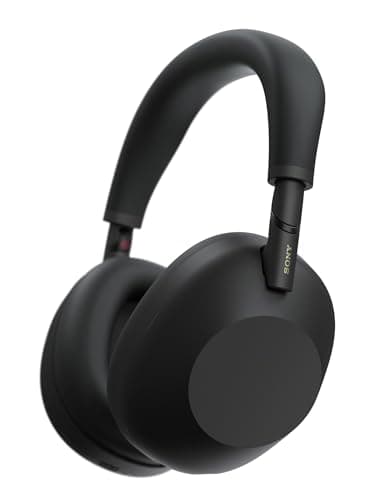
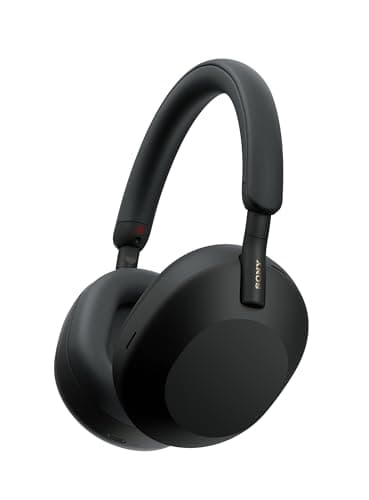
Versus the Sony WH-1000XM6 ($448): Sony's flagship delivers superior noise cancellation, lighter weight, a more comfortable fit for extended wear, and arguably better value. But the PX8 S2 offers substantially better sound quality, more premium build materials, wider codec support, and a significantly more luxurious ownership experience. If you prioritize ANC and comfort above all else, the Sony wins. If you care about sound quality first, the B&W is worth the premium.
Versus the Bose QuietComfort Ultra Headphones ($449): Bose offers arguably the best ANC in the business along with outstanding comfort. Sound quality has improved over previous generations but still falls short of the PX8 S2's dynamic, engaging presentation. The B&W also offers superior codec support and wired listening options.
Versus the B&W PX7 S3 ($450): The PX7 S3 offers roughly 80% of the PX8 S2's sound quality at roughly 56% of the price. It uses bio-cellulose drivers rather than the Carbon Cone units, lacks aptX Lossless support, and has a less luxurious build. If you are on a budget, the PX7 S3 is the smarter buy. But if you can afford the difference, the PX8 S2's improvements in soundstage, dynamics, and detail retrieval are meaningful and audible.
Versus the Apple AirPods Max ($499): The AirPods Max excels within the Apple ecosystem with seamless pairing, Spatial Audio, and excellent ANC. But it is heavier at 384 grams, offers fewer codec options for Android users, and cannot match the PX8 S2's sound quality for critical listening. The B&W also supports wired USB-C audio, which the Apple lacks entirely.
Versus the Sennheiser Momentum 4 Wireless ($350): The Momentum 4 offers remarkable value with 60-hour battery life, decent ANC, and enjoyable sound. But it cannot match the PX8 S2's build quality, driver sophistication, or overall sound refinement. The Sennheiser is the pragmatic choice; the B&W is the aspirational one.
Who Should Buy the PX8 S2
The PX8 S2 exists for a specific type of listener: someone who values sound quality above all else and is willing to pay a significant premium for it. If you primarily want the best noise cancellation, the Sony WH-1000XM6 achieves that for $350 less. If you want the best value in premium wireless audio, the PX7 S3 delivers most of the experience for less than half the price. If you want the best overall balance of features, comfort, and ANC, the Bose QC Ultra remains the pick.
But if you want the best sound quality in a wireless, noise-canceling headphone — full stop — the PX8 S2 makes a compelling case. The Carbon Cone drivers deliver a level of musical engagement, dynamic expression, and tonal richness that no competitor at any price can match. The premium build materials, replaceable components, and comprehensive codec support make the PX8 S2 feel like a long-term investment rather than a disposable piece of electronics.
The $799 price tag is undeniably steep, and the imperfect ANC is a legitimate concern at this level. But for listeners who prioritize musical enjoyment over silence, who appreciate craftsmanship in their personal electronics, and who want wired-quality sound in a wireless form factor, the Bowers & Wilkins PX8 S2 is the headphone that finally justifies the luxury price tag in the wireless category.
Related: Bose Quietcomfort Ultra Earbuds 2Nd Gen · Apple Airpods Max 2 Review · Sennheiser Hd 480 Pro
Pros
- Exceptional sound quality with Carbon Cone drivers that rival wired headphones
- Premium Nappa leather build with replaceable ear pads and headband
- Comprehensive codec support including aptX Lossless and aptX Adaptive
- 30-hour battery life with 15-minute quick charge for 7 hours
- USB-C wired digital audio and 3.5mm analog input included
- Physical buttons provide reliable tactile feedback
Cons
- Noise cancellation trails Sony and Bose despite improvement over predecessor
- $799 price is $100 more than the original PX8 and nearly double Sony's flagship
- Controls are fiddly to locate by feel when wearing the headphones
- Ear pad and headband replacement requires professional service
- No IP rating — not suitable for workouts or rain
Final Verdict
The Bowers & Wilkins PX8 S2 delivers the finest wireless sound quality in any noise-canceling headphone, but its $799 price and imperfect ANC mean it is best suited for audio purists who prioritize musical detail over maximum silence.