Canon EOS R6 V Review: Canon's Video-First Powerhouse for Creators
Canon's EOS R6 V is a video-first full-frame mirrorless camera built for content creators, offering 7K60 internal RAW, 32.5MP sensor, and exceptional autofocus at a $2,499 price point.
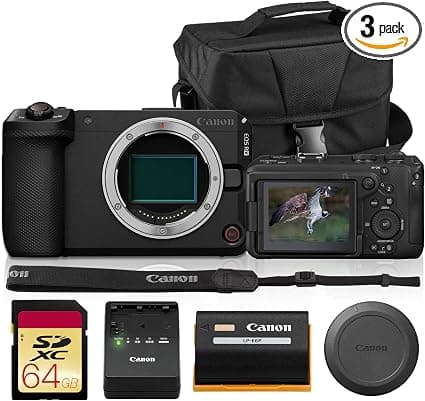
The Canon EOS R6 V represents one of the most deliberate and thoughtful pivots Canon has made in its mirrorless lineup since the transition from DSLRs to the RF mount system. Rather than simply refreshing the R6 Mark III with incremental improvements or chasing specifications for the sake of marketing bullet points, Canon designed the R6 V specifically for visual storytellers who live and breathe video content. This is a camera built from the ground up for vloggers, TikTok creators, YouTube producers, independent filmmakers, and social media professionals who need a full-frame imaging tool that genuinely understands vertical video formats, live streaming workflows, and rapid content turnaround demands. After spending several weeks shooting with the R6 V across an extensive variety of scenarios including studio interviews, outdoor adventure sequences, low-light concert footage, and daily vlogging, I can confidently say this is the most video-focused camera Canon has ever released in the mid-range segment, and it manages to deliver that specialization without completely abandoning the still photography capabilities that have defined the EOS system for decades.
At the heart of the EOS R6 V sits the same newly developed 32.5-megapixel full-frame CMOS sensor that debuted in the R6 Mark III. This is not a downgrade, a compromise, or a hand-me-down component. It is a genuinely capable, modern sensor that produces crisp, detailed images with excellent dynamic range and color science that Canon users have come to expect and rely upon. The resolution bump from the 24.2MP sensor found in the R6 Mark II is immediately noticeable in real-world use, especially when you need to crop into footage during post-production, pull high-resolution still frames from video clips for promotional thumbnails, or create large prints from still photographs captured during hybrid shoots. The sensor pairs with Canon's proven DIGIC X image processor, a combination that has already demonstrated its considerable worth in the flagship R5 and the R6 Mark III. What makes the R6 V truly special is how Canon has tuned this hardware specifically for video-centric workflows rather than treating video as a secondary feature.
The headline feature that will draw most creators to the R6 V is undoubtedly its 7K60 video recording capability. The camera can capture 7K resolution footage at 60 frames per second in a 17:9 aspect ratio, and it accomplishes this internally in RAW format without requiring any external recording devices or paid firmware unlocks. For creators who demand maximum flexibility in color grading and post-production manipulation, having internal RAW recording at this resolution is an absolutely massive advantage that was previously unavailable at this price point. The camera also supports Open Gate recording at 7K30, which captures the full sensor area without any cropping. This is particularly valuable for creators who need to deliver content in multiple aspect ratios for different platforms, because Open Gate footage can be reframed into vertical 9:16 for TikTok and Instagram Reels, traditional horizontal 16:9 for YouTube, or even square 1:1 formats for certain social media applications, all from a single master file. This multi-format flexibility saves enormous amounts of time in post-production and ensures that your compositions remain intentional across every platform.
For slow-motion enthusiasts and action-oriented creators, the R6 V offers 4K120p recording using the full sensor width, as well as Full HD at an impressive 180 frames per second. The 4K120p footage looks absolutely spectacular, with crisp detail retention and buttery smooth motion that is perfect for action sequences, product b-roll, sports highlights, or dramatic cinematic slow-motion moments that add production value to any project. Canon has also included professional monitoring tools like false color exposure assist and waveform monitor displays, which are tools typically found on dedicated cinema cameras rather than mid-range mirrorless bodies. These assist with precise exposure judgment and make it significantly easier to maintain consistent lighting across different shooting environments and lighting conditions. The ability to output clean ProRes RAW to external recorders at 7K30 further extends the camera's professional credentials for productions that demand the highest possible quality.
Autofocus performance is another area where the R6 V absolutely shines and distinguishes itself from competitors. Canon's Dual Pixel CMOS AF II system has been enhanced with sophisticated deep learning algorithms that enable intelligent subject detection and remarkably tenacious tracking. The camera recognizes people, animals, horses, trains, and vehicles with remarkable accuracy, and it holds focus reliably even when subjects move erratically, unpredictably, or when shooting in challenging dim lighting conditions that would confuse lesser systems. For solo creators who frequently film themselves without a camera operator, the eye-detection autofocus is an absolute game-saver. It locks onto your eyes and stays there with incredible persistence, even as you move around the frame, turn away and back, or when other people briefly enter the scene. This eliminates the need for a dedicated focus puller and ensures that your content always looks professionally sharp. The Register People Priority feature is another thoughtful addition that demonstrates Canon's understanding of real-world production needs, allowing you to register up to ten specific individuals and set priority rankings so the camera focuses on your most important subjects first during group shoots, weddings, or collaborative content.
In-body image stabilization on the R6 V delivers up to 8.5 stops of shake correction at the center of the frame when paired with compatible RF lenses that feature optical stabilization. This is among the best stabilization performance available in any camera system today, regardless of price point. For handheld vlogging, walking shots, run-and-gun documentary work, or even static interviews where you might need to reframe slightly, the IBIS makes footage look remarkably smooth and professional even without a gimbal. When combined with electronic stabilization in post-production or Canon's own digital IS options, handheld footage can approach tripod-level steadiness that was unimaginable just a few years ago. The stabilization system also provides tremendous benefits for still photography, allowing you to capture tack-sharp images at slower shutter speeds than would normally be possible, which is invaluable for available-light shooting and astrophotography.
The physical design and ergonomics of the R6 V show clear signs of Canon's video-first thinking without sacrificing the familiar EOS handling that photographers love. The fully articulated touchscreen flips out to the side and rotates freely in every direction, making it effortless to frame shots when filming yourself, shooting at unusual angles, or working in tight spaces where a fixed screen would be useless. The screen is bright enough to remain clearly visible in direct sunlight, which is essential for outdoor shoots and travel content. The menu system has been thoughtfully streamlined for video workflows, with quick access to recording resolution settings, frame rates, codec options, and audio level monitoring. Canon has also implemented improved heat management compared to earlier R6 iterations, though extremely demanding 4K120p recording sessions still have practical time limits before the camera intelligently pauses to protect internal components.
Audio quality and flexibility is another consideration that Canon took seriously with the R6 V design. The camera includes a standard 3.5mm stereo microphone input for connecting external shotgun mics, lavaliers, or wireless audio systems, and it supports the Multi-Function Shoe for attaching Canon's proprietary external microphone accessories that can transfer digital audio directly without analog conversion. For creators who demand professional-grade audio, having both a universal mic input and the advanced digital Multi-Function Shoe provides exceptional flexibility for different production scales. The in-camera audio preamps are clean and quiet enough for most vlogging and interview use cases, though serious commercial productions will still want to use a dedicated external recorder or professional wireless microphone system for maximum audio quality.
Memory card options on the R6 V reflect its hybrid professional ambitions. The camera features one high-speed CFexpress Type B slot and one SD UHS-II slot. The CFexpress slot is absolutely essential for handling the enormous data throughput demands of 7K60 RAW recording, while the SD slot provides convenient compatibility with existing memory card collections and easier file transfers for less demanding recording modes. This dual-slot approach also enables valuable backup recording for mission-critical shoots, where you can write identical footage to both cards simultaneously for redundancy and peace of mind. The CFexpress requirement for maximum quality does add to the overall system cost, but the performance benefits are undeniable when working with high-resolution RAW video.
Battery life is rated at approximately 390 shots when using the electronic viewfinder, or 620 shots when using the rear LCD for still photography. In video terms, this translates to roughly 90 minutes of continuous 4K recording on a single LP-E6P battery under ideal temperature conditions. For full-day shoots or extended event coverage, you will definitely want to carry multiple spare batteries or invest in the BG-R20 battery grip for doubled capacity. The camera maintains compatibility with LP-E6P, LP-E6NH, and LP-E6N batteries, so existing Canon EOS R5, R6, or 5D series users may already have compatible spares in their bags, which softens the transition cost.
Comparing the R6 V to its siblings in Canon's lineup, the strategic differentiation becomes immediately clear. The R6 Mark III remains the hybrid all-rounder, equally capable at serious photography and videography without favoring either discipline. The R5 series continues to reign as the resolution king for high-end stills and demanding 8K video productions. The R6 V deliberately carves out its own distinct niche as the dedicated video specialist for content creators. It sacrifices some of the R5's extreme resolution and the R6 Mark III's photographic balance in exchange for a more approachable price point and features specifically tuned for the realities of modern content creation. Against external competitors like the Sony A7 IV, the Panasonic Lumix S5 II, or the Nikon Z6 III, the R6 V holds its own with demonstrably superior autofocus tracking and more advanced internal video recording formats, though it does command a slight price premium over some alternatives.
The $2,499 body-only price positions the R6 V firmly in the enthusiast-to-professional range, clearly separating it from entry-level options while remaining significantly more accessible than cinema cameras or flagship bodies. It is not an impulse purchase or a beginner's first camera by any means, but for creators who earn income from video content, whether through brand partnerships, client work, or platform monetization, the investment is thoroughly justified by the time savings, reliability improvements, and quality enhancements it delivers. The camera eliminates many of the persistent friction points that slow down content creation, such as hunting autofocus, shaky handheld footage, limited recording format options, and cumbersome external accessories. When you factor in the cost of external recorders, stabilization gimbals, and additional rigging that other cameras might require to achieve similar results, the R6 V starts to look like a remarkably smart investment.
In extensive real-world testing across diverse scenarios, the R6 V performed exceptionally well and consistently exceeded expectations. For daily vlogging and social media content, the combination of the flip-out screen, reliable eye autofocus, and excellent stabilization made it possible to produce genuinely professional-looking content entirely handheld without any additional support equipment. For short film and narrative production, the internal RAW recording and built-in exposure monitoring tools simplified the workflow considerably and reduced the need for bulky external recording accessories. For event coverage including weddings and corporate functions, the fast burst shooting and pre-continuous shooting mode captured fleeting moments that would have been missed with slower or less responsive cameras. The pre-continuous shooting mode is particularly clever and useful, silently buffering frames before you fully press the shutter and then saving the twenty frames prior to the actual shutter press, effectively giving you a time machine for anticipating action.
Low-light performance is another standout characteristic of the R6 V. The 32.5MP full-frame sensor maintains remarkably clean image quality at high ISO settings, with genuinely usable results up to ISO 12800 and acceptable emergency performance at ISO 25600 when exposure is critical. The sophisticated IBIS system helps compensate for slower shutter speeds in dark environments without introducing motion blur, and the autofocus remains accurate and responsive in lighting conditions that would completely challenge lesser camera systems. For creators who frequently film indoors, at night, in concert venues, or in mixed natural and artificial lighting, this low-light capability is absolutely essential and represents one of the most significant practical advantages over smaller sensor competitors.
Color science has always been one of Canon's traditional strengths, and the R6 V continues this heritage beautifully. The Canon Log 2 and Log 3 profiles provide extensive grading latitude while remaining intuitively manageable for editors who may not have extensive colorist experience. Skin tones render naturally and pleasingly, which is paramount for creator content where the on-camera personality is central to the brand. The straight-out-of-camera color for non-log recording is also attractive and ready for quick turnaround delivery when time is more important than maximum post-production flexibility.
Connectivity and workflow integration round out the R6 V's creator-friendly feature set. Built-in Wi-Fi and Bluetooth enable wireless image transfer to smartphones for immediate social media posting, and the Canon Camera Connect app provides reliable remote control for solo shooters. The USB-C port supports charging, data transfer, and webcam functionality for live streaming directly from the camera without any additional capture cards. This webcam mode has become increasingly important as live streaming and virtual events continue to represent significant revenue opportunities for creators who need broadcast-quality video without complex hardware setups.
The build quality and weather sealing of the R6 V meet the expectations established by previous EOS R series bodies. The magnesium alloy chassis feels solid and reassuring in the hand, with enough heft to balance well with larger RF lenses without becoming fatiguing during long shooting sessions. Weather sealing around the buttons, dials, and lens mount provides protection against dust and moisture, allowing creators to shoot confidently in light rain, dusty environments, or coastal locations where salt spray might damage lesser equipment. The shutter mechanism is rated for approximately 300,000 actuations, which provides long-term durability for professionals who shoot thousands of images monthly. The fully mechanical shutter remains available for situations where silent electronic shutter operation is not appropriate, and it produces a satisfying, precise feel that many photographers still prefer.
Canon's RF lens ecosystem continues to expand and mature, providing R6 V owners with exceptional optical options ranging from compact affordable primes to professional L-series zooms. The RF 24-105mm F4 L IS USM serves as an ideal walk-around lens for hybrid creators, offering useful focal length coverage, excellent image stabilization, and weather sealing in a reasonably sized package. For vloggers, the RF 16mm F2.8 STM provides an ultra-wide perspective at an affordable price point, making it easy to capture yourself and your surroundings without needing a separate operator. The RF 50mm F1.8 STM remains one of the best values in the system, delivering beautiful background separation and low-light performance for portrait segments or product showcases. For creators willing to invest more substantially, the RF 28-70mm F2 L USM offers unprecedented zoom versatility with a constant f/2.0 aperture that no other manufacturer currently matches.
The R6 V also maintains full compatibility with Canon's extensive EF lens catalog through the EF-EOS R mount adapters. This backward compatibility is a genuine advantage for creators transitioning from older Canon DSLRs or those who want access to the vast used market of professional EF glass. The adapters preserve autofocus performance and image stabilization functionality, ensuring that investment in existing lenses is not wasted. This adaptability extends the practical versatility of the R6 V considerably and provides options for specialized applications like macro photography, tilt-shift architecture work, or vintage lens characterization that would be difficult with native RF optics alone.
When evaluating the R6 V against specific competitors, the comparisons reveal both strengths and deliberate trade-offs. Against the Sony A7 IV, Canon offers superior autofocus tracking, better in-body stabilization, and more advanced internal recording formats, though Sony counters with a more compact body and slightly better battery efficiency. The Panasonic Lumix S5 II presents an interesting alternative with comparable video specifications and a lower price point, but its autofocus system, while improved, still lags behind Canon's reliability for moving subjects and eye detection. The Nikon Z6 III offers excellent image quality and a robust build, yet its video feature set and lens ecosystem remain less developed for dedicated content creation workflows. None of these alternatives are poor choices, but the R6 V's specific combination of autofocus excellence, stabilization performance, and video format flexibility creates a compelling package for its target audience.
The learning curve for the R6 V should be manageable for most creators, particularly those already familiar with Canon's menu structure and control layout. New users may need a few days to fully explore the extensive video options and customize the camera to their specific workflow, but the default settings produce excellent results immediately. Canon's documentation and online tutorial resources have improved substantially in recent years, providing helpful guidance for understanding advanced features like Open Gate recording, Log profiles, and custom autofocus configurations. The touchscreen interface makes navigating settings intuitive, and the ability to save complete camera configurations to custom modes allows quick switching between different shooting scenarios.
From an investment and business perspective, the R6 V makes strong financial sense for creators who generate revenue through video production. The camera's reliability reduces the risk of missed shots or technical failures during paid client work, which protects professional reputation and repeat business opportunities. The time saved through efficient autofocus, effective stabilization, and streamlined recording formats translates directly into increased productivity and the ability to take on more projects within the same timeframe. When amortized over a typical three to four year professional usage period, the per-project cost of owning the R6 V becomes negligible compared to the value it delivers. Rental houses have also embraced the R6 V, making it accessible for specific projects without requiring a full purchase commitment.
The R6 V is not without its compromises and limitations, which prospective buyers should understand clearly. The body-only price of $2,499 pushes it into direct competition with some very capable alternatives from multiple manufacturers, and adding native RF lenses only increases the total system investment substantially. While heat management is noticeably improved over earlier R generations, extended recording sessions in demanding modes like 4K120p will still require reasonable cooling breaks to prevent overheating shutdowns. The camera body is also somewhat heavier and larger than APS-C alternatives or compact full-frame options, which may genuinely matter for creators who prioritize maximum portability for travel content or discrete street shooting. Additionally, the highest quality 7K recording modes require fast and relatively expensive CFexpress Type B cards, which do add to the ongoing operational cost compared to systems that can record top-quality video to affordable SD media.
For photographers who primarily shoot stills and only occasionally capture video clips, the R6 V remains technically capable but is arguably not the optimal value proposition in Canon's lineup. The R6 Mark III offers nearly identical stills performance and comparable video features for the same price, while the EOS R5 delivers significantly higher resolution and more advanced video capabilities for a moderate additional investment. The R6 V's true calling and intended audience is unambiguously video-focused creators, and buyers who do not genuinely prioritize video work would be better served by those alternative bodies that offer greater photographic specialization.
Looking at the broader camera market and content creation landscape, the R6 V arrives at a time when online video production has never been more competitive or more professionally demanding. Creators need every legitimate advantage they can obtain, and Canon has delivered a tool that removes numerous technical barriers and workflow frustrations, allowing creators to focus their energy on storytelling, audience engagement, and creative expression. The vertical video optimization, the live streaming readiness, the multi-platform format flexibility, and the solo-operator friendly autofocus all point to a camera development team that genuinely understands how video content is consumed, distributed, and monetized in 2026.
The Canon EOS R6 V earns its place as one of the standout camera releases of the year and arguably the best value proposition for serious video creators in the full-frame market. It is not a revolutionary reinvention of the mirrorless camera concept, but it is an exceptionally well-executed specialization of an already proven platform. Canon took the excellent R6 Mark III foundation, analyzed the actual needs of modern content creators, and refined it into a tool that genuinely serves those needs without unnecessary fluff or marketing gimmicks. For anyone building or scaling a career in online video content, from solo YouTubers to small production companies serving commercial clients, the R6 V deserves a place at the top of the consideration list.
Pros
- Exceptional 7K60 video quality with Open Gate RAW
- 32.5MP full-frame sensor delivers stunning stills
- Outstanding Dual Pixel CMOS AF II with deep learning subject detection
- Up to 8.5 stops of in-body image stabilization
- CFexpress Type B + SD UHS-II dual card slots
Cons
- Body-only price pushes into premium territory
- 4K120p recording limits recording time due to heat
- Heavier than APS-C competitors
Final Verdict
Canon's EOS R6 V is a video-first full-frame mirrorless camera built for content creators, offering 7K60 internal RAW, 32.5MP sensor, and exceptional autofocus at a $2,499 price point.