DJI Osmo Action 6 Review: The Best Action Camera Gets a Variable Aperture and Square Sensor
The DJI Osmo Action 6 introduces the first variable aperture lens on an action camera and a square 1/1.1-inch sensor, delivering class-leading low-light performance and a streamlined multi-platform shooting workflow for content creators.
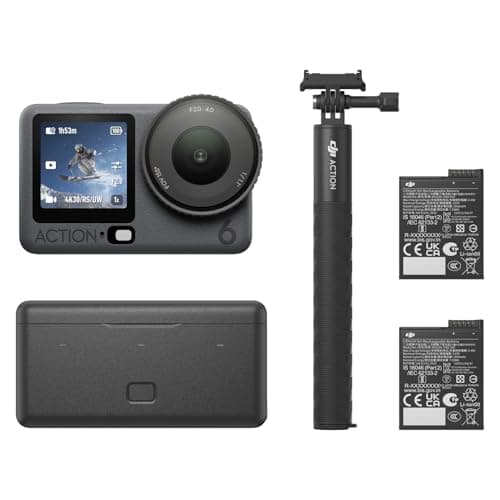
DJI has been steadily closing the gap with GoPro in the action camera space, and with the Osmo Action 6, it may have finally taken the lead. The Action 6 is not just another spec bump — it introduces features that genuinely change how you think about shooting action footage. The headline additions are a larger 1/1.1-inch square-format image sensor and the first-ever variable aperture lens on an action camera, letting you switch between f/2.0 and f/4.0 depending on your lighting conditions. Combined with an improved 8K video mode, best-in-class battery life, and a 20-meter waterproof rating straight out of the box, the Action 6 makes a compelling case for itself at $369 for the Standard combo and $439 for the Enhanced kit tested here.
I have been using the DJI Osmo Action 6 Enhanced Combo for over a week, putting it through its paces in a range of real-world scenarios — urban walking vlogs, low-light indoor shooting, outdoor action clips, and even a few water-adjacent tests — to see whether DJI's latest flagship can finally claim the action camera crown from GoPro and Insta360.
Design and Build Quality
The Action 6 looks and feels like a refined evolution of the Action 5 Pro. The body is compact and boxy, measuring 1.3 by 2.9 by 1.9 inches and weighing just 5.3 ounces. It fits comfortably in one hand and is light enough to mount on a helmet, bike handlebars, or a selfie stick without feeling cumbersome. The all-plastic chassis feels rugged and durable, with a reassuring solidity that suggests it can handle the knocks and drops that come with active use.
A key upgrade in this generation is the waterproof rating. The Action 6 is rated to 20 meters (66 feet) without any external housing — double the depth rating of the GoPro Hero 13 Black. That is a meaningful advantage for divers, snorkelers, and anyone who wants to take their camera into deeper water without the bulk and expense of an additional dive housing. If you do need to go deeper, a separate dive case extends the rating to roughly 60 meters.
The Action 6 features dual OLED touchscreens: a 2.5-inch rear display for framing and navigation and a 1.5-inch front display for vlogging and selfie shooting. Both screens are bright, responsive, and work well even with wet hands, thanks to a hydrophobic coating that prevents water droplets from causing phantom touches. The front screen is particularly useful for solo content creators who need to frame themselves without guessing.
One important change that existing DJI action camera owners need to be aware of: the Action 6 uses a new Dual-Direction Quick-Release mounting system that is not backward compatible with the magnetic quick-release plates used on the Action 5 Pro and earlier models. If you are upgrading from an Action 5 Pro, you will need to buy new mounts, chest straps, helmet mounts, and adhesive plates. That replacement cost can add up quickly — between $30 and $80 depending on how many accessories you need to swap. DJI includes one curved adhesive mount and one quick-release base in the box, but if you have a collection of Action 5 Pro accessories, factor the replacement expense into your upgrade budget.
On the positive side, the new mount system is more secure than the previous generation. The dual-latch design locks the camera firmly in place with no wobble or play, and releasing it requires pressing both side buttons simultaneously — a deliberate action that minimizes the risk of accidental detachment during high-impact activities.
Variable Aperture: The Killer Feature
The variable aperture lens is the Action 6's standout feature, and it is the sort of innovation that makes you wonder why no action camera manufacturer has attempted it before. DJI's implementation lets the camera switch between f/2.0, f/2.6, f/2.8, and f/4.0, depending on the shooting mode and lighting conditions. You cannot manually lock in any aperture value — the camera selects the aperture based on the chosen mode — but the available ranges cover the most useful scenarios well.
At f/2.0, the Action 6 captures roughly twice as much light as the Action 5 Pro's fixed f/2.8 aperture. This makes a dramatic difference in low-light performance. Indoor evening shots that would have been noisy and underexposed on the Action 5 Pro are bright and usable on the Action 6. Twilight cityscapes, dimly lit restaurants, and shaded forest trails all look significantly cleaner. The f/2.0 aperture also enables shallower depth of field, giving footage a more cinematic look with subject-background separation that action cameras typically struggle to achieve.
At the other end of the range, f/4.0 introduces two useful effects. The first is the "Starburst" mode, which renders bright point light sources — headlamps, streetlights, candles — with a six-point star diffraction pattern. This is a creative effect that was previously only achievable with a dedicated camera and a stopped-down lens. The second benefit is a reduced minimum focus distance: at f/4.0, the Action 6 can focus as close as 15 centimeters, compared to roughly 35 centimeters on the Action 5 Pro. This makes it much more useful for close-up detail shots of gear, food, or small subjects.
The auto aperture system works well in most scenarios, but it has a few quirks. When shooting in mixed lighting conditions — walking from a bright outdoor space into a dim indoor space, for example — the aperture adjustment can produce a visible exposure shift that is more jarring than the smooth transitions you get from electronic exposure compensation alone. It is not a dealbreaker, but it is something to be aware of if you shoot long continuous takes in variable lighting.
Video Quality and the Square Sensor
The Action 6's 1/1.1-inch CMOS sensor captures 38-megapixel stills and supports video recording up to 8K at 30 frames per second, 4K at up to 120 fps, and 1080p at up to 240 fps for slow motion. In 10-bit color with D-Log M flat profile, the camera captures a wide dynamic range that gives you plenty of latitude for color grading in post-production. Straight-out-of-camera footage in the "Normal" color profile looks pleasing — saturated but not oversaturated, with natural-looking skin tones and good exposure handling across a range of lighting conditions.
The square sensor is the real productivity game-changer. Because the sensor captures a 1:1 aspect ratio at up to 4K resolution (3,840 by 3,840 pixels), you can shoot once and reframe for both horizontal and vertical delivery without losing resolution. This is huge for content creators who publish across multiple platforms. A single day of shooting can produce a 16:9 timeline for YouTube, a 9:16 timeline for TikTok and Instagram Reels, and a 1:1 crop for Instagram feed posts, all from the same source footage. There is no need to rotate the camera between takes, no need to shoot everything twice, and no resolution penalty for the vertical crop.
The 4:3 aspect ratio recording (up to 4K at 120 fps) offers similar flexibility, capturing a taller frame that gives you room to punch in for stabilization or reframing in post. This is the same concept that GoPro introduced with its 8:7 sensor on the Hero 11, and it is every bit as useful here. If you create content for social media, the square and 4:3 modes alone may be worth the upgrade from any action camera that lacks them.
In terms of pure image quality, 4K footage from the Action 6 looks excellent in good light. Colors are accurate, detail is sharp, and the RockSteady 3.0 stabilization keeps handheld footage smooth and watchable even during walking, running, or biking. The 10-bit D-Log M profile preserves highlight and shadow detail well, giving you room to push the grade without introducing banding or noise. I was able to recover several stops of shadow detail in post from a sunset clip that would have been unusably dark on an 8-bit camera.
The 8K mode is technically present but practically underwhelming. Due to the Quad Bayer sensor design, 8K reads every pixel but 4K is oversampled from the full sensor width, meaning the two resolutions are visually nearly identical in detail. The 8K mode also locks you into 16:9 aspect ratio, forfeiting the square sensor's multi-platform advantage. You are better off shooting in 4K and enjoying the extra flexibility of the square format.
Low-Light Performance
Low light has historically been the weak spot for action cameras, but the Action 6 makes significant progress here. The combination of the larger f/2.0 aperture and the bigger 1/1.1-inch sensor captures roughly twice as much light as the Action 5 Pro and significantly more than the GoPro Hero 13 Black's fixed f/2.5 aperture. In practice, this means usable footage in conditions where most action cameras would produce noisy, dark imagery.
I shot handheld walking footage in a dimly lit bar at night, and the Action 6 delivered smooth, reasonably clean video at 4K 30 fps. There is still noise visible in shadow areas — smartphone cameras like the iPhone 15 Pro still produce cleaner low-light video — but for an action camera, this is genuinely impressive. The SuperNight mode (f/2.0 locked) goes even further, prioritizing light gathering at the expense of sharpness to produce brighter footage in extreme low light.
Stabilization in low light is also improved. RockSteady 3.0's night mode produces noticeably sharper results than the Action 5 Pro's stabilization in dim conditions, with less pixelation and fewer artifacts during fast motion. If you shoot a lot of evening content — nighttime bike rides, dusk hiking, indoor events — the Action 6's low-light capability is a strong reason to choose it over the competition.
Battery Life and Charging
Battery life is another area where the Action 6 excels. The 1,950mAh Extreme Battery Plus is the same physical format as the Action 5 Pro and Action 3 batteries, making them interchangeable across generations. In my testing, the Action 6 recorded 112 minutes of 4K 60fps video on a single charge, 92 minutes of 4:3 4K 60fps, and 84 minutes of 8K 30fps. The camera did not overheat during any of these runs — an issue that plagued some early 8K action cameras.
The Enhanced Combo includes two batteries plus the multi-charger, which is enough for a full day of shooting. I took the Action 6 on an eight-hour outing — mixing 4K clips, photo stops, and standby time — and drained roughly one and a half batteries. For most adventure scenarios, two batteries will cover you from morning to evening without needing to find a power outlet.
Charging via USB-C takes roughly 90 minutes per battery from empty to full. The multi-charger that comes with the Enhanced Combo can charge two batteries simultaneously and also serves as a USB-C hub, which is a nice touch for keeping your workspace organized.
Audio and Connectivity
The Action 6's built-in microphones capture acceptable audio for casual use — clear enough for vlogging in quiet to moderately noisy environments, with reasonable wind noise reduction from the built-in wind sock. But the real audio story here is the ability to connect two DJI wireless microphones directly, without needing a receiver plugged into the USB-C port.
This is a huge quality-of-life improvement for interview scenarios, two-person shoots, or any situation where you want your subject's voice to be crystal clear despite wind, traffic, or background noise. The camera pairs with DJI Mic 2, Mic 3, and Mic Mini transmitters over Bluetooth, and you can monitor audio levels on the rear screen. Range is solid — I tested it up to about 200 meters in open line-of-sight conditions before the signal started to break up.
For file transfer, the Action 6 supports Wi-Fi 6 at up to 80 MB/s and USB-C at up to 800 MB/s. The 50 GB of internal storage (up from 47 GB on the Action 5 Pro) provides roughly 80 to 90 minutes of 4K 60fps recording out of the box, and you can expand storage via the microSDXC slot. The built-in storage is a genuinely useful failsafe — even if you forget your SD card, you can still shoot a meaningful amount of footage.
Stabilization: RockSteady 3.0
RockSteady 3.0 is DJI's latest electronic image stabilization, and it delivers smooth, gimbal-like footage in most scenarios. Walking, jogging, and gentle biking all produce footage that looks stable and natural, with none of the jitter or micro-vibrations that cheaper stabilization systems introduce. The horizon-leveling feature keeps the horizon straight during camera tilts of up to 360 degrees, which is useful for dynamic shots where the camera rotates.
That said, GoPro's HyperSmooth 6.0 remains the gold standard for stabilization, particularly in high-vibration scenarios. On a mountain bike descending a rocky trail, the Hero 13 Black's footage is noticeably smoother than the Action 6's, with fewer residual vibrations and more consistent horizon lock. For most people most of the time, RockSteady 3.0 is more than adequate, but if you do a lot of high-speed off-road sports, the GoPro still has the edge.
Comparisons and Competition
Against the GoPro Hero 13 Black ($309), the Action 6 is the more innovative camera this generation. GoPro's main advantages are its more mature stabilization, higher resolution 5.3K capture, and the GoPro subscription service with unlimited cloud storage and automatic highlight reels. DJI counters with the larger, more sensitive sensor, the variable aperture, the square format flexibility, double the waterproof depth rating, and significantly better battery life. The pricing is close enough that the choice comes down to your priorities: GoPro for stabilization and ecosystem, DJI for image quality and versatility.
The Insta360 Ace Pro 2 ($420) is the third major contender. It matches the Action 6 on sensor size (also 1/1.1-inch) and offers similar low-light performance, plus the unique ability to shoot 360-degree footage with its interchangeable lens system. But the Ace Pro 2 lacks the variable aperture, has lower battery life (roughly 60 minutes of 4K), and its stabilization is not as refined as DJI's RockSteady. The modular lens system is genuinely compelling for creative shooters, but the Action 6 is the more polished all-around camera.
Against its own predecessor, the Action 5 Pro ($319), the Action 6 represents a clear upgrade. The square sensor, variable aperture, and improved low-light performance are all meaningful advances that justify the $50 to $100 premium. The Action 5 Pro remains a great value for budget-conscious buyers who do not need the square format or the best low-light performance, but the Action 6 is the better camera by a clear margin.
Usability and Everyday Shooting Experience
Beyond the spec sheet, the Action 6 is a genuinely pleasant camera to use day to day. The dual OLED screens are bright enough to see clearly in direct sunlight, and the touch response is fast and accurate. Swiping between shooting modes, adjusting exposure settings, and reviewing footage all happen without noticeable lag. The menus are logically organized, though the sheer number of shooting modes — Standard, SuperNight, Portrait, Subject Tracking, Slow Motion, Time-lapse, Hyperlapse, and several others — can feel overwhelming at first. DJI could streamline the mode selection process in a firmware update without sacrificing capability.
The customizable Quick Shift button on the side of the camera is a nice productivity feature. By default, it toggles between video and photo modes, but you can remap it to any of the other modes you use most frequently. I set mine to Subject Tracking for quick access during outdoor shoots, and it saved me from digging through menus multiple times per session.
Voice control works reliably for basic commands — "start recording," "stop recording," "take photo," and "shut down" — though it requires a relatively quiet environment to trigger consistently. In windy conditions or near traffic, you will be using the shutter button instead. Gesture control (waving to start or stop recording) is a neat party trick that works better than expected, but I would not rely on it as a primary control method.
The DJI Mimo app serves as the companion for file transfer, remote control, firmware updates, and quick editing. The wireless transfer speeds are solid — a two-minute 4K clip transfers to my iPhone in roughly 15 seconds over Wi-Fi. The app's built-in editing templates are basic but functional for quick social media uploads. The one area where DJI lags behind GoPro is cloud integration: GoPro's subscription service automatically uploads footage to the cloud and uses AI to create highlight reels, while DJI requires you to manually transfer and manage your files. If you value a fully automated post-shoot workflow, GoPro's ecosystem is still ahead.
Storage and File Management
The 50 GB of built-in storage is one of those features you do not appreciate until you need it. I forgot my microSD card on a morning shoot and was able to capture roughly 80 minutes of 4K 60fps footage to internal storage without issue. That is enough to cover most single-day outings, and the peace of mind of having a backup storage option is hard to overstate. When you do use a microSD card, the slot is conveniently located behind the battery door and accepts cards up to 1TB in size.
File management is straightforward. The camera organizes footage into date-stamped folders and supports both MP4 and MOV container formats. The RockSteady stabilization metadata is baked into the file, so compatible editing software can apply stabilization adjustments in post if needed. D-Log M footage recorded in 10-bit color preserves enough dynamic range for serious grading work — I was able to push shadows by several stops and recover highlights from a backlit sunset shot without introducing noticeable banding or color shifts.
For creators who shoot large volumes of footage, the USB-C transfer speed of up to 800 MB/s means you can offload a full 256 GB card in roughly five minutes. That is fast enough that you can realistically dump footage, format the card, and get back to shooting during a lunch break.
Durability and Long-Term Use
The Action 6 is built for abuse in a way that instills confidence. The body is sealed against dust and moisture, and the lens cover is replaceable — a smart design choice given that scratches and impacts are inevitable with action camera use. The waterproofing extends to the charging door and battery compartment, though DJI recommends rinsing the camera in fresh water and drying it thoroughly after saltwater exposure, which is standard practice for any waterproof camera.
During my testing, I deliberately dropped the Action 6 from chest height onto concrete — a tumble that would have shattered a smartphone screen. The camera emerged with a few scuffs on the corner but no functional damage and no screen cracks. The included protective frame adds an extra layer of impact protection, though it does block access to the side button slightly.
One durability note worth mentioning: the front OLED screen is more prone to scratches than the rear screen, simply because it faces outward when mounted on a helmet or chest strap. A screen protector is a wise investment if you plan to use the Action 6 in dusty or sandy environments.
Value Proposition and Pricing Breakdown
The Action 6 is available in three configurations, and choosing the right one matters for your budget and use case. The Essential Combo ($369) includes the camera, one battery, and a protective frame — enough to get started but limiting if you shoot for more than an hour or two at a time. The Standard Combo ($399) adds a curved adhesive mount and a spare battery. The Enhanced Combo ($439, tested here) includes two batteries, a multi-charger, a 1.5-meter extension rod, a battery case, and a carrying bag.
For most buyers, the Enhanced Combo is the one to get. The two-battery setup covers a full day of adventure shooting, the extension rod is useful for vlogging and group selfies, and the multi-charger dramatically simplifies the charging workflow. The $70 premium over the Essential Combo pays for itself the first time you run out of battery mid-shoot, and the included carrying bag makes it easy to keep everything organized.
If you already own Action 5 Pro batteries, they work with the Action 6, which reduces the cost of the upgrade slightly. But the mount incompatibility is the real hidden cost: expect to spend $15 to $30 on replacement mounts and adhesive plates if you have invested in DJI's accessory ecosystem. This is the one area where DJI could have handled the transition better, and it is worth factoring into your total cost of ownership.
Who Should Buy the DJI Osmo Action 6
The Action 6 is an easy recommendation for several groups. Social media creators who publish to both YouTube and TikTok or Instagram will save hours of shooting time with the square sensor's single-capture-for-all-platforms workflow. Low-light shooters — evening cyclists, night hikers, indoor event videographers — will benefit enormously from the f/2.0 aperture and improved sensor sensitivity. And anyone upgrading from an Action 3 or Action 4, or buying their first action camera, will find the Action 6 to be the most capable and versatile option on the market right now.
If you already own the Action 5 Pro, the upgrade decision is more nuanced. The square sensor and variable aperture are genuinely useful new capabilities, but the mount incompatibility adds real cost to the transition. If you rely on a large collection of magnetic mounts and accessories, the total upgrade cost (camera plus new accessories) may exceed $500, and you may be better off waiting for the Action 7.
For competitive action sports that push stabilization to the limit, GoPro's HyperSmooth 6.0 is still the king. And if you want maximum resolution for cropping and reframing in horizontal delivery, the Hero 13 Black's 5.3K capture gives you more pixels to work with.
But for the broadest combination of image quality, versatility, battery life, and innovative features, the DJI Osmo Action 6 is the best action camera you can buy in 2026. It is the first action camera that genuinely feels designed for the multi-platform, low-light, always-shooting reality of modern content creation.
You can check the latest price for the DJI Osmo Action 6 on Amazon here.
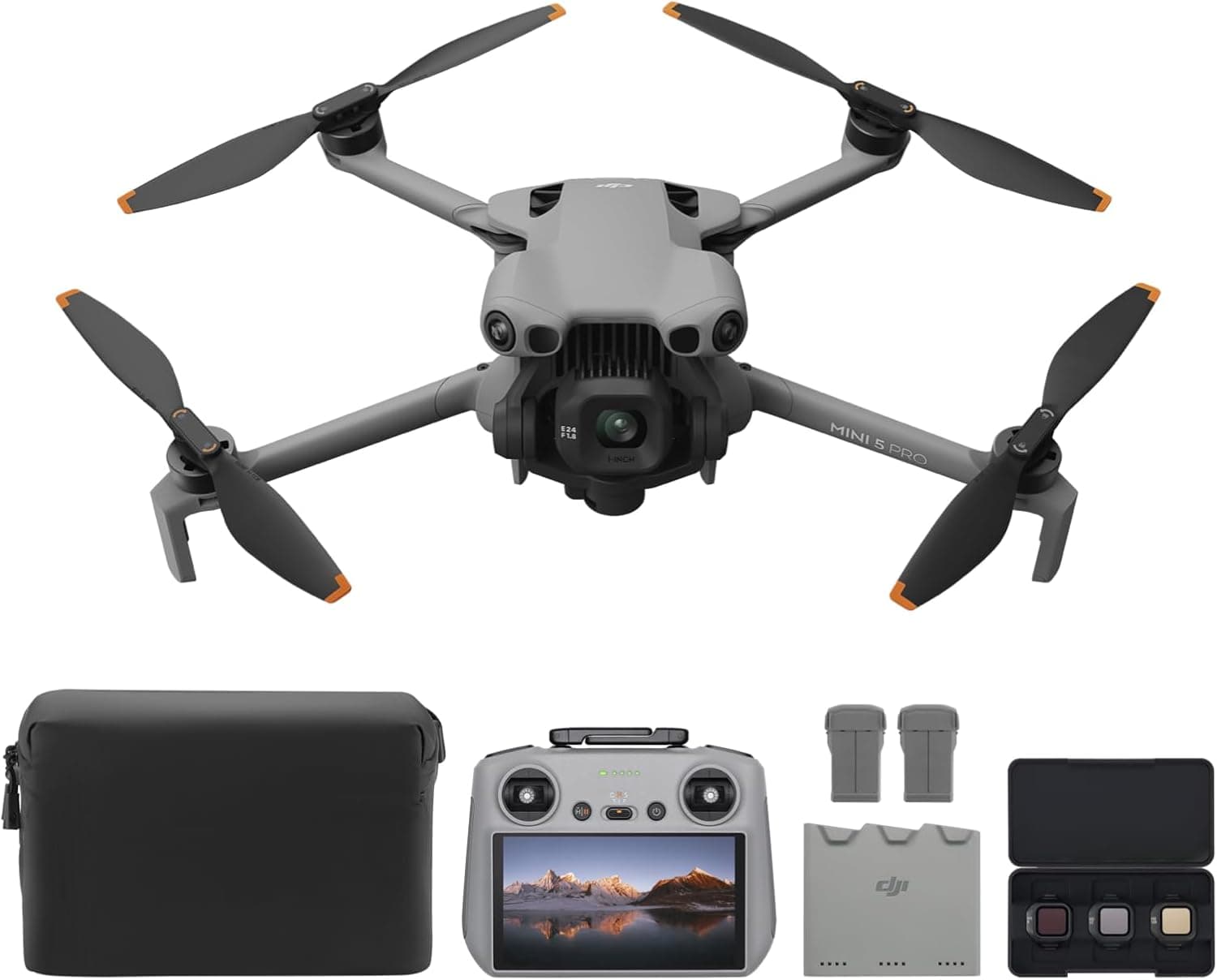
Related: GoPro Hero 13 Black · DJI Osmo Action 5 Pro · DJI Mini 5 Pro
Related: GoPro Hero 13 Black · DJI Osmo Action 5 Pro · DJI Mini 5 Pro
Pros
- First action camera with variable aperture f/2.0-f/4.0 lens for excellent low-light performance
- Square 1/1.1-inch sensor enables single-capture multi-platform shooting for social media creators
- Best-in-class battery life with 112 minutes of 4K 60fps recording per charge
- 50GB built-in storage serves as a reliable backup when you forget your SD card
- 20-meter waterproof rating out of the box without requiring a separate housing
Cons
- New mount system is not backward compatible with Action 5 Pro accessories
- Auto aperture can produce visible exposure shifts in mixed lighting conditions
- No manual aperture lock limits creative control for advanced users
- GoPro's HyperSmooth 6.0 stabilization remains superior for high-vibration sports
Final Verdict
The DJI Osmo Action 6 introduces the first variable aperture lens on an action camera and a square 1/1.1-inch sensor, delivering class-leading low-light performance and a streamlined multi-platform shooting workflow for content creators.