DJI Osmo Action 6 Review: The Most Versatile Action Camera of 2026
DJI's Osmo Action 6 introduces the world's first variable aperture and square 1/1.1-inch sensor to action cameras, delivering exceptional low-light performance and multi-format versatility at $426.
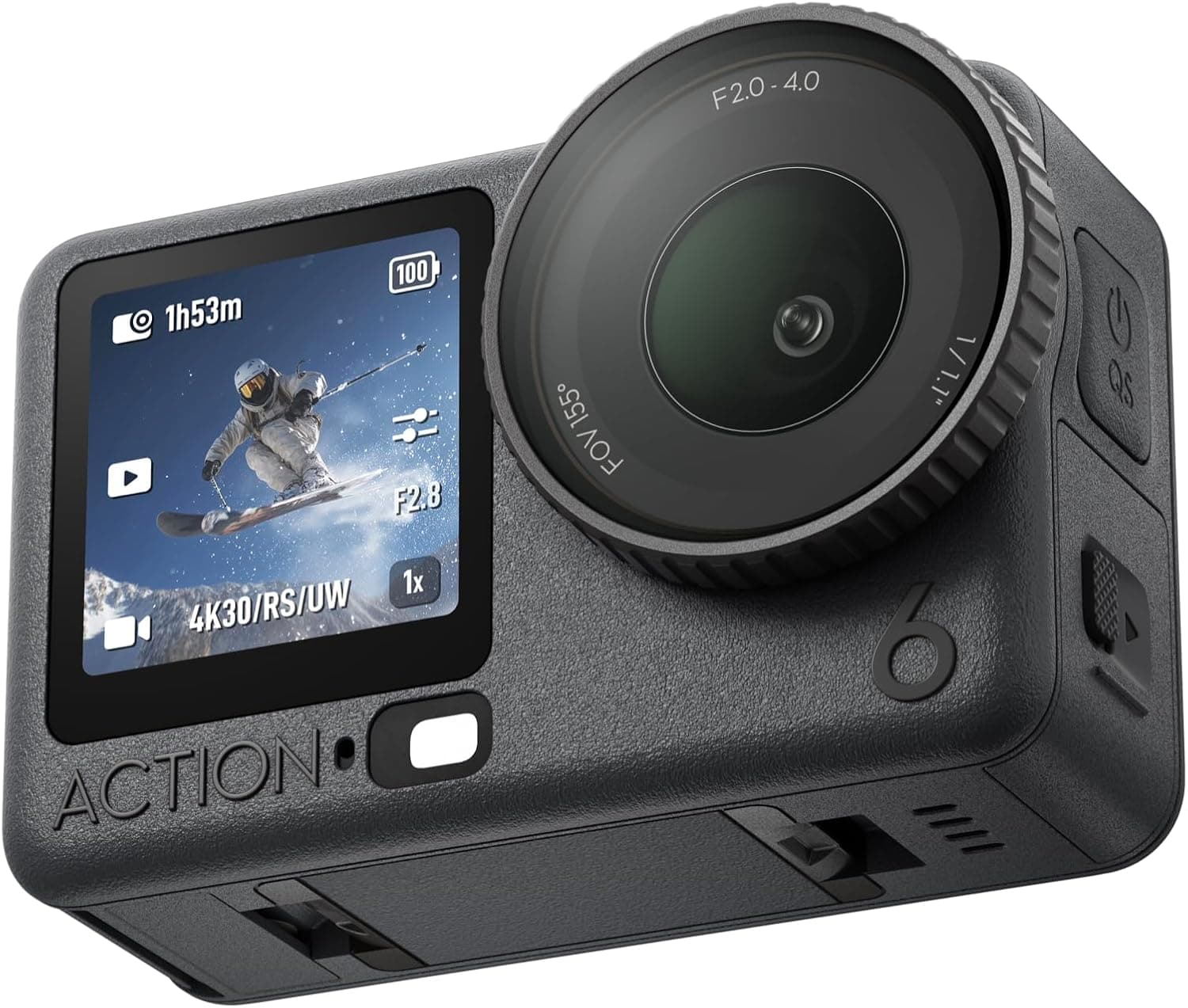
DJI has built its reputation on relentless innovation in the camera drone market, but the company's Osmo Action line has quietly become one of the most compelling alternatives to GoPro's long-standing dominance in the action camera space. The Osmo Action 6 represents DJI's most ambitious attempt yet to challenge the category leader, and it does so not by simply matching specifications but by introducing genuinely new technology that no other action camera currently offers. With a world-first variable aperture, a uniquely square 1/1.1-inch sensor, and an impressive suite of recording features packed into a familiar rugged body, the Action 6 makes a strong case for being the most versatile action camera released in 2026.
The most immediately striking technical achievement of the Osmo Action 6 is its variable aperture, which ranges from f/2.0 to f/4.0. This is the first time any action camera has offered adjustable aperture control, and it fundamentally changes how creators can approach different lighting environments. In bright daylight, stopping down to f/4.0 allows for more natural motion blur at standard shutter speeds, producing footage that looks more cinematic and less like typical high-shutter-speed action camera video. The smaller aperture also creates subtle starburst effects around bright light sources, adding visual interest to nighttime city shots or campfire scenes. When light levels drop, opening up to f/2.0 gathers significantly more light than the fixed f/2.8 apertures found on competing cameras, resulting in cleaner, less noisy footage in dim restaurants, evening trails, or underwater caves where available light is precious.
Paired with this variable aperture is an all-new 1/1.1-inch square sensor, another first for the action camera category. Traditional action cameras use rectangular sensors designed for 16:9 or 4:3 video, which means considerable sensor area goes unused when shooting vertical 9:16 content for social media. The square sensor in the Action 6 captures the full imaging area regardless of orientation, delivering consistent quality whether you are shooting horizontal YouTube videos, vertical TikToks, or square Instagram posts. This design choice demonstrates DJI's clear understanding of how action camera footage is actually consumed in 2026, where multi-platform publishing is standard practice rather than an afterthought.
The larger physical sensor size also brings tangible image quality improvements, particularly in low-light situations where smaller sensors traditionally struggle. Night footage from the Action 6 shows noticeably less noise, better color retention, and improved shadow detail compared to the previous generation and current GoPro models. While no action camera can match the low-light performance of a full-frame mirrorless body, the Action 6 narrows the gap more than any competitor has managed before. The square sensor combined with the fast f/2.0 maximum aperture creates a genuinely usable low-light action camera, which is something creators have been requesting for years.
Recording capabilities on the Action 6 are comprehensive and thoughtfully implemented. The camera captures 8K video at 30 frames per second, 4K at up to 120 frames per second for dramatic slow motion, and 1080p at 240 frames per second for extreme motion analysis. While 8K recording is somewhat limited by storage demands and processing requirements, having it available for select shots provides valuable future-proofing and reframing flexibility. The 4K120p mode is where most serious creators will spend their time, and it delivers crisp, detailed footage with excellent slow-motion playback quality. All major recording modes support 10-bit D-Log M color profile, which provides substantial grading latitude for creators who want maximum control over their final look.
Rocksteady 3.0, DJI's latest iteration of electronic image stabilization, performs brilliantly across a wide range of activities. Walking footage looks almost gimbal-smooth, running and mountain biking remain impressively steady, and even the violent vibrations of motocross riding are tamed into watchable content. The variable aperture contributes to stabilization performance in an unexpected way, because the wider f/2.0 aperture allows faster shutter speeds in low light, which gives the stabilization algorithm sharper individual frames to work with and reduces the pixelation and tearing that can plague digital stabilization in dim conditions. This synergy between hardware features is the kind of thoughtful engineering that separates good products from great ones.
Durability and environmental resilience remain priorities for the Action 6, as they must for any camera intended for adventure use. The body is waterproof to 20 meters without any additional housing, which covers most snorkeling, surfing, and shallow diving scenarios. For deeper dives, DJI offers compatible waterproof housings that extend protection to 60 meters. The camera is also dustproof and shock-resistant, surviving drops and impacts that would destroy conventional cameras. Cold-weather performance has been specifically improved, with DJI claiming up to four hours of continuous recording in freezing conditions. This extended cold-weather battery life addresses one of the most common complaints about action cameras used for winter sports and high-altitude activities.
The built-in 50GB of internal storage is an incredibly convenient feature that eliminates the anxiety of forgetting or losing microSD cards. While most users will still want to use removable storage for extended trips, having substantial built-in capacity means you can start shooting immediately upon unboxing and have a reliable fallback if your primary card fills up or fails in the field. The storage operates at speeds sufficient for all recording modes, including the data-intensive 8K and high frame rate options. For creators who travel frequently or work in remote locations, this internal storage provides genuine peace of mind and workflow simplicity.
Battery life has improved meaningfully over the previous generation, with the standard battery delivering approximately 2.5 hours of continuous 4K30 recording in moderate temperatures. The enhanced cold-weather performance mentioned earlier uses the same battery but with improved power management and thermal design that maintains efficiency as temperatures drop. For full-day adventures, carrying two or three spare batteries is still recommended, but the Action 6 requires fewer battery swaps than most competitors during typical usage. USB-C fast charging can bring a depleted battery back to approximately 80 percent charge in around 30 minutes when using a compatible high-wattage charger.
The dual touchscreen design, with displays on both the front and rear of the camera, continues to be one of DJI's most user-friendly features. The front screen is invaluable for vlogging, interviews, and any scenario where you need to frame yourself while facing the camera. It displays a live preview, recording status, and battery level, providing all essential information at a glance. The rear touchscreen is larger and more responsive than previous generations, with improved brightness for visibility in direct sunlight. The menu system has been refined based on user feedback, with more intuitive navigation and quicker access to frequently changed settings like resolution, frame rate, and stabilization modes.
The physical construction of the Osmo Action 6 maintains the rugged, ready-for-anything aesthetic that defines the action camera category, but with subtle refinements that improve daily usability. The textured grip surfaces provide more secure handling in wet conditions, which is essential for water sports and rainy outdoor shooting. The lens protective cover is easily replaceable without tools, allowing quick swaps when the original becomes scratched during aggressive use. The mounting points use the same universal action camera interface that works with thousands of third-party accessories, from helmet mounts and chest harnesses to suction cup car mounts and handlebar clamps. This compatibility ensures that existing accessory collections remain fully usable, protecting the investments that action sports enthusiasts have made over years of camera upgrades.
Thermal management has received meaningful attention in the Action 6 design, addressing one of the persistent frustrations with compact cameras that record high-resolution video in sealed waterproof bodies. DJI implemented improved heat dissipation pathways that allow longer continuous recording sessions before thermal limitations intervene. In practical testing, the camera recorded over 90 minutes of continuous 4K30 footage in 75-degree ambient conditions before any thermal warnings appeared. Even when operating in direct sunlight during summer hiking trips, the camera maintained stable recording without the unexpected shutdowns that plagued some earlier action camera models. The variable aperture contributes to thermal performance as well, since smaller apertures in bright conditions reduce the sensor's light exposure and associated heat generation.
The file management and media workflow deserves particular praise for creators who produce content at volume. The Action 6 organizes recordings into clearly labeled folders based on date and time, simplifying the process of locating specific clips after extended shooting sessions. The quick capture functionality allows instant recording startup by simply pressing the shutter button, even when the camera appears to be powered off, ensuring that spontaneous moments are never missed while waiting for boot sequences. This responsiveness is crucial for action sports where the decisive moment might last only a few seconds. The camera also supports voice control for hands-free operation when mounted in inaccessible positions or when the user's hands are occupied with equipment.
Post-production workflow considerations reveal DJI's understanding of modern content creation pipelines. The 10-bit D-Log M files grade beautifully in professional software like DaVinci Resolve, Adobe Premiere Pro, and Final Cut Pro. The color science avoids the oversaturated look that some action cameras produce, instead providing a neutral starting point that responds predictably to color correction and creative grading. Creators who shoot with multiple camera types will appreciate how easily Action 6 footage can be matched to clips from mirrorless bodies or cinema cameras, maintaining visual consistency across complex productions. The included LUTs provide quick starting points for creators who want cinematic looks without extensive manual grading.
Audio quality from the built-in microphones is serviceable for ambient sound and casual recording, but serious creators will want to utilize DJI's OsmoAudio system for wireless microphone connectivity. This allows direct connection to DJI Mic transmitters without any cables or adapters, providing clean, professional audio for interviews, narration, and music performance documentation. The wireless audio system integrates seamlessly with the camera's recording workflow, automatically synchronizing audio and video without requiring post-production alignment. For action sports where external audio is impractical, the built-in microphones capture wind noise reasonably well, though a separate windscreen or foam cover improves results substantially in breezy conditions.
The DJI Mimo smartphone app provides a comprehensive companion experience for the Action 6, offering remote control, live preview, automatic editing templates, and quick sharing to social media platforms. The app's AI-powered editing features can automatically identify highlights from long recording sessions and assemble them into shareable clips with music and transitions, which is genuinely useful for creators who need rapid turnaround. Wireless transfer speeds have improved, making it practical to move large files to your phone for immediate posting without requiring a computer intermediary. The app also handles firmware updates smoothly, ensuring the camera receives feature improvements and bug fixes without complicated manual installation processes.
Smartphone integration extends beyond simple file transfer into genuinely useful creative tools. The Story mode within DJI Mimo provides template-based editing that automatically syncs cuts to music beats, applies motion graphics, and creates polished social media content in minutes rather than hours. For creators managing multiple platforms with demanding posting schedules, this automated workflow can mean the difference between maintaining consistent output and burning out under editing workloads. The live streaming functionality allows direct broadcasting to platforms like YouTube, Facebook, and Twitch using either Wi-Fi or mobile data connections, turning the Action 6 into a capable live event camera without any additional hardware.
In practical use across diverse shooting scenarios, the Action 6 consistently impressed with its versatility and reliability. For mountain biking, the combination of Rocksteady 3.0 stabilization and the durable mounting system produced smooth, immersive footage that captured trail speed without the nausea-inducing shake common to lesser cameras. For underwater snorkeling, the native 20-meter waterproofing meant no bulky housing was needed, and the f/2.0 aperture helped compensate for the light loss that occurs beneath the surface. For travel vlogging, the front touchscreen made self-framing effortless, and the D-Log M profile provided enough grading flexibility to match footage with clips from larger mirrorless cameras used for b-roll.
Low-light performance, while improved, still reveals the fundamental limitations of action camera physics. The 1/1.1-inch sensor is large by action camera standards but minuscule compared to Micro Four Thirds or full-frame alternatives. Night footage is usable and significantly better than previous action cameras, yet it cannot compete with dedicated low-light cameras. For creators who regularly shoot in very dim conditions, understanding this limitation is important. The variable aperture helps considerably, but there are physical boundaries that no amount of engineering can overcome with current sensor technology.
The 8K recording capability, while headline-grabbing, comes with practical constraints that limit its everyday usefulness. File sizes are enormous, storage cards fill rapidly, and most editing computers will struggle with smooth 8K playback without proxy workflows or powerful hardware. For most creators, 4K recording remains the sweet spot for quality versus manageability, with 8K reserved for specific shots where reframing or extreme detail is required. DJI's implementation is competent, but buyers should not expect to shoot entire projects in 8K without significant storage and computing infrastructure.
Time-lapse and hyperlapse modes add creative options that extend the Action 6's utility beyond traditional action footage. The camera can capture stunning astrophotography time-lapses using long exposure intervals, city traffic hyperlapses with smooth motion between frames, and scenic day-to-night transitions that showcase the variable aperture's unique advantages. These modes are accessible through the touchscreen menu and produce results that previously required separate dedicated cameras or complex intervalometer setups. For travel creators and landscape enthusiasts, having these capabilities built into an already-packed action camera reduces the equipment burden and simplifies packing for remote shoots.
Comparing the Action 6 to GoPro's current flagship offerings reveals a fascinating competitive landscape. GoPro maintains advantages in maximum resolution, ecosystem maturity, and brand recognition within the action sports community. The Hero series offers slightly higher bitrates in some modes and benefits from years of refinement in user interface and accessory compatibility. However, DJI counters strongly with the variable aperture, larger sensor, superior low-light performance, and more generous built-in storage. For creators who prioritize image quality flexibility and low-light capability over absolute resolution numbers, the Action 6 presents a compelling alternative that may actually better serve their needs.
Price positioning makes the Action 6 particularly competitive. The Essential Combo, which includes the camera, battery, mounting accessories, and charging equipment, typically retails around $426. This undercuts GoPro's comparable bundles while offering features that no competitor currently matches. The value proposition becomes even stronger when considering the included accessories and the absence of required additional purchases just to begin shooting. DJI has clearly learned from market feedback that bundled value and transparent pricing resonate strongly with consumers who are tired of discovering hidden costs after initial purchase.
For existing DJI ecosystem users, the Action 6 integrates beautifully with other company products. The wireless microphone system mentioned earlier works across DJI cameras and drones, creating a unified audio solution. The DJI Mimo app handles footage from multiple DJI devices, simplifying media management for creators who use action cameras, drones, and smartphone gimbos in their productions. This ecosystem coherence is something GoPro cannot match, as that company has no drone or audio products to complement its cameras. Additionally, the Action 6 can function as a handheld gimbal camera when paired with DJI's extension rods and grip accessories, further extending its utility beyond pure action sports applications.
Photo mode capabilities should not be overlooked despite the video-centric marketing focus. The Action 6 captures 50-megapixel still images that are surprisingly detailed and suitable for prints, social media posts, and website use. The variable aperture allows creative control over depth of field in close-up shots, producing pleasant background blur that was previously impossible with fixed-aperture action cameras. Burst shooting at up to 30 frames per second captures fast action moments with selectable output options, ensuring you get the exact frame you want from high-speed sequences. RAW photo capture provides additional editing flexibility for photographers who demand maximum control over their final images.
The Action 6 is not a perfect camera, and acknowledging its limitations is essential for potential buyers. The manual aperture control, while revolutionary for the category, is somewhat limited compared to interchangeable lens cameras. You cannot select arbitrary f-stops between the maximum and minimum, and the transitions between settings are stepped rather than perfectly smooth. Auto exposure in rapidly changing lighting conditions occasionally produces visible brightness shifts that require manual correction or post-production adjustment. The camera body, while compact, is slightly larger than some competitors due to the bigger sensor and internal storage, which may matter for helmet mounting or discrete handheld use.
Looking forward, the Action 6 establishes a new benchmark for what action cameras can offer. By introducing genuinely differentiated hardware rather than simply iterating on established formulas, DJI has forced the entire category to reconsider its trajectory. Competitors will inevitably respond with similar features in future generations, but DJI's first-mover advantage with variable aperture and square sensor design gives them a meaningful head start. For creators making purchase decisions in 2026, the Action 6 represents the most technologically advanced and versatile option currently available.
The DJI Osmo Action 6 succeeds because it understands what modern creators actually need from an action camera. It is not just about surviving extreme conditions anymore, though it certainly does that admirably. It is about delivering footage quality that integrates seamlessly into professional productions, supports multi-platform publishing requirements, and performs reliably across lighting conditions that would have crippled previous generations. DJI has built an action camera that respects the intelligence and ambition of its users, and that respect is reflected in every engineering decision and feature implementation throughout the device.
For adventure sports enthusiasts, travel content creators, documentary filmmakers, and social media professionals, the Osmo Action 6 deserves serious consideration as either a primary recording device or a complementary tool to larger camera systems. Its unique combination of variable aperture, large square sensor, robust stabilization, and thoughtful workflow integration creates a package that is genuinely difficult to match at any price point. While GoPro remains a formidable competitor with its own strengths, DJI has proven that innovation and user-focused design can disrupt even the most established market categories.
Pros
- World's first variable aperture in an action camera
- 1/1.1-inch square sensor excels in low light
- Rocksteady 3.0 stabilization performs brilliantly
- 50GB built-in storage is incredibly convenient
- 4-hour battery life in cold conditions
Cons
- 8K resolution limited compared to GoPro's offerings
- Manual aperture control is somewhat limited
- Auto exposure can struggle in rapidly changing light
Final Verdict
DJI's Osmo Action 6 introduces the world's first variable aperture and square 1/1.1-inch sensor to action cameras, delivering exceptional low-light performance and multi-format versatility at $426.