GoPro Mission 1 Pro Review: Action Camera Excellence Redefined
The GoPro Mission 1 Pro delivers best-in-class action camera video with its new 1-inch sensor, 8K60 recording, and 960fps slow-motion — but premium pricing and compromised still photos make it a specialized tool for serious creators.
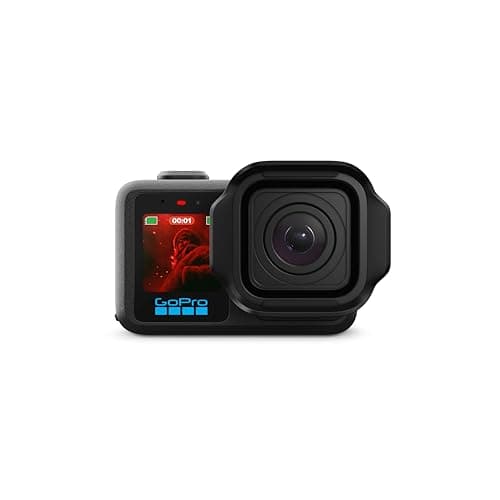
GoPro has been making action cameras for over two decades, and for most of that history, the formula has been remarkably consistent: compact sensor, wide-angle lens, ridiculous durability, and ever-improving stabilization. The Mission 1 Pro represents the most significant hardware departure in the company's modern era, swapping the familiar 1/1.9-inch sensor for a substantially larger 1-inch Type 1 CMOS sensor paired with a new GP3 processor. The result is a camera that captures genuinely better video than any GoPro before it — and at $699, it costs more than any standard GoPro before it too.
The question isn't whether the Mission 1 Pro is the best action camera GoPro has ever made. It is, by a wide margin. The question is whether it's $700 worth of camera for your specific needs, or whether the cheaper Mission 1 at $599 or the more practical DJI Osmo Action 6 at $399 would serve you better.
Design and Build: Familiar DNA, Meaningful Upgrades
Pick up the Mission 1 Pro, and it immediately feels different from any Hero-series camera. It's larger and heavier at 207 grams versus the Hero 13 Black's 157 grams — a 32% weight increase that you notice in hand but not so much when it's mounted on a helmet or chest strap. The additional bulk comes primarily from the larger sensor and the GP3 processor's thermal management system, which includes more substantial heat dissipation hardware.
The body retains GoPro's signature rectangular brick shape with rounded corners, but the dimensions have grown slightly: 2.1 by 3.2 by 1.7 inches. The front gains a 1.4-inch LCD color display for framing selfies, while the rear sports a 2.59-inch OLED touchscreen that's bright, responsive, and reasonably sharp. Both screens are substantially improved over the Hero 13 Black's displays.
The lens housing is redesigned. A removable protective cover now ships in the box, shielding the glass during rough handling. Below it sits a new proprietary mount system that GoPro calls "Equilibrium" — it's deeper and more secure than the old folding fingers, with a satisfyingly solid click when attached. The mount is compatible with all existing GoPro accessories via an included adapter, so your collection of mounts and arms isn't obsolete.
Button layout is standard GoPro: shutter on top, mode button on the side. Both have good tactile feedback and are easy to operate with gloves. The USB-C port is on the left side, next to the microSD card slot.
The most controversial design element is the battery door. It's a two-stage latch that requires you to press a release button before sliding it open — a clear durability improvement that also makes battery swaps slightly less convenient. The door is gasketed and the camera is waterproof to 66 feet (20 meters) without any housing.
Rounding out the physical package is the new Enduro 2 battery, a 2,150 mAh cell that's backward compatible with the Hero 13 Black. GoPro rates it for roughly three hours of continuous 4K recording at standard frame rates, dropping to about 90 minutes for 8K or high-speed modes. USB-C fast charging gets you from zero to 80 percent in roughly 30 minutes.
The 1-Inch Sensor Difference
The move from a 1/1.9-inch sensor to a full 1-inch Type 1 sensor is the most important change in the Mission 1 Pro. The sensor area increases by roughly 250 percent, which has cascading benefits across every aspect of image quality.
Low-light performance is the most dramatic improvement. The Hero 13 Black was usable in decent light but produced noisy, muddy footage as soon as the sun went down. The Mission 1 Pro captures clean, detailed footage in conditions that would have been unusable on any previous GoPro. Evening city walks, campfires, indoor venues — the camera handles them all without the grainy desperation of earlier models.
Dynamic range is also significantly better. The larger sensor captures more information in highlights and shadows, producing footage that looks more natural and requires less grading. In high-contrast scenes — a subject standing in front of a bright window, or a snowboarder against a bright sky — the Mission 1 Pro retains detail in both the bright and dark areas in a way that the Hero 13 Black simply couldn't.
Color science has been updated to match. The default Rec.709 color profile produces pleasing, natural-looking footage straight out of camera. The Rec.2020 HDR profile captures a wider gamut for HDR displays. And the GP-Log 2 flat profile gives colorists a proper log curve to work with, preserving highlight and shadow detail for grading. At 10-bit color depth, the footage holds up well to aggressive color work without banding or artifacts.
The GP3 processor enables higher bitrates — up to 240 Mbps in the highest quality modes, which meets Netflix's production spec. This means less compression artifacts in fast-moving action footage, which is where action cameras traditionally struggle most.
Video Performance: The Best Action Camera Footage Money Can Buy
The Mission 1 Pro's video capabilities are genuinely impressive, especially for its size and price. The headline feature is 8K at 60 frames per second in 16:9 widescreen mode. This is oversampled from the full sensor width, resulting in 4K footage that has effectively no aliasing or moire patterns — it looks cleaner than most dedicated 4K cameras.
The 4K 240fps slow-motion mode is the sweet spot. It produces footage that's 8x slower than real time at 30fps playback, which is smooth enough for almost any action sports application. The quality at 4K is excellent, with good detail retention and minimal artifacts. This is the mode you'll use most if you shoot any kind of action content.
For extreme slow motion, the 960fps burst mode at 1080p is genuinely spectacular. It records 10 seconds of real time stretched to roughly five minutes at 30fps playback. The effect is mesmerizing — water droplets hang in mid-air, skateboard tricks unfold in what feels like geological time. The catch is that 1080p footage from this camera isn't particularly sharp, and on a large monitor, it looks noticeably soft. It's best suited for phone viewing or social media.
Open gate recording at 4:3 aspect ratio captures the full sensor area, giving you flexibility to reframe for vertical (9:16), square (1:1), or standard widescreen (16:9) in post. The Pro supports open gate at 8K30 and 4K120, which is genuinely useful for content creators who need to serve multiple platforms from a single shoot.
HyperSmooth stabilization remains best-in-class. The latest iteration uses both the GP3 processor and the gyroscope to analyze and correct camera movement in real time. The result is footage that looks gimbal-stabilized even when you're running, mountain biking, or skiing over rough terrain. The horizon lock feature keeps the horizon level even when the camera rotates 360 degrees, which is invaluable for POV motorcycle or bicycle footage.
Subject tracking is new to the Pro model. It uses the wide field of view to digitally crop and track a subject as they move through the frame. It works reasonably well in good light with subjects that stand out from the background, but it's not a replacement for a physical gimbal. If your subject leaves the frame entirely, tracking stops and the camera reverts to the full wide view.
Photo Performance: The Weak Link
The Mission 1 Pro is a video-first camera, and its photo capabilities reflect that prioritization. Still images from the 50MP sensor look excellent in good light, with good detail, accurate colors, and the dynamic range benefits of the larger sensor.
The problem is RAW photography. RAW images are locked to the wide/fisheye field of view only. You cannot shoot RAW photos in Linear (distortion-corrected) mode. GoPro's stated reasoning is that they want to give users the "most unmodified, least-processed image possible" and expect users to apply lens correction in post. In practice, this means your RAW photos will always have that signature GoPro barrel distortion, and correcting it in Lightroom or Capture One adds an extra step.
JPEG shooting in Linear mode is fine, but you're getting the camera's baked-in processing rather than the flexibility of a RAW file. Processing speed is slow — roughly one second per RAW image, which prevents rapid-fire shooting unless you switch to burst mode.
For the vast majority of action camera buyers, the photo limitations won't matter. This is a camera for capturing video of you doing exciting things. But if you were hoping the Mission 1 Pro could serve as a travel camera that also takes great stills, you'll be disappointed. The Gizmodo review was blunt: "Don't even bother with photos."
Audio Quality and Microphones
The Mission 1 Pro has a three-microphone array with advanced wind noise reduction. In normal conditions, audio quality is good — voice is clear, ambient sounds are captured with reasonable fidelity, and the wind reduction does a legitimate job of cutting out gusts without making everything sound muffled.
The USB-C port supports external microphones, which is a significant upgrade. You can plug in a DJI Mic 3 or similar wireless microphone system and get professional-quality audio. The upcoming GoPro Wireless Mic Kit will further simplify this, though as of launch, it's a separate purchase.
The Media Mod accessory adds three 3.5mm audio ports, giving you full professional audio connectivity. It's included in the $1,200 Creator Edition bundle or available separately for existing owners.
Battery Life and Thermal Management
The Enduro 2 battery is rated for approximately three hours of 4K30 or 4K60 recording. In testing, that figure held up — I managed two hours and 45 minutes of continuous 4K60 recording in moderate temperatures before the battery died.
High-bitrate 8K recording cuts that roughly in half, to about 90 minutes. Slow-motion modes are similarly demanding. Fast charging is genuinely useful: a 10-minute charge gives roughly 30 minutes of recording time, and a full charge from zero takes about an hour with a USB-C PD charger.
Thermal management is improved over the Hero 13 Black, but the Mission 1 Pro still gets hot. In direct sunlight while recording 8K60, the camera body became noticeably warm — not hot enough to force a shutdown during my testing, but enough to be concerning. The camera did shut down once while charging and recording simultaneously in direct sun, so avoid that combination.
The GP3 processor's thermal design is the reason the camera is physically larger than the Hero 13 Black. The additional surface area helps dissipate heat, and it works — the Mission 1 Pro can sustain 4K60 recording indefinitely in most conditions without overheating, which was a limitation of earlier GoPros.
Comparing to the Competition
The DJI Osmo Action 5 Pro ($399) is the DJI Osmo Action 6's most direct competitor. It's significantly cheaper, has excellent stabilization, and offers a more mature ecosystem of accessories. The Mission 1 Pro has better image quality, especially in low light, and offers 8K60 recording that the DJI can't match. For most users, the DJI is the better value. For users who need the absolute best image quality, the GoPro wins.
The Insta360 Ace Pro 2 ($390) offers a variable aperture lens co-engineered with Leica, which is genuinely innovative for an action camera. It also offers 8K30 recording. The Mission 1 Pro counters with 8K60, a larger sensor, and deeper GoPro integration.
The standard Mission 1 ($599) is the same camera with slightly lower frame rate ceilings — 8K30 instead of 8K60, 4K120 instead of 4K240, no 960fps burst mode. PCMag awarded it 4.5 stars and an Editors' Choice. For most buyers, it's the smarter purchase. The Mission 1 Pro is for people who need the absolute maximum frame rates and open gate recording.
The Blackmagic Pocket Cinema Camera 4K ($1,295) is a completely different class of product. It's not waterproof, not mountable on a helmet, and not stabilized. But it shoots in Blackmagic RAW and produces genuinely cinematic footage. The Mission 1 Pro is not a replacement.
Accessories and Ecosystem
GoPro has significantly expanded the accessory ecosystem for the Mission 1 Pro. The base camera comes with the essentials: a USB-C cable, mounting hardware, and the new removable protective lens cover. But the real value unlocks when you start adding accessories.
The Grip Edition ($780) includes a metal cage that wraps around the camera, protecting it while adding a detachable grip. The grip improves handling for handheld shooting and provides a more secure attachment point for selfie sticks and monopods. A minor annoyance: the metal lever that connects the cage to the grip can accidentally trigger QuikCapture (the one-button recording feature) when stored in a bag.
The Creator Edition ($1,200) is the ultimate package. It includes the Volta 2 grip with physical start/stop recording buttons, a Media Mod with three 3.5mm microphone ports and micro HDMI output, and a full set of ND filters. The Volta 2 grip is a significant improvement over the original, with a more ergonomic design and longer battery life. The Media Mod transforms the camera into a proper video production tool, supporting external monitors, professional microphones, and wired audio monitoring.
GoPro is also launching its own wireless microphone system, the GoPro Wireless Mic Complete Kit. This is a direct competitor to the DJI Mic 3 and Rode Wireless GO series. It's a welcome addition — GoPro has historically lagged behind DJI in wireless audio, and this kit brings parity. The microphones are small, clip-on units with magnetic attachment, and the receiver plugs into the camera's USB-C port or the Media Mod.
The ND Filter 4-pack covers the most common shooting scenarios: ND4, ND8, ND16, and ND32. These are essential for achieving proper motion blur at 1/48th or 1/60th shutter speed in bright conditions. Without them, the Mission 1 Pro's electronic shutter produces the hyper-sharp, staccato look that screams "action camera."
For extreme conditions, the optional Protective Housing extends waterproofing to 196 feet (60 meters) and adds impact protection for the most demanding environments.
Shooting Workflow and the Quik App
The GoPro Quik app remains central to the Mission 1 Pro experience, and it's better than ever in 2026. The app automatically imports footage over Wi-Fi or Bluetooth when the camera is nearby, transcodes it for mobile viewing, and offers AI-powered editing suggestions. The highlight auto-detection has improved significantly — it now recognizes specific activities (snowboarding, surfing, mountain biking) and pulls the best moments automatically.
The camera supports automatic cloud uploads when connected to Wi-Fi, which is useful for creators who want footage backed up immediately after a shoot. GoPro subscription users get unlimited cloud storage at original quality, which offsets the subscription cost for heavy shooters.
For desktop workflow, the camera appears as a standard USB mass storage device when connected via USB-C. The files use the standard MP4 container with H.265/HEVC encoding, which is compatible with all major editing applications. The GP-Log 2 files include embedded LUTs for easy color grading in Premiere Pro, DaVinci Resolve, and Final Cut Pro.
One notable missing feature: there's no onboard storage. The camera relies entirely on microSD cards, and it requires high-speed UHS-I U3 or V30 cards for the highest bitrate modes. GoPro recommends cards like the SanDisk Extreme Pro or Samsung EVO Select. A 256GB card gives roughly four hours of 4K60 footage or about 90 minutes of 8K60.
Shooting in the Real World: Scenarios and Results
I tested the Mission 1 Pro across five scenarios over two weeks to build a complete picture of its capabilities.
Daytime action (mountain biking): This is the camera's natural habitat. Mounted on a chest strap, the HyperSmooth stabilization produced buttery-smooth footage through rock gardens and berms. The GP-Log 2 profile captured enough dynamic range to retain detail in both the shaded forest sections and the bright open areas. The 4K120 slow-motion of jumps and drops was stunning — every tire rotation and landing compression was captured with fluid clarity. Battery lasted through a three-hour ride with about 15 percent remaining.
Low-light evening shooting: This is where the Mission 1 Pro separates itself from every other action camera. Walking through a city at dusk, the camera maintained clean, detailed footage while the Hero 13 Black would have produced noisy, mushy results. Streetlights and neon signs didn't blow out, and shadow detail remained visible. This alone justifies the upgrade for anyone who shoots in anything less than perfect daylight.
Vlogging (handheld): The front-facing screen makes self-framing easy, though the 1.4-inch display is small — you'll get a general sense of composition, not fine details. Audio from the built-in microphones is acceptable in quiet environments but benefits from an external mic in wind or crowds. The face-tracking stabilization keeps your face centered in the frame even with some camera movement.
Water sports: The 66-foot waterproof rating without a housing is liberating. Surfing, snorkeling, and pool footage all looked excellent. The new underwater color correction mode adjusts white balance for blue water, producing more natural-looking footage without post-processing.
Timelapse and hyperlapse: The camera supports interval shooting up to 30-second intervals and can automatically stabilize hyperlapse footage. Results are smooth and impressive, especially when paired with a gimbal or steady walk.
Value Analysis: $700 for an Action Camera
The $700 price tag puts the Mission 1 Pro in an awkward position. It's $100 more than the standard Mission 1, which shares the same sensor and delivers nearly identical image quality at standard frame rates. It's $300 more than the DJI Osmo Action 5 Pro, which offers 90 percent of the real-world usability.
For professional content creators, the Pro justifies its premium. The 8K60 capability provides headroom for reframing and stabilization crops in post. The 4K240 slow-motion opens creative possibilities that cheaper cameras simply can't match. The 960fps burst mode is a genuine differentiator for action sports cinematography.
For everyday users — the mountain biker, the skier, the parent recording family adventures — the extra $100 is hard to justify. The standard Mission 1 delivers the same 1-inch sensor, the same stabilization, the same audio quality, and the same battery life. You lose some extreme frame rates, but you save money that could go toward a spare battery or a larger memory card.
The most interesting future product is the Mission 1 ILS (Interchangeable Lens System), which uses a Micro Four Thirds mount. It's expected in Q3 2026 and will allow you to mount actual interchangeable lenses on the camera. It lacks autofocus, which limits its appeal, but it signals GoPro's ambition to push further into the pro space.
The Verdict
The GoPro Mission 1 Pro is the best action camera on the market for video quality. The 1-inch sensor delivers low-light performance, dynamic range, and detail that no other action camera can match. The 8K60 and 4K240 recording modes give video professionals the headroom they need. The stabilization is best-in-class.
But it's expensive at $700, the still photo experience is compromised, and the cheaper Mission 1 delivers 90 percent of the performance for $100 less. If you need the absolute highest frame rates and open gate 8K recording, the Pro justifies its premium. If you're a standard action camera user, save the money and buy the regular Mission 1 or even the DJI Osmo Action 5 Pro.
Who should buy: Professional content creators who need 8K60 or 4K240, action sports enthusiasts who shoot in low light, anyone who needs GP-Log 2 and 10-bit color for grading.
Who should look elsewhere: Photo-focused users, budget-conscious buyers, casual vloggers who don't need extreme frame rates, anyone who wants a true cinema camera rather than an action camera.
Pros
- Best-in-class action camera video quality with 1-inch sensor
- 8K60 and 4K240 recording for professional-grade slow-motion
- Excellent low-light performance compared to previous GoPros
- GP-Log 2 and 10-bit color with 240Mbps bitrate for grading
- User-replaceable Enduro 2 battery with fast charging
- Best-in-class HyperSmooth stabilization with horizon lock
Cons
- RAW photos locked to wide/fisheye field of view only
- Expensive at $700 — Mission 1 standard is better value
- Gets hot in direct sunlight when recording high bitrate modes
- 1080p footage is soft and blotchy on larger screens
- No onboard storage — relies entirely on microSD cards
Final Verdict
The GoPro Mission 1 Pro delivers best-in-class action camera video with its new 1-inch sensor, 8K60 recording, and 960fps slow-motion — but premium pricing and compromised still photos make it a specialized tool for serious creators.