The JBL Flip 7 Proves That Four Years of Waiting Was Worth It for Portable Audio
The JBL Flip 7 delivers meaningful upgrades in durability, connectivity, and sound processing that make it the best Flip yet, though the lack of PartyBoost backwards compatibility and a built-in microphone hold it back from perfection.
JBL's Flip series has been the gateway drug of portable Bluetooth speakers for over a decade. The original Flip launched in 2012, and since then, each generation has refined the formula: cylindrical design, bold sound from a compact package, and enough durability to survive beach trips, pool parties, and hiking adventures. The JBL Flip 7 arrives four years after the Flip 6 — an unusually long gap for JBL — and it brings meaningful upgrades in durability, connectivity, and sound processing that make it the best Flip yet, even if the overall design philosophy remains comfortably familiar.
What Has Changed and What Has Not
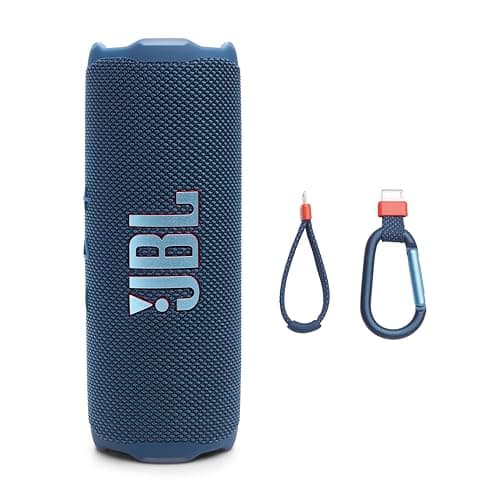
At first glance, you might struggle to tell the Flip 7 apart from its predecessor. The familiar cylindrical form factor is back, complete with the exposed passive bass radiator on each end and the prominent JBL logo across the front grille. The available colors — Blue, Black, Camo, Red, Teal, White, and Sand — offer plenty of personality, and the overall dimensions remain virtually identical to the Flip 6. JBL has wisely chosen not to mess with a design that has sold millions of units worldwide.
But look closer, and the differences start to emerge. The most obvious physical change is the new PushLock system, which replaces the basic fabric loop of previous generations with a built-in interface that accepts a carabiner or carrying strap. JBL includes both in the box — a welcome touch that saves you from hunting for accessories that actually fit. The four rubber bumpers on the ends of the Flip 7 are also slightly longer and thicker than those on the Flip 6, reflecting the new drop-proof certification.
The control layout has been refreshed as well. The buttons now feature a slightly different arrangement, with a dedicated Auracast button replacing the old PartyBoost button. This is more than a cosmetic change — it signals a fundamental shift in how JBL approaches multi-speaker connectivity, which I will cover in detail below.
Durability: From Water-Resistant to Indestructible
The single most significant upgrade on the Flip 7 is its durability rating. JBL has bumped the IP rating from IP67 on the Flip 6 to IP68 on the Flip 7, and the practical implications are substantial. IP68 means the speaker is fully dust-tight and can be submerged in water up to 1.5 meters deep for 30 minutes. That is a meaningful improvement over the Flip 6's 1-meter submersion rating, and it means the Flip 7 can genuinely survive being dropped in a pool or left out in a heavy rainstorm without any concern.
But the durability story does not end there. JBL has also given the Flip 7 a drop-proof certification, claiming it can survive a 1-meter fall onto concrete without damage. In practice, I dropped the Flip 7 from waist height onto a tiled patio floor (unintentionally, I should add), and it bounced once and kept playing without missing a beat. The reinforced rubber bumpers on the ends appear to do their job effectively, absorbing impact energy that would have otherwise transferred through the speaker body to the internal components.
For anyone who has ever watched their Bluetooth speaker tumble off a poolside table or slip from a backpack clip, this drop-proof rating is not marketing fluff — it is genuine peace of mind. Combined with the IP68 rating, the Flip 7 is one of the most rugged portable speakers you can buy at any price point, and certainly the most durable in its class. This alone justifies the price premium over the Flip 6 for anyone who uses their speaker primarily outdoors.
Connectivity: Bluetooth 5.4 and Auracast
The JBL Flip 7 upgrades from Bluetooth 5.1 to Bluetooth 5.4, and the improvement in connection stability is noticeable. Range feels solid out to the typical 30-foot boundary, and I experienced fewer momentary dropouts than with the Flip 6 when walking between rooms. Bluetooth 5.4 also brings lower latency for video playback, though the difference is subtle when watching YouTube or Netflix on a phone.
The bigger connectivity story is Auracast. JBL has replaced its proprietary PartyBoost technology with the industry-standard Auracast broadcast protocol, and this is both a blessing and a complication. Auracast lets you broadcast audio from your phone to an unlimited number of compatible speakers simultaneously, and it enables easy pairing with other Auracast-enabled JBL speakers like the Charge 6, Go 4, and Clip 5.
The blessing: Auracast is an open standard, which means it will work with any Auracast-compatible speaker from any brand in the future. It is more future-proof than JBL's closed ecosystem, and it represents the direction the entire Bluetooth audio industry is heading. When more manufacturers adopt Auracast, your Flip 7 will be able to join multi-speaker setups with non-JBL products — something that was impossible under the old PartyBoost regime.
The complication: Auracast is not backwards compatible with PartyBoost. If you already own a Flip 6, Charge 5, or any older JBL speaker, you cannot pair it with the Flip 7. This is a significant limitation that JBL does not advertise prominently, and it means the Flip 7 lives in a disconnected ecosystem from all previous JBL speakers. Anyone who has invested in multiple JBL speakers over the years will need to either stay with the Flip 6 or upgrade their entire collection.
In practice, the Auracast pairing process is straightforward. Press the dedicated button on the Flip 7, then open your phone's Bluetooth settings and find the Auracast broadcast. You can also use the JBL Portable app to manage multi-speaker connections, switch between Party mode (same audio on all speakers) and Stereo mode (left/right channel split between two Flip 7s), and adjust the EQ.
One important note: Stereo pairing requires two identical Flip 7 speakers. You cannot create a stereo pair between a Flip 7 and a Charge 6, even though both support Auracast. You can, however, play the same audio across both simultaneously in Party mode, which is adequate for most outdoor gathering scenarios.
USB-C Audio: Lossless Listening From a Portable Speaker
Here is a feature that genuinely surprised me: the Flip 7 supports lossless audio playback via USB-C. By holding down the play/pause button while connecting the included USB-C cable, you can bypass Bluetooth compression entirely and play high-resolution audio from a compatible source. Apple Music Lossless and Tidal HiFi tracks come through with noticeably better clarity and dynamic range when wired versus Bluetooth.
Now, let me be realistic about the magnitude of this improvement. The Flip 7 is a compact, mono, portable speaker with a 45 x 80mm woofer and a 16mm tweeter. It is never going to reveal the full depth of a lossless audio stream the way a pair of premium headphones or a proper home audio system would. The physical limitations of the small driver and single-channel output mean that the difference between lossless AAC over Bluetooth and lossless over USB-C is subtle rather than transformational.
But there is an audible difference, particularly in the high frequencies and transient response. Cymbal crashes have slightly more shimmer and decay. Vocal consonants — the sibilance on S and T sounds — are cleaner and more defined. Bass notes start and stop with a fraction more precision. If you are using the Flip 7 as a desktop speaker in your home office or in a fixed location where USB-C connection is practical, it is a worthwhile upgrade. On the go, Bluetooth remains the primary use case, and the Flip 7 sounds perfectly good over SBC and AAC codecs.
Sound Quality: Better, But Not Radically Different
The Flip 7 uses the same driver configuration as the Flip 6: a 45 x 80mm racetrack-shaped woofer paired with a 16mm tweeter. The physical hardware has not changed, but JBL has introduced a new digital signal processing feature called AI Sound Boost that uses upgraded algorithms to prevent distortion when the drivers are pushed to their maximum output.
In practice, AI Sound Boost delivers a subtle but real improvement. The Flip 7 can play louder before distortion kicks in, and the overall sound signature is slightly cleaner than the Flip 6 at higher volumes. Bass hits have a fraction more definition, and the transition between the woofer and tweeter feels more seamless. These are incremental improvements rather than a generational leap, but they are noticeable in direct A/B comparison.
The Flip 7 produces a fun, energetic sound signature that JBL is known for. Bass is punchy and present without overwhelming the mids, and the overall tuning is slightly V-shaped — boosted in the lows and highs with a mild dip in the upper mids. This is a sound profile designed for outdoor gatherings, beach days, and casual listening rather than critical analysis. Pop, hip-hop, and electronic music sound lively and engaging through the Flip 7. Jazz and classical fare less well, with the slight midrange recession robbing acoustic instruments of some of their natural warmth and body.
The seven-band EQ in the JBL Portable app gives you the tools to tailor the sound to your preference. If you find the stock tuning too bass-heavy, a gentle reduction in the lowest two bands while bumping the midrange bands produces a more balanced presentation that works well for podcasts and acoustic music. The EQ adjustments are saved to the speaker itself, so your custom profile persists even when you switch source devices.
Compared to the JBL Charge 6, the Flip 7 sounds noticeably smaller. The Charge 6 has a larger woofer (53 x 93mm) that produces deeper, more impactful bass, and its bigger enclosure gives the sound more room to breathe. The Flip 7 holds its own in the mids and highs, but if bass is your primary concern and portability is secondary, the Charge 6 is the better sonic investment for just $50 more.
Compared to the Bose SoundLink Flex, the Flip 7 sounds more fun and energetic, while the Bose offers a more balanced, neutral sound profile. Personal preference dictates which approach you prefer, but the Flip 7's IP68 rating and drop-proof durability give it a significant practical advantage over the Bose for outdoor use.
Compared to the Anker Soundcore Boom 2 at $129.99, the Flip 7 offers superior build quality, better durability (IP68 vs IPX7), and the Auracast multi-speaker ecosystem. The Boom 2 counters with an integrated USB-A charging port that lets it double as a power bank, LED lighting effects, and slightly louder maximum volume. Sound quality is comparable between the two, with each having a slightly different tonal character.
The JBL Portable App: Finally, a Proper EQ
The JBL Portable app has received a meaningful upgrade alongside the Flip 7. The most notable improvement is the switch from a three-band EQ (bass, mid, treble) to a full seven-band equalizer. This gives you much finer control over the sound signature, and the presets JBL provides are actually useful — there is a Bass Boost for outdoor gatherings, a Vocal Boost for podcasts and audiobooks, and a Flat mode for those who prefer an uncolored presentation.
The app also adds a PlayTime Boost feature that extends battery life from the standard 14 hours to a claimed 16 hours. It works by reducing bass output and shifting the sound emphasis toward mids and treble, which draws less power from the battery. The tradeoff is obvious — the Flip 7 sounds noticeably thinner in this mode, and most listeners will prefer the standard tuning. But if you are on a camping trip and need those extra two hours, the option is there.
Other app features include firmware updates, battery level monitoring, and multi-speaker pairing management. The interface is clean and intuitive, and I did not encounter any connection dropouts or bugs during testing. JBL has also added four new EQ presets alongside the user-customizable seven-band options, giving you a total of 11 sound profiles to choose from if you count your custom settings.
Battery Life: Adequate for a Day Out
JBL rates the Flip 7 at 14 hours of playback on a single charge, extending to 16 hours with PlayTime Boost enabled. The SoundGuys lab test recorded 6 hours and 16 minutes at 80dB from one meter — a more demanding test that pushes the speaker at significantly higher volume than typical casual listening.
In real-world use, I got between 10 and 12 hours at moderate volume (around 60-70% on my phone), which aligns with JBL's claims for typical listening conditions and is adequate for a full day at the beach or an afternoon barbecue. The Flip 7 charges via USB-C in approximately 2.5 hours, which is reasonably fast for a speaker of this capacity.
There is no quick-charge feature, meaning you cannot get an hour of playback from 15 minutes of charging like you can with some competitors. This is a minor limitation, but it means you need to plan ahead for longer outings. The included USB-C cable is adequate but unremarkable — JBL does not include a wall charger, which is standard for the category but still feels cheap at this price.
One practical note: you can use the Flip 7 while it is charging, which is useful for extended sessions where you need the music to keep going. The speaker switches to wired power seamlessly without interrupting playback.
PushLock System: A Small Change With Big Practical Impact
The PushLock system deserves more attention than it typically receives in speaker reviews. Previous Flip generations used a simple fabric loop at one end — functional but limited. You could thread a carabiner through it or hang it from a hook, but the loop was not designed for quick attachment and removal.
The PushLock system integrates a built-in connector point directly into the speaker body, and JBL includes both a carabiner and a carrying strap in the box. The carabiner clips onto belt loops, backpack straps, and tent poles with a satisfying click. The carrying strap threads through the PushLock mount and provides a comfortable grip for walking around.
In practice, the PushLock system makes the Flip 7 significantly more portable than its predecessor. I clipped it to my backpack for a hiking trip, hung it from a shower caddy at the gym, and attached it to a beach umbrella pole without ever worrying about the connection failing. The carabiner feels sturdy enough for regular use, though it is clearly designed for casual carrying rather than extreme sports.
The interchangeability of the PushLock system also opens the door to future accessory options. JBL has announced plans for additional attachments including suction cup mounts for windows and handlebar mounts for bicycles. Third-party accessories are likely to follow, which could make the Flip 7 the centerpiece of a versatile portable audio ecosystem.
What Is Missing
No product is perfect, and the Flip 7 has its share of omissions. There is no built-in microphone, which means you cannot take phone calls or use voice assistants through the speaker. This is a surprising exclusion given that many competitors at this price point offer call functionality, and it limits the Flip 7's utility as an all-in-one portable audio device. If you need a speaker that doubles as a conference call device, the JBL Charge 6 includes a microphone and might be the better choice.
There is also no AUX input. Audio input is limited to Bluetooth and USB-C, which means you cannot connect older devices with 3.5mm headphone jacks without a separate adapter. The USB-C audio feature partially compensates for this loss, but it requires a USB-C cable between your phone and the speaker, which undermines the wireless portability that makes the Flip series appealing.
The lack of backwards compatibility with PartyBoost is a genuine limitation. If you have built up a collection of JBL speakers over the years — a Flip 6 here, a Charge 5 there — you cannot integrate the Flip 7 into that ecosystem. Auracast is the smarter long-term standard, but JBL's transition strategy leaves existing owners in an awkward position. You either keep your old speakers and skip the Flip 7, or upgrade your entire collection.
Who Should Buy the JBL Flip 7
The JBL Flip 7 is the best portable Bluetooth speaker JBL has ever made in this size class, and it earns that distinction through meaningful upgrades in durability, connectivity, and sound processing rather than radical reinvention. The IP68 rating and drop-proof certification make it the most rugged speaker in its class. Auracast provides a future-proof multi-speaker standard, even at the cost of backwards compatibility. And AI Sound Boost delivers a cleaner, louder sound that makes the most of the proven driver configuration.
At $149.95, the Flip 7 is $20 more than the Flip 6 launched at and roughly $30-40 more than what the Flip 6 currently sells for. That premium buys you meaningful upgrades: better water and drop protection, Bluetooth 5.4, Auracast, USB-C lossless audio, a proper seven-band EQ, and the PushLock accessory system. Whether those additions are worth the price bump depends on how you plan to use the speaker.
If you already own a Flip 6 and it still works, there is no urgent need to upgrade. The sound quality improvement is incremental, and you would lose PartyBoost compatibility with your existing JBL speakers. But if you are buying your first portable speaker, or if your Flip 6 has seen better days after years of beach trips and pool parties, the Flip 7 is the obvious choice. Its superior durability alone justifies the price premium for anyone who takes their music outdoors.
If bass output is a top priority and you are willing to accept a larger form factor, the JBL Charge 6 at $199.95 delivers noticeably deeper and more powerful bass while sharing all of the Flip 7's connectivity features. But the Charge 6 does not fit in a cup holder or clip to a backpack the way the Flip 7 does, and for many users, that portability advantage is the deciding factor.
The Flip 7 fills a specific niche that no other speaker in its price range occupies: it is small enough to carry everywhere, durable enough to survive anything, and loud enough to fill a backyard. Four years was a long wait for the next generation, but JBL used that time to make considered, practical improvements that add up to a genuinely better portable speaker.
Related: Jbl Charge 6 · Bose Soundlink Max · Soundcore Boom 3I Review
Pros
- IP68 waterproof and drop-proof certification for maximum outdoor durability
- Bluetooth 5.4 with Auracast for future-proof multi-speaker connectivity
- USB-C lossless audio input for wired high-resolution playback
- Seven-band EQ in the JBL Portable app for fine-tuned sound customization
- PushLock accessory system with included carabiner and carrying strap
- Improved sound processing via AI Sound Boost reduces distortion at high volumes
Cons
- Auracast is not backwards compatible with older JBL PartyBoost speakers
- No built-in microphone for phone calls or voice assistants
- No AUX input — only Bluetooth and USB-C audio
- Battery life is adequate but not class-leading at 14 hours rated
- PlayTime Boost mode extends battery but significantly degrades sound quality
Final Verdict
The JBL Flip 7 delivers meaningful upgrades in durability, connectivity, and sound processing that make it the best Flip yet, though the lack of PartyBoost backwards compatibility and a built-in microphone hold it back from perfection.