JBL Live 780NC Review: 80-Hour Battery Life and Premium Features on a Budget
The JBL Live 780NC delivers an impressive 80-hour battery life, adaptive noise cancellation, LDAC and LE Audio codecs, Auracast support, and a rich feature set at just $250 — making it one of the best value wireless headphones of 2026.
The JBL Live 780NC represents a compelling proposition in the increasingly crowded wireless over-ear headphone market: deliver the features, sound quality, and battery life that rival flagship models costing nearly twice as much, all at a very accessible $250 price point. After spending extensive time with these headphones across a variety of real-world scenarios — from daily commutes and open-plan office sessions to quiet evening listening and even video calls — it's clear that JBL has crafted something genuinely impressive, even if it comes with a few notable compromises.
Design and Build Quality
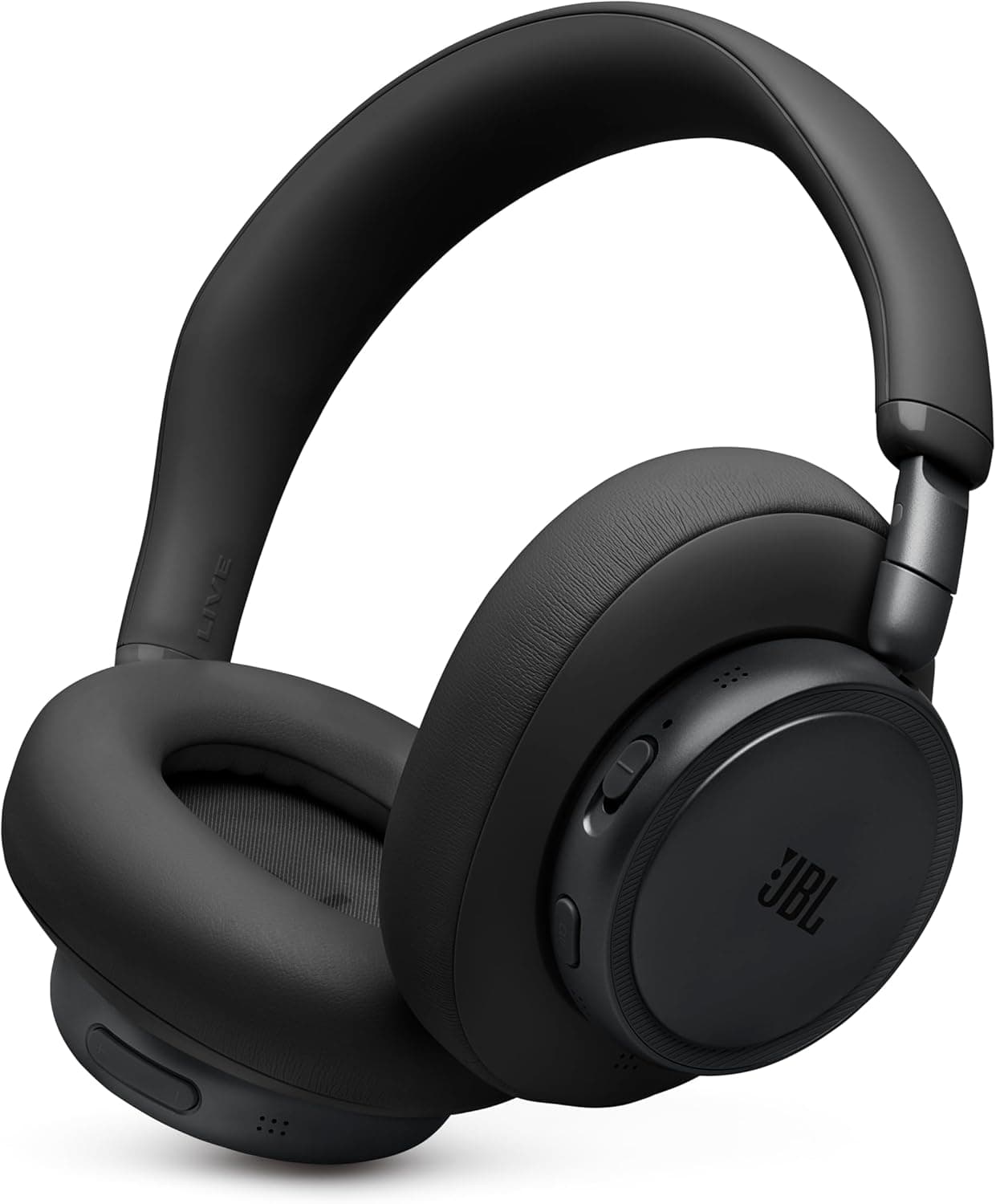
The first thing you notice about the JBL Live 780NC is how thoughtfully designed they are for an all-day wearable device. The headphones use a primarily plastic construction, but the build quality feels robust rather than cheap. The headband has just the right amount of flex without any creaking or cracking when you bend or twist them, and the metal-reinforced sliders provide a secure, clicky adjustment mechanism that stays in place once set.
The earcups are wrapped in a plush leatherette material filled with memory foam, and they strike an excellent balance between comfort and acoustic isolation. JBL has given the earcups a rounded, almost retro-inspired shape that stands out subtly without being flashy. The clamping force is moderate — tight enough to create a good seal for noise isolation but gentle enough that you can wear them for several hours without discomfort. The headband's underside is generously padded with a soft silicone-like material that distributes weight evenly across the top of your head.
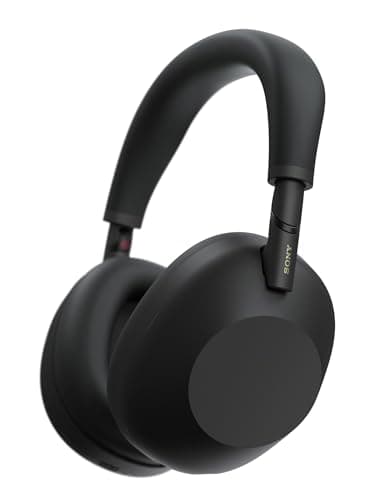
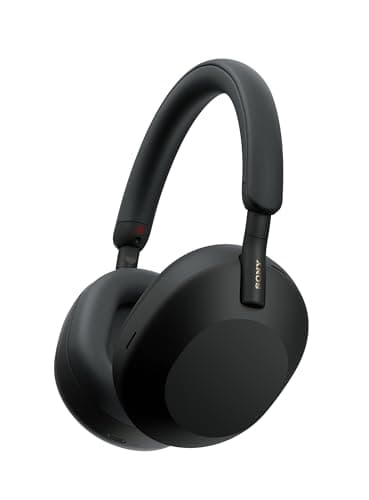
At just 260 grams, these are among the lighter over-ear ANC headphones in their class, noticeably lighter than the Sony WH-1000XM6 (around 250g but more expensive) and significantly lighter than the Apple AirPods Max (385g). This weight advantage becomes apparent during extended listening sessions, where the JBL Live 780NC remains comfortable while heavier competitors start to make their presence felt.
The earcups fold flat, making them easy to slip into a backpack or the included soft carry pouch. They don't fold down into a truly compact shape like some travel-focused models, but the flat-folding design is practical enough for daily commuting. Speaking of the pouch: it's a soft fabric case rather than a hard shell. It offers reasonable scratch protection but won't save your headphones from a serious drop, so travel with care.
One design choice that deserves mention is the control layout. The right earcup features a three-position physical power slider (Off/On/Bluetooth pairing mode) that's vastly preferable to the long-press power toggles found on many competitors. There's also a dedicated ANC mode button and a capacitive touch surface for playback control. The left earcup houses a traditional volume rocker. Physical switches for power and ANC are a genuine quality-of-life improvement — you always know exactly what state the headphones are in.
The touch controls, however, can be slightly inconsistent. Single taps for play/pause sometimes fail to register, and swipe gestures occasionally trigger on the first attempt but miss on a follow-up. It's not a dealbreaker by any means, but it's an area where the headphones don't feel as polished as they could be.
Sound Quality
The JBL Live 780NC features 40mm dynamic drivers with a frequency response spanning 10Hz to 40kHz, backed by Hi-Res Audio certification for both wired and wireless playback. On paper, those are impressive specs for the price, and in practice, the headphones deliver a sound signature that's energetic, detailed, and — at least out of the box — very bass-forward.
The default tuning is undeniably bass-heavy. JBL's signature sound has always leaned toward the warmer, punchier side of things, and the Live 780NC continues that tradition with gusto. Low-end frequencies get a substantial boost that makes kick drums thump with authority and bass lines rumble with satisfying depth. Tracks like Kendrick Lamar's "Loyalty" hit hard, with the sub-bass providing a visceral foundation. However, this bass emphasis comes at a cost: on some tracks, particularly those with busy low-frequency content, the bass can overshadow the mids and highs, making the overall presentation feel slightly congested. When testing electronic music like The Knife's "Silent Shout," the bass triplets were powerful to the point of being overwhelming, occasionally masking the delicate upper harmonies.
The midrange has good body and presence. Vocals come through with clarity and warmth, sitting naturally in the mix. Acoustic instruments like guitars and pianos have a pleasing richness, and the headphones do a respectable job of conveying the timbral character of different instruments. When listening to Bill Callahan's "Drover," his deep baritone vocals had excellent weight and texture, though the accompanying drums occasionally sounded more thunderous than the recording intended.
High frequencies are handled with decent extension and sparkle. Cymbals and hi-hats have a crisp, airy quality that adds life to the music, and there's enough treble energy to keep the sound from feeling muffled or veiled. The high end can sometimes verge on bright with certain recordings, but it never crosses into harsh or fatiguing territory — even during extended listening sessions.
The soundstage is wider than you might expect from a closed-back wireless headphone in this price range. Stereo imaging is reasonably precise, with good left-right separation that gives instruments and vocals distinct positions in the mix. It's not as spacious as open-back headphones or the best in the premium category like the Sennheiser HDB 630, but it's perfectly adequate for everyday listening and creates a convincing sense of space.
Here's the important caveat: the JBL Headphones app gives you a powerful 10-band equalizer that completely transforms the listening experience. Applying the Studio EQ preset or creating a custom curve that tames the bass by a few decibels dramatically improves tonal balance. With a modest EQ adjustment, the Live 780NC becomes a genuinely capable all-rounder that can handle everything from acoustic folk to complex orchestral passages with composure. The app also includes Personi-Fi 3.0, which tests your hearing and creates a personalized EQ profile — a genuinely useful feature that's rare at any price point.
JBL's Spatial Sound mode adds virtualized height and width to stereo content, with dedicated presets for movies, music, and gaming. It's a mixed bag: movie content benefits from the expanded soundstage, and gaming gains a sense of immersion, but for music listening, the effect can sound artificial and slightly hollow. Most listeners will prefer standard stereo for critical music listening.
Active Noise Cancellation
The ANC performance on the JBL Live 780NC is good — not great, not disappointing, but solidly in the "does the job admirably" category. The six-microphone Adaptive Noise Cancelling 2.0 system continuously analyzes your surroundings and adjusts the level of cancellation in real time. Against constant low-frequency noises like airplane hum, train rumble, or HVAC systems, the ANC performs respectably, cutting out a significant portion of the drone.
Where the ANC falls short is against higher-frequency, irregular noises. Office chatter, keyboard clacking, and sudden sounds like a coffee cup being set down on a table still get through. In an open-plan office, you'll still hear nearby conversations, just quieter. The same goes for wind noise — transparency mode actually disables itself automatically when it detects windy conditions, which is thoughtful but reveals the system's limitations.
Compared to the class leaders — Sony's WH-1000XM6, Bose QuietComfort Ultra, and Apple's AirPods Max — the JBL's ANC is a clear step down. Those $400+ headphones create a near-silent bubble that the Live 780NC can't quite match. But that's also a $200 price difference, and in the context of its price bracket, the ANC is competitive and perfectly usable.
The transparency mode, on the other hand, is quite good. It offers lifelike clarity that makes you feel like you're not wearing headphones at all, and the TalkThru feature intelligently focuses on voices when someone starts speaking to you. It's well-implemented and genuinely useful for office environments or quick interactions at a coffeeshop.
Battery Life
Battery life is arguably the JBL Live 780NC's strongest feature, and it's frankly astonishing for the price. JBL advertises up to 80 hours of playback with ANC off and 50 hours with ANC on. In real-world testing, these claims hold up remarkably well. With a mix of ANC-on usage during commutes and ANC-off listening at home, you can easily go two to three weeks between charges with moderate daily use.
The fast charging is equally impressive: a five-minute charge delivers four hours of playback, and a full charge from empty takes about two hours. This means even if you forget to charge overnight, plugging in while you shower and grab breakfast provides enough juice for an entire day of listening. The sheer endurance of these headphones eliminates any semblance of battery anxiety.
The battery performance also benefits from the efficient Bluetooth 6.0 radio and LE Audio support. When connected via LC3 (the LE Audio codec), battery drain drops significantly — from roughly 10% per hour on AAC to about 5% per hour. This is particularly beneficial for iPhone users who can now take advantage of LE Audio through Auracast broadcasts, a feature that was previously Android-exclusive territory.
One baffling omission: JBL does not include a USB-C charging cable in the box. You get a carrying pouch and a USB-C to 3.5mm aux cable, but no charging cable. It's a strange cost-cutting measure for a $250 product that otherwise feels well-packaged.
Connectivity and Features
The JBL Live 780NC is remarkably well-connected for its price. Bluetooth 6.0 provides rock-solid stability with an impressive range — the connection remained stable even when I left my phone on my desk and walked to the opposite end of a large open-plan office, roughly 30 meters away. Multipoint connection to two devices simultaneously works seamlessly for toggling between a phone and laptop, though I did notice switching can occasionally be sluggish, taking three to five seconds to transition audio between devices.
The codec support is where the Live 780NC really flexes its value proposition. LDAC support delivers near-lossless wireless audio for Android users, offering bitrates up to 990 kbps that preserve the detail and nuance of high-resolution recordings. During LDAC usage, however, I experienced occasional dropouts roughly every two hours — a known quirk of the codec that's not unique to JBL but worth noting if you're in a crowded RF environment. LE Audio support via LC3 is a fantastic addition, dramatically improving power efficiency and enabling Auracast broadcasts. I was genuinely impressed by how the headphones seamlessly switched between codecs depending on content type and battery optimization settings.
The practical benefit of LC3 became apparent during long-haul flights. Streaming audio via LC3 instead of AAC reduced battery drain from roughly 10% per hour to just 5% per hour, effectively doubling the already impressive endurance. For iPhone users, the LC3 support through Auracast means you can finally access LE Audio features that were previously Android-exclusive — a meaningful differentiator in this price bracket.
Auracast support is a genuinely forward-looking feature, and I tested it with intriguing results. It allows the headphones to receive broadcast audio from compatible sources, making them useful in settings like gyms, airports, or lecture halls where shared audio streams are becoming more common. Paired with a compatible source like a Samsung Galaxy or Pixel device, the Auracast connection held steady at about 10 meters, making it practical for a classroom or conference room scenario. It's early days for Auracast infrastructure, but having support baked in future-proofs the headphones nicely and represents genuine innovation at this price point.
The call quality is a standout feature that deserves special emphasis. The dual beamforming microphones, combined with an AI-trained algorithm that adapts to your voice patterns and acoustic environment, deliver impressively clear voice pickup. I tested this in a variety of conditions: quiet home office, busy coffee shop, windy sidewalk, and a coworking space with background chatter. In the coffee shop test, callers reported that they could hear my voice clearly with background noise reduced to a faint murmur — far better than most integrated laptop or phone microphones. The AI algorithm continuously adapts to your environment, so a call that starts in a quiet room and moves to a noisy street maintains solid performance throughout.
The JBL Headphones app deserves special praise and is genuinely one of the best companion apps in the audio industry. It doesn't require an account (a refreshing change from the trend toward app-based login requirements), and it provides comprehensive control over every aspect of the headphones. Beyond the EQ and Personi-Fi 3.0 features that produce genuinely audible improvements, you can customize the touch controls extensively, adjust ANC levels on a fine-grained slider, toggle between LDAC and LE Audio modes depending on your quality-versus-battery priority, set Smart Audio and Video modes for reduced latency (critical for anyone watching YouTube or Netflix on a laptop), and even access a Relax mode with soothing nature sounds on a timer. There's also an Adaptive EQ feature that compensates for low-volume listening where human ears naturally lose bass perception, and a Sound Leakage Compensation that adjusts output when the headphones detect they're not perfectly sealed. It's this depth of customization — features typically reserved for $400-plus headphones — that makes the JBL Live 780NC such a compelling value.
Real-World Performance: A Day in the Life
To truly evaluate the JBL Live 780NC, I spent an entire work week wearing them as my primary headphones across every scenario imaginable. The morning commute started with ANC on to block subway noise, and the adaptive ANC did an admirable job taming the low-frequency rumble of the train. Walking through busy streets with transparency mode engaged, the headphones felt natural and safe, letting ambient sounds through with convincing realism.
In the office, the Live 780NC served double duty. During focused work sessions, ANC created enough quiet to concentrate effectively, though I could still hear nearby conversations and phone rings at a reduced volume. Music played at moderate volume during coding sessions, and the spatial sound feature added a welcome sense of space to instrumental focus playlists. For video calls throughout the day, the microphone quality was consistently praised by colleagues, who noted a significant improvement over my laptop's built-in array.
Evening listening sessions at home revealed the headphones' versatility across genres. Classical orchestral pieces benefited from the wide frequency response and decent soundstage, while hip-hop and electronic tracks showcased the powerful bass foundation. A movie marathon over the weekend with Dolby Atmos content revealed a wider, more immersive soundstage that genuinely added to the cinematic experience, though the effect was more subtle than a proper surround system.
The comfort proved exceptional. I wore the headphones for sessions stretching six to eight hours with only one or two brief breaks, and never experienced the hotspot pressure or ear fatigue that plagues many over-ear designs. The lightweight construction and plush padding make these easy to forget you're wearing, which is the highest compliment you can pay to a headphone's ergonomics.
Value Proposition and Market Position
At $249.95, the JBL Live 780NC occupies a fascinating sweet spot. It undercuts premium flagships by $150 to $250 while matching or exceeding them in battery life, codec support, and software features. The compromises — ANC performance, default tuning aggressiveness, and some build shortcuts like the soft case — are proportional to the savings but may tip the scales depending on your priorities.
For the budget-conscious audiophile who values customization and doesn't want to compromise on battery life, the Live 780NC is arguably the best value in wireless headphones today. For the frequent traveler who needs top-tier ANC above all else, the Sony WH-1000XM6 remains the better — if pricier — choice. For everyone else who wants a well-rounded, feature-rich daily driver that won't leave you hunting for a charging cable every other day, the JBL Live 780NC makes an exceptionally strong case.
Personi-Fi 3.0: Personalization Done Right
One of the most genuinely innovative features in the JBL Live 780NC is Personi-Fi 3.0, a hearing-based EQ calibration system that's rare in any headphone, let alone one at this price point. The feature works by guiding you through a series of hearing tests that play tones at various frequencies and volumes, asking you to identify which you can hear. Based on your responses, the system creates a customized EQ profile that compensates for any hearing loss or sensitivity quirks in your individual hearing.
I tested Personi-Fi 3.0 extensively, running the calibration multiple times to assess consistency. The results were genuinely impressive: the custom profile subtly lifted the upper mids and treble in a way that made details more apparent without sounding artificially boosted. The difference was particularly noticeable on well-recorded acoustic tracks, where the sense of air and space around instruments became more vivid. It's a feature that rewards spending five minutes on setup and pays dividends every time you listen afterward.
The system also includes low-volume Adaptive EQ, which adjusts the frequency response to compensate for the natural tendency of human hearing to lose bass perception at lower volumes. This means your music maintains its tonal balance whether you're listening at office-friendly low levels or cranking it up on a commute. It's thoughtful engineering that shows JBL put genuine effort into the listening experience, not just the spec sheet.
Comparisons and Competition
At $250, the JBL Live 780NC occupies an interesting space in the market, sandwiched between budget options like the Anker Soundcore Space Q45 and premium flagships like the Sony WH-1000XM6 and Bose QuietComfort Ultra.
Against the Sony WH-1000XM6 ($449), the JBL sacrifices some ANC performance and overall polish but gains dramatically better battery life (80 hours vs 30 hours), a richer feature set in the app, and a $200 savings. The Sony's ANC is clearly superior, and its default tuning is more neutral, but the JBL offers better value for money if battery life and customization matter more to you.
Against the Nothing Headphone (a) ($249), the competition is closer. The Nothing offers slightly better battery life (90 hours ANC off) and a more distinctive design, but the JBL counters with LDAC support, a more mature app ecosystem, and more conventional comfort. It's a toss-up that comes down to design preference and codec support.
The Cambridge Audio Melomania P100 ($299) offers 100-hour battery life but lacks spatial audio and has a more restrained feature set, making the JBL a more versatile daily driver despite the shorter total battery life.
Final Verdict
The JBL Live 780NC is a testament to JBL's ability to deliver exceptional value in the midrange headphone market. It combines the kind of battery life that competitors can only dream of, a robust and customizable feature set, comfortable all-day ergonomics, and sound quality that — with a few EQ tweaks — can hold its own against headphones costing hundreds more.
The compromises are real but proportional to the price. The ANC is good but not class-leading, the default tuning needs EQ correction for neutral listeners, and the lack of a charging cable is genuinely annoying. The touch controls could be more reliable, and the soft pouch feels budget-adjacent.
But here's the thing: no headphone at $250 delivers everything the Live 780NC does. The combination of 80-hour battery life, LDAC and LE Audio codecs, Auracast support, a feature-rich app, and genuinely comfortable design creates a package that's hard to beat for the price. If you're looking for wireless headphones that won't break the bank but still deliver premium features and long-lasting comfort, the JBL Live 780NC deserves a very serious look.
The sweet spot they occupy is clear: for the listener who wants most of the premium headphone experience without spending premium headphone money, JBL has delivered exactly what the market needed.
Related: JBL Tour One M3 · Sony WH-1000XM6 · Bose QuietComfort Ultra Headphones (2nd Gen)
Pros
- Outstanding 80-hour battery life — best in class
- LDAC and LE Audio codec support for high-res wireless audio
- Comfortable all-day wear at just 260 grams
- Feature-rich companion app with 10-band EQ and Personi-Fi 3.0
- Fast charging (5 minutes = 4 hours playback)
- Auracast support for LE Audio broadcasts
- Excellent call quality with AI-enhanced noise suppression
Cons
- Bass-heavy default tuning requires EQ adjustment for neutral sound
- ANC is decent but not competitive with Sony or Bose flagships
- No USB-C charging cable included in the box
- Soft carry pouch instead of a hard shell case
- Touch controls can be occasionally unreliable
Final Verdict
The JBL Live 780NC delivers an impressive 80-hour battery life, adaptive noise cancellation, LDAC and LE Audio codecs, Auracast support, and a rich feature set at just $250 — making it one of the best value wireless headphones of 2026.