Nikon Z50 II Review: The Best Beginner Mirrorless Camera Gets a Flagship Brain
The Nikon Z50 II brings flagship-level EXPEED 7 processing to an entry-level APS-C mirrorless camera, delivering professional 10-bit video, excellent autofocus, and great image quality at an accessible price point.
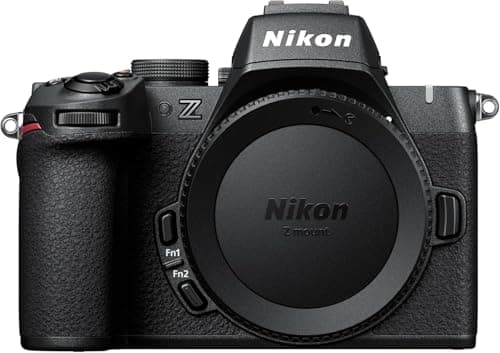
The mirrorless camera market for beginners has never been more competitive. Sony has the ZV-E10 II with its creator-focused features, Canon has the R50 and R10 with their excellent dual-pixel autofocus, and Fujifilm has the X-S20 with its beloved film simulations. Into this crowded field steps the Nikon Z50 II, an update to the 2020-era Z50 that promises to bring flagship-level processing power to an entry-level price point. The headline upgrade is the inclusion of Nikon's EXPEED 7 image processor — the same chip found in the professional Z8 and Z9 — paired with a 20.9-megapixel APS-C sensor that's carried over from the original Z50. At $909 for the body only or $1,049 bundled with the excellent 16-50mm f/3.5-6.3 VR kit lens, the Z50 II positions itself as the thinking person's entry-level mirrorless camera: less flashy than the Sony, less stylish than the Fujifilm, but potentially more capable where it counts.
Design and Handling
Pick up the Nikon Z50 II and you'll immediately notice two things: it feels solid in a way that budget cameras often don't, and the grip is genuinely comfortable. The body is constructed from fiber-reinforced plastic, which keeps weight down to approximately 540 grams with battery and card, but it doesn't feel cheap. The deep, textured handgrip provides a secure hold even with larger lenses attached, and the well-placed dual command dials on the top plate give you immediate control over aperture and shutter speed without diving into menus. The magnesium-alloy internal chassis adds rigidity that inspires confidence, and the weather sealing — while not officially rated — appears to offer basic dust and moisture resistance based on the rubber gaskets around the battery door and port covers.
The Z50 II measures 5.0 by 3.82 by 2.64 inches, making it compact enough to slip into a small shoulder bag or even a large jacket pocket with the collapsible 16-50mm kit lens attached. This portability is one of its strongest arguments — it's a camera you can genuinely carry everywhere without thinking twice. The total weight with the kit lens is just over 680 grams, lighter than a typical entry-level DSLR kit from a decade ago and roughly comparable to carrying a large water bottle. For travel photographers, this weight savings adds up over a full day of walking and shooting.
Compared to its predecessor, the Z50 II gains a few important physical improvements. The screen is now fully articulated, flipping out to the side and rotating 180 degrees for selfies and vlogging. This is a significant upgrade from the original Z50's tilt-only screen, which was frustrating for video creators and overhead shooting. The 3.2-inch, 1.04-million-dot LCD is sharp and responsive to touch, with smooth menu navigation and pinch-to-zoom during playback. Touch functionality extends to autofocus point selection — tap anywhere on the screen during shooting and the camera focuses on that point, which is much faster than using the directional pad. That said, the screen has a critical flaw: it's simply not bright enough for outdoor use. In direct sunlight, the display becomes difficult to see even at maximum brightness, and you'll find yourself relying almost entirely on the electronic viewfinder.
The electronic viewfinder is a 2.36-million-dot OLED unit with a maximum brightness of 1,000 nits — twice as bright as the EVF in the original Z50. This makes it genuinely usable in bright daylight, which is more than can be said for many cameras in this price range. The viewfinder is also physically larger than expected for this class, with a 0.68x magnification that makes composing shots feel natural and immersive rather than like you're peering through a porthole. The eye sensor is responsive and the viewfinder activates quickly when you bring the camera to your eye, with minimal delay.
Button layout is well thought out. The Z50 II adds dedicated Drive, Display, and Zoom buttons that were missing on the original, putting key controls at your fingertips. There's a programmable Fn button on the front that I set to white balance, and the movie record button is conveniently placed near the shutter release. The only ergonomic disappointment is the absence of an AF joystick — a feature present on the similarly-sized Nikon Z5 — which means selecting autofocus points requires either using the touchscreen or the multi-selector directional pad. For a camera that otherwise handles so well, this omission is puzzling and feels like a deliberate differentiation from Nikon's higher-end bodies. You can work around it by using the touchscreen for point selection, but if you're shooting with the camera to your eye, you'll need to use the directional pad, which is slower than a joystick.
EXPEED 7: Flagship Power, Entry-Level Price
The defining upgrade of the Z50 II is the EXPEED 7 image processor, and its impact is felt across nearly every aspect of the camera's performance. Burst shooting jumps from 11 frames per second with the mechanical shutter to 30 fps with the electronic shutter (JPEG only, with fixed focus). More importantly, the camera gains a pre-release capture buffer that records up to one second of images before you fully press the shutter — a fantastic feature for wildlife and sports photographers who need to capture that decisive moment when a bird takes flight or a player scores a goal. The buffer depth is approximately 50 raw+JPEG frames at 11 fps before the camera slows down, which is sufficient for most action sequences.
The processor also enables a significantly more sophisticated autofocus system. The Z50 II inherits the full AF user interface from Nikon's flagship Z8 and Z9, including 3D Tracking and advanced subject recognition. The camera can detect and track nine different subject types: humans, birds, cats, dogs, cars, motorcycles, bicycles, trains, and airplanes. Human detection is the most refined — it reliably finds eyes, faces, and heads even with subjects wearing sunglasses or masks, and it maintains tracking when subjects briefly move behind obstacles. Animal detection works well with cats and dogs in good light, though it can get confused with very furry or oddly shaped pets. Vehicle tracking is functional for cars and motorcycles on the road but is less consistent for bicycles and trains in complex environments with multiple moving objects.
In practice, the autofocus is good rather than class-leading. It consistently tracks human subjects with the reliability you'd expect from a modern mirrorless camera. But it doesn't have the near-magical stickiness of Canon's Dual Pixel CMOS AF II, which seems to read the photographer's mind in challenging scenarios. The Nikon can lose tracking in low-contrast situations or when subjects move unpredictably. DPReview's comprehensive testing confirmed that while the Z50 II shares the same AF specification as the Z8 and Z9, it doesn't deliver the same level of performance — the less powerful processing pipeline and simpler sensor mean tracking is a step behind the professional bodies. Low-light AF performance is respectable, with accurate focus achievable down to approximately -4 EV with an f/2 lens, making it usable for夜景 photography and dimly lit indoor events.
The autofocus interface itself deserves high praise. Nikon's 3D Tracking implementation is intuitive to use — you simply select a subject, and the camera follows it across the frame without requiring you to manually keep the focus point on the subject. Wide-area AF modes with subject detection work well for general shooting, while dynamic-area AF gives you more control for predictable subjects like birds in flight. The touchscreen makes focus point selection quick and natural, though the absence of a dedicated AF joystick means you'll rely on touch more than you might prefer when using the LCD.
Image Quality
The 20.9-megapixel APS-C CMOS sensor is unchanged from the original Z50, but that's less of a downside than it sounds. This sensor was excellent in 2020, and it remains highly competitive today. Image quality is characterized by natural color reproduction that Nikon is known for, good dynamic range, and clean files up to ISO 3200. Noise is well controlled at ISO 6400, with fine detail preserved in raw files and minimal chroma noise. Beyond ISO 12800, images become noticeably soft with visible luminance noise, but they remain usable for social media or small prints in a pinch. ISO 25600 and above should be reserved for emergency situations only.
Dynamic range is approximately 13.5 stops at base ISO, giving you plenty of latitude to recover shadows and highlights in post-processing. The sensor is ISO-invariant from around ISO 400 upward, meaning you can underexpose by several stops and recover the image in editing with minimal quality penalty. This makes the Z50 II a capable camera for challenging lighting conditions like sunset landscapes or dimly lit indoor events, where you can prioritize shutter speed or aperture and fix exposure later. In real-world testing, I was able to recover underexposed shadows by up to four stops without introducing objectionable noise or banding, which is impressive for an APS-C sensor at this price point.
JPEG output benefits from Nikon's well-regarded color science. Skin tones are natural and pleasing with a slight warmth that flatters portrait subjects without looking artificial. Landscapes have appropriately punchy greens and blues, and the overall color palette is slightly warm without being oversaturated. The new Picture Control system offers 31 built-in color presets, including the new "Flexible Picture Control" profiles that let you fine-tune parameters like clarity, contrast, and saturation beyond what was previously possible. The dedicated Picture Control button on the top plate makes switching between profiles quick, and you can download additional profiles from Nikon's Imaging Cloud service. The monochrome profile is particularly good, with deep, rich blacks and smooth tonal transitions that rival dedicated black-and-white modes on more expensive cameras.
Video Capabilities
This is where the Z50 II makes its most compelling argument. For a camera in this price range, the video specification is genuinely impressive and arguably the best in its class. The camera records 4K video at up to 30 frames per second from the full width of the sensor, oversampled from 5K for excellent detail with minimal moire and aliasing. A 4K 60p mode is available with a 1.44x crop, which introduces some additional noise and reduces the effective field of view but remains usable for most applications where slow motion is desired. 1080p recording goes up to 120 fps for high-quality slow-motion footage, and at 1080p the camera can record continuously for up to 30 minutes before overheating — adequate for most projects but not ideal for long event recordings.
The headline feature is internal 10-bit recording with Nikon's N-Log and HLG (Hybrid Log Gamma) profiles. This gives you professional-grade color grading flexibility typically reserved for cameras costing twice as much. The log footage retains impressive dynamic range — approximately 12 stops in N-Log — and grades smoothly in DaVinci Resolve or Premiere Pro with minimal banding or artifacts. The addition of a waveform monitor, one of the cheapest cameras to offer this feature, makes exposure management in video much more precise than relying on zebras alone, especially when shooting log profiles where proper exposure is critical.
The Z50 II also gains a headphone jack, which is surprisingly rare in this class. Being able to monitor audio while recording is essential for serious video work, and its inclusion here signals that Nikon is targeting the creator market seriously. The USB-C port supports UVC/UAC standards, making the camera function as a plug-and-play 4K webcam without additional software — useful for streaming, video calls, or quick recording setups. The port also supports USB Power Delivery, so you can power the camera from a portable battery pack for extended recording sessions, partially mitigating the battery life concerns.
Rolling shutter measures approximately 21 milliseconds in 4K 30p mode and 14.7 milliseconds in 4K 60p mode. This is average for the class — you'll notice some jello effect with fast panning or moving subjects, but it's not severe enough to be problematic for most content. Strictly speaking, it's better than the original Z50's 30ms rolling shutter but not as good as the Sony ZV-E10 II's 12ms.
The product review AF mode is a particularly nice touch for content creators. When enabled, the camera prioritizes objects held up to the lens, smoothly transitioning focus from your face to the product and back when you lower it. It works reliably with the kit lens and should be even better with Nikon's close-focusing Z-macro lenses. The transition speed is adjustable, letting you choose between snappy and smooth focus pulls.
Battery Life and Connectivity
Battery life is the Z50 II's most significant weakness. Despite using a larger-capacity EN-EL25a battery (9.4 watt-hours vs. 8.5 watt-hours in the original), CIPA ratings have dropped from approximately 310 shots to around 250 shots per charge with the LCD screen. The EXPEED 7 processor draws more power, and the gains from the larger battery don't fully offset the increased consumption. In real-world mixed shooting (a combination of EVF and LCD usage, occasional 4K video clips), expect around 300-350 shots per charge. For video shooting, expect roughly 75 minutes of continuous 4K recording per charge. You'll want at least two spare batteries for a full day of shooting, and the camera doesn't include an external charger — you charge the battery in-camera via USB-C, which is slow and ties up the camera. Thankfully, third-party EN-EL25a batteries are widely available and inexpensive.
Connectivity is otherwise excellent. The Z50 II features Wi-Fi 5 (802.11ac) and Bluetooth 4.2 for wireless image transfer and remote camera control. Nikon's SnapBridge app, which was notoriously unreliable in its early days, has matured into one of the better camera connectivity apps on the market. It maintains a persistent Bluetooth connection for automatic image transfer (at reduced 2MP resolution) and geotagging, while the Wi-Fi connection handles full-resolution transfers and remote shooting. The app pairs easily, stays connected reliably, and transfers images at reasonable speeds.
The single UHS-II SD card slot is located in the battery compartment, which is standard for this class but means you can't swap cards without removing the battery. An UHS-II slot is appreciated for its faster read and write speeds — a UHS-II card can clear the buffer significantly faster than a UHS-I card, which matters when shooting bursts of raw files.
Comparison with Competitors
The Z50 II enters a hotly contested segment, and how it stacks up depends heavily on what you prioritize.
vs Sony ZV-E10 II ($1,298 with lens): Sony's offering is built specifically for content creators, with excellent autofocus, a higher-resolution 26MP sensor, and a more compact body. The Sony also has better battery life and more extensive third-party lens support through the extensive E-mount ecosystem, with dozens of native APS-C lenses from Sigma, Tamron, and others. However, the Z50 II has better out-of-camera JPEG colors, the fully-articulated screen is more useful for vlogging than the Sony's tilt screen, and the Nikon is significantly cheaper at $1,049 with the kit lens versus $1,298 for the Sony. For video, the Nikon's 10-bit N-Log is a genuine advantage over the Sony's 8-bit internal recording, giving you significantly more flexibility in color grading.
vs Canon EOS R50 ($799 with lens): Canon's entry-level R50 is cheaper and has the incredibly sticky Dual Pixel CMOS AF II system that's arguably the best autofocus in this class. The Canon also has slightly better battery life and a more extensive RF-S lens lineup that includes affordable options like the 22mm f/2 and 11-22mm f/4-5.6. The Nikon fights back with 10-bit video, the waveform monitor, better ergonomics via the deep grip, pre-release capture, and the higher-resolution viewfinder. If you shoot mostly stills and want the best autofocus for the money, the R50 is compelling. If you want video capability and better handling, the Nikon is the better choice. The Canon also lacks a headphone jack, which may be a dealbreaker for video creators.
vs Fujifilm X-S20 ($1,299 with lens): Fujifilm's X-S20 is the most direct enthusiast competitor, with a 26MP X-Trans sensor, in-body image stabilization, and Fujifilm's beloved film simulations that produce stunning JPEGs straight out of camera. The X-S20 has IBIS, which the Nikon completely lacks — a massive advantage for handheld video and low-light photography, as it allows you to shoot at slower shutter speeds without blur. The Fujifilm also has significantly better battery life at approximately 750 shots per charge. However, the X-S20 costs roughly $250 more, and its autofocus, while much improved, still lags behind the Nikon for subject tracking reliability. If you can afford the premium and want IBIS, get the Fujifilm. If you're on a tighter budget, the Nikon offers better value.
Who Is the Z50 II For?
The Nikon Z50 II is a camera that knows its audience. It's for beginners who want room to grow — photographers and videographers who are serious enough to appreciate 10-bit log video, professional-grade autofocus interfaces, and pre-release capture, but whose budgets haven't yet reached the $2,000+ territory of full-frame cameras. It's for students building their first serious kit, travel vloggers who need a compact hybrid, and hobbyists who want one camera that can do both stills and video without compromise.
It is not for everyone. The limited battery life makes it a poor choice for extended shooting sessions without spare batteries. The lack of in-body image stabilization means you'll need stabilized lenses for smooth handheld video, and Nikon's VR lenses tend to be more expensive than non-VR alternatives. The modest 20.9MP sensor, while still excellent, is beginning to show its age against 26MP competitors. And the limited Z-mount DX lens lineup — currently just a 16-50mm kit zoom, a 50-250mm telephoto zoom, a 24mm f/1.7 prime, and a growing list of third-party options from Viltrox and TTArtisan — constrains your creative options compared to Sony's or Canon's extensive APS-C ecosystems. If you need a wide range of affordable lens options, the Sony E-mount system is currently the safest bet.
The Bottom Line
The Nikon Z50 II is a camera of strengths and compromises. Its strengths — the EXPEED 7 processor, excellent video capabilities with 10-bit internal recording, well-designed ergonomics, and good image quality — are genuinely impressive at this price. Its compromises — short battery life, no IBIS, an aging sensor, and limited lens selection — are equally real and equally significant. Whether the Z50 II is the right camera for you depends entirely on which side of that equation matters more.
For the aspiring filmmaker who wants to learn professional color grading on a budget, the Z50 II is arguably the best value in the mirrorless market today. For the photographer who needs reliable autofocus and the ability to shoot all day on a single charge, the Canon R50 or Sony ZV-E10 II may serve you better. For anyone, regardless of their priorities, the Z50 II represents something increasingly rare in the camera industry: a genuinely thoughtful product that prioritizes capability over marketing specs. It's not the flashiest camera in its class, and it won't win any spec-sheet comparison battles. But in the hands of a thoughtful photographer who understands its strengths and works around its weaknesses, it's capable of producing images that rival cameras costing twice as much. Sometimes, that's worth more than any feature list.
Pros
- EXPEED 7 processor brings flagship-level performance and features to an entry-level price
- Excellent 10-bit internal N-Log and HLG video recording with waveform monitor
- Comfortable ergonomics with deep grip, dual command dials, and fully articulated screen
- Bright 1000-nit EVF that's genuinely usable in daylight
- Pre-release capture and 30fps burst shooting for action photography
Cons
- Battery life is poor at ~250 shots per charge, requiring spare batteries
- No in-body image stabilization limits handheld video capability
- 20.9MP sensor is aging and falls behind 26MP competitors
- Limited Z-mount DX lens selection compared to Sony E-mount ecosystem
Final Verdict
The Nikon Z50 II brings flagship-level EXPEED 7 processing to an entry-level APS-C mirrorless camera, delivering professional 10-bit video, excellent autofocus, and great image quality at an accessible price point.