Panasonic Lumix L10 Review: The Best Premium Compact Camera of 2026?
The Panasonic Lumix L10 marks a triumphant return after an eight-year hiatus, offering a 20.4MP Four Thirds sensor, a fast Leica 24-75mm f/1.7-2.8 zoom lens, groundbreaking Real Time LUT in-camera color grading, and class-leading phase-detect autofocus in a premium metal body. At its current street price, it's the best value premium compact camera on the market.
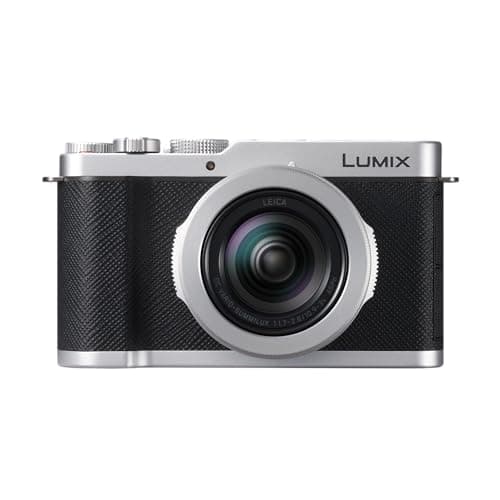
The Panasonic Lumix L10 marks a triumphant return to the fixed-lens compact camera market for Panasonic after an eight-year hiatus, and it arrives with a clear mission: to prove that the premium compact camera is far from dead. Celebrating 25 years of the Lumix brand, the L10 is a modern reimagining of the beloved LX100 series, bringing a 20.4MP Four Thirds sensor, a fast Leica DC Vario-Summilux 24-75mm f/1.7-2.8 zoom lens, and the company's most advanced phase-detect autofocus system into a beautifully crafted metal body. At an Amazon price of $629 (well below its $1,500 MSRP), it represents a compelling value proposition for photographers who want serious image quality in a portable package. But with the compact camera market having evolved significantly since the LX100 II's 2019 release, the question is whether the L10 does enough to stand out against fierce competition from the Fujifilm X100VI, Sony RX100 VII, and Ricoh GR III series.
Design and Build Quality
The Lumix L10 immediately impresses with its build quality. The body combines a magnesium front plate with an aluminum top deck, giving it a dense, premium feel that rivals cameras costing considerably more. It's available in Black, Silver, and a limited Titanium Gold Special Edition that commemorates the Lumix 25th anniversary. At 508 grams with battery and SD card, it's heavier than the LX100 II but still eminently portable for daily carry.
The camera measures 127.1 x 73.9 x 66.9 mm, making it significantly larger than its predecessor. This was a deliberate trade-off by Panasonic to accommodate a larger battery and a fully articulated LCD screen. While it's no longer truly pocketable — you'll want a small bag or jacket pocket — the size increase brings genuine usability improvements. The grip is more substantial, the controls have more room to breathe, and the overall handling benefits from the extra real estate.
One of the most welcome changes is the viewfinder. The L10 uses a 2.36 million-dot OLED viewfinder with 0.74x magnification, a massive upgrade from the LX100 II's field-sequential EVF that suffered from color tearing artifacts. The new EVF is large, bright, and clear, making composition a genuine pleasure in any lighting condition. The 3.0-inch fully articulated LCD screen is equally impressive, with 1.84 million dots of resolution and excellent touch responsiveness. The articulating mechanism is particularly valuable for low-angle shooting, vertical compositions, and video work.
The control layout has been completely redesigned from the LX100 II, and opinions are somewhat mixed. The top deck replaces the LX100's dedicated shutter speed and exposure compensation dials with a PASM mode dial and a customizable thumbdial. The lens retains its dedicated aperture ring, which is satisfying to use with its click-stops. However, the rear d-pad and dial assembly feels slightly cheap for a camera at this price point, using materials that don't quite match the rest of the build.
Panasonic has made the camera highly customizable. The mode dial offers five custom positions (C1 through C5), and virtually every button can be assigned a different function. This means that once you've set it up to your preferences, the L10 can be a remarkably efficient shooting tool. The zoom lever, which wraps around the shutter button, offers precise control over the lens, and there's a dedicated physical switch on the side for the multi-aspect ratio sensor.
Sensor and Image Quality
At the heart of the Lumix L10 is a 26.5MP Four Thirds BSI-CMOS sensor, though the effective resolution varies depending on the aspect ratio selected thanks to the multi-aspect design. In the native 4:3 mode, you get approximately 20.3 megapixels, while 3:2 and 16:9 modes offer progressively wider horizontal fields of view. This is a unique feature that Panasonic has carried over from the LX100 series, and it remains one of the camera's most distinctive advantages.
The sensor is paired with the latest generation Venus Engine processor, which brings significant improvements in noise handling, dynamic range, and color science. At base ISO, images are clean with excellent detail rendition. The Leica-branded lens does an admirable job resolving to the sensor's capabilities, though it's worth noting that the lens design itself has been carried forward from the LX100 II and shows its age in some areas. Corner sharpness is noticeably softer than the center, particularly at the wide end of the zoom range, and there's some falloff in resolution as you move away from the optical axis.
That said, in real-world shooting, the vast majority of users will find image quality more than satisfactory. The center of the frame is sharp across the zoom range, and the f/1.7-2.8 maximum aperture provides genuine low-light capability and depth-of-field control that smaller-sensor compacts simply cannot match. The ability to throw backgrounds out of focus at the wide end, particularly when shooting close to your subject, produces images with a dimensionality that rivals much larger cameras.
The multi-aspect sensor deserves special mention. Being able to switch between 4:3, 3:2, and 16:9 ratios using a dedicated physical switch is not just a gimmick — it genuinely changes how you compose. The 16:9 mode is particularly compelling for landscape photography, giving you a cinematic field of view that doesn't require cropping. The 3:2 mode matches the standard print ratio and is useful for street photography.
Real Time LUT: The Game-Changing Feature
The standout feature of the Lumix L10 — and the one that sets it apart from every competitor — is the Real Time LUT system. This allows photographers to load custom color lookup tables directly onto the camera and apply them to JPEG files in real time. The results are straight-out-of-camera images that look like they've been professionally graded, with no post-processing required.
Panasonic ships the L10 with several built-in LUTs, including the excellent Lumix Classic and Lumix Classic Gold, both of which provide film-like color rendering that rivals Fujifilm's celebrated Film Simulations. The Magic LUT, which uses AI to generate custom color grades from your existing photos, is expected to arrive via firmware update and promises to take the system to another level entirely.
For photographers who shoot JPEG, this is transformative. You can dial in a look that matches your creative vision and have it baked into every image you capture. For street photographers and travel photographers who need to deliver images quickly, the workflow advantages are enormous. Even for RAW shooters, the LUT system serves as a useful preview tool, showing you what your final edit might look like while you're still in the field.
The LUMIX Lab app extends the LUT system further, allowing users to create and transfer custom LUTs from their phone to the camera. While the app was still working out some bugs at launch, the core functionality is solid and points to a future where in-camera color grading becomes standard across the industry.
Autofocus Performance
The autofocus system in the Lumix L10 is, quite simply, the best ever fitted to a Micro Four Thirds camera and arguably the best in any current zoom compact. Panasonic has brought its phase-detect AF technology from the GH7 into the L10, and the results are outstanding.
For static subjects, AF acquisition is instantaneous and accurate in virtually any lighting condition. The camera locks focus quickly and quietly, with none of the hunting that plagued earlier Panasonic compacts. The real star, however, is the AI subject detection. The L10 can recognize and track people (including eyes and faces), animals, cars, motorcycles, trains, and airplanes. In practice, the system works remarkably well, maintaining lock on moving subjects with impressive tenacity.
Continuous autofocus performance is strong, with a high hit rate even for unpredictable subjects like running children or pets. The tracking AF mode will follow a designated subject across the frame, and while it won't fall back to conventional tracking if the specified subject type isn't detected (a minor irritation), in most situations it performs admirably.
The camera offers 779 focus points across the sensor, and the touchscreen allows for intuitive focus point selection. Simply tap on the screen where you want the camera to focus, and it responds instantly. The Focus Limiter is a welcome addition for zone focusing, allowing you to set a focus range (for example, 6 to 8 feet) for quick street photography.
Compared to the Fujifilm X100VI and Sony RX100 VII, the L10's AF system holds its own and in many situations outperforms both. The Fujifilm's contrast-detect system can hunt in low light, while the Sony's 1-inch sensor limits its low-light AF capability. The L10's larger Four Thirds sensor combined with phase-detect AF gives it a real advantage in challenging conditions.
Video Capabilities
While the L10 is primarily positioned as a stills camera, its video specifications are surprisingly robust. The camera can shoot 5.6K video at up to 60 frames per second, 4K at up to 120 fps for slow motion, and Full HD at up to 240 fps. These specifications put it in contention with purpose-built vlogging cameras and make it a versatile hybrid option for content creators.
The fully articulated screen is a significant advantage for video work, particularly for solo shooters who need to frame themselves. The lack of a headphone socket is disappointing for serious videographers, but for casual use, the internal microphones and the ability to use an external USB-C microphone provide adequate audio capture.
Video autofocus benefits from the same phase-detect system as stills, providing smooth and reliable tracking. The lens-based optical stabilization works well for static shots but struggles with walking motion, where some cropping would be beneficial. For tripod-based work or controlled shooting, the video quality is excellent, with good detail and pleasing color rendering from the Real Time LUT system.
Battery Life and Charging
One of the most significant improvements over the LX100 II is battery life. The L10 uses the same high-capacity DMW-BLK22 battery as Panasonic's S-series full-frame cameras, providing approximately 410 shots per charge with the EVF or 420 with the LCD. In power-saving mode, this extends to around 1,000 shots. This is a dramatic improvement over the LX100's 300-shot rating and makes the L10 viable for full-day shooting without a spare battery.
Charging is via USB-C, and the camera supports in-camera charging while in use. The battery compartment is shared with the SD card slot, which is convenient for quick card swaps.
Real-World Performance
Using the Lumix L10 in real-world conditions reveals a camera that excels in several key areas while making some compromises that potential buyers need to understand. For street photography, the combination of the versatile zoom range, excellent autofocus, and Real Time LUT JPEGs makes for a highly efficient workflow. The camera is responsive and unobtrusive, with a shutter sound that won't draw attention.
For travel photography, the L10 is nearly ideal. The zoom lens covers a useful range from moderate wide-angle to short telephoto, the battery lasts all day, and the image quality is good enough for large prints and publication. The lack of weather sealing is a notable omission for a camera at this price point — a light rain shower could spell disaster — but the build quality is otherwise rugged enough for normal travel use.
For portrait and event photography, the f/1.7-2.8 aperture provides genuine depth-of-field control, and the eye-detection AF works reliably. The Real Time LUT feature allows for consistent color across a series of images, which is valuable for events where you need to deliver a cohesive set of photos quickly.
The lens is the camera's most significant limitation optically. While the center sharpness is good, the edges and corners never achieve the same level of critical sharpness. The lens also stops at 75mm equivalent, which feels restrictive when similar cameras offer longer reach. The f/2.8 at the telephoto end is adequate but not exceptional.
Comparisons with Competitors
The compact camera market has narrowed significantly, but the remaining players are all strong contenders. The Fujifilm X100VI is arguably the L10's most direct competitor, offering a larger APS-C sensor, weather sealing, and celebrated Film Simulations. For those considering a full-frame mirrorless alternative, check out our Canon EOS R6 Mark III Review. However, its fixed 35mm f/2 lens is much less versatile than the L10's zoom, and its autofocus system is not as responsive in challenging conditions.
The Sony RX100 VII features a smaller 1-inch sensor but packs a remarkably versatile 24-200mm zoom lens into a genuinely pocketable body. Its autofocus is excellent, and its size advantage is significant. However, its smaller sensor limits low-light performance and depth-of-field control compared to the L10.
The Ricoh GR III offers APS-C image quality in a truly pocketable package with a superb 28mm f/2.8 lens, but its fixed focal length and contrast-detect AF make it less versatile than the L10 for general-purpose photography.
Who Should Buy the Lumix L10?
The Panasonic Lumix L10 is aimed squarely at enthusiast photographers who want the image quality of a larger camera in a portable package, without sacrificing versatility. It's ideal for travel photographers who need a single camera that can handle everything from landscapes to portraits to street scenes. It's perfect for daily carry, offering the kind of image quality that makes you want to bring it everywhere.
It's less suitable for professionals who need weather sealing, for pocket-camera enthusiasts who prioritize portability above all else, or for action shooters who might prefer our DJI Osmo Action 6 Review, or for those who prefer the fixed-focal-length experience of cameras like the Fujifilm X100VI.
Lens Performance and Optical Quality
The Leica DC Vario-Summilux 24-75mm f/1.7-2.8 ASPH lens is the L10's most important component, and its performance largely defines the camera's character. At the wide end, the lens delivers good center sharpness wide open at f/1.7, with noticeable improvement when stopped down to f/2.8 or f/4. The edges are softer than the center across the aperture range, which is consistent with the lens's heritage from the LX100 series. This softness is most apparent when photographing flat subjects like test charts or architecture, but in real-world shooting of people, landscapes, and everyday scenes, it rarely detracts from the image.
The 24mm wide end is genuinely useful for landscape photography, architecture, and interior shots. The 75mm telephoto end provides a modest reach that works well for portraits and detail shots, though I found myself wishing for just a bit more reach on several occasions. An 85mm or 100mm equivalent would have made the camera significantly more versatile for portrait work and compressed landscapes.
Close-up performance is respectable, with the lens achieving reasonable magnification at the wide end. The minimum focusing distance allows for creative close-ups of flowers, food, and small objects, though true macro photography requires dedicated equipment.
One area where the lens truly shines is its rendering of out-of-focus areas. The bokeh produced by the Nine-blade aperture is smooth and pleasant, with none of the nervous, busy quality that plagues many compact camera lenses. This, combined with the shallow depth of field available at f/1.7, allows for subject separation that rivals much larger cameras.
Chromatic aberration is well controlled, with minimal purple fringing in high-contrast situations. Distortion is handled through in-camera correction, and the corrected JPEGs show straight lines where they should be. Flare resistance is average, with the lens showing some veiling flare when shooting directly into strong light sources — the included lens hood helps mitigate this.
In-Camera Processing and JPEG Engine
Panasonic has invested heavily in the L10's JPEG processing engine, and the results are the best straight-out-of-camera images the company has ever produced. Beyond the Real Time LUT system, the camera offers extensive customization of Photo Styles, allowing you to fine-tune contrast, sharpness, saturation, noise reduction, and color tone to your preferences.
The noise reduction algorithm is particularly impressive. At higher ISOs, the camera manages to reduce noise without completely destroying detail, giving JPEGs a natural, film-like grain structure rather than the plasticky, smeared look of earlier Panasonic cameras. ISO 3200 is genuinely usable, and ISO 6400 produces acceptable results for web sharing and small prints.
The white balance system is reliable in most conditions, with Auto White Balance producing natural results in mixed lighting. The camera offers comprehensive white balance fine-tuning, including a white balance shift function that lets you dial in precise color corrections.
Connectivity and Ecosystem
The L10 includes modern connectivity features that make it a capable partner in a connected workflow. Built-in Wi-Fi and Bluetooth allow for quick image transfer to your smartphone via the LUMIX Lab app. Bluetooth provides a constant low-power connection for GPS tagging and remote control.
USB-C connectivity supports fast file transfer and in-camera charging, and the camera can be used as a UVC webcam for video calls — a useful feature in the hybrid work era. The HDMI micro output allows for external monitoring, though the lack of clean HDMI output limits its professional video potential.
The hot shoe supports standard flash units and accessories, which is a welcome inclusion that many modern compacts have abandoned. The flash sync speed is 1/2000, which allows for fill flash in bright conditions.
Build Quality and Long-Term Durability
While the magnesium and aluminum construction gives the L10 a premium feel, the lack of weather sealing is the camera's most significant durability concern. The Leica D-Lux 8, which shares the L10's lens, offers some level of weather sealing, and its absence here is felt. A camera at this price point, targeted at travel photographers, should be able to withstand light rain and dust.
That said, the mechanical construction is otherwise excellent. The lens barrel is tight with no play, the control dials have positive detents, and the card door and battery compartment are well-sealed. The camera feels like it will withstand years of regular use, as long as you're careful about environmental conditions.
Shooting Experience and Workflow
In practice, the Lumix L10 is a camera that rewards investment in setup. The default control configuration is, as several reviewers have noted, something of a mess. But Panasonic has made the camera deeply customizable, and once you've configured it to your preferences, the shooting experience becomes fluid and intuitive.
My recommended setup involves assigning exposure compensation to the top thumbdial, ISO to the function button on the front, and white balance to one of the customizable Fn buttons. This gives quick access to the three most frequently adjusted settings without diving into menus.
The touchscreen interface is responsive and well-implemented. Touch-to-focus works instantly, and the touch menu system is logical, though it benefits from the camera's extensive customization options. The touch screen can be disabled for eye-level shooting, preventing accidental input from your nose or cheek.
The camera's startup time is approximately one second, fast enough to capture spontaneous moments. Shutter lag is negligible with single AF, and the electronic shutter allows for silent shooting in sensitive environments. The burst shooting rate of 30 frames per second with electronic shutter is generous, making the L10 capable of capturing fast action.
Value Proposition
At $629 on Amazon, the Lumix L10 represents extraordinary value for a camera with this feature set. The Four Thirds sensor, phase-detect AF, Real Time LUT system, and premium build quality would be compelling at the $1,500 MSRP. At the current street price, it's something of a steal.
Compared to the Fujifilm X100VI at $1,599, the Sony RX100 VII at $1,298, or the Ricoh GR III at $1,069, the L10 offers more versatility (thanks to its zoom lens), better autofocus, and a more modern feature set at a lower price. The only camera that competes on value is the Leica D-Lux 8, which shares the L10's lens and sensor but costs significantly more for the red dot.
Conclusion
The Panasonic Lumix L10 is more than just a nostalgia play or an anniversary special. It's a genuinely modern compact camera that addresses the real needs of enthusiast photographers. The zoom lens versatility, excellent autofocus, and innovative color tools make it a camera that can serve as a primary creative tool, not just a backup or travel companion.
The compromises — unsealed body, aging lens design, and occasionally confusing controls — are real but manageable. For the photographer who values versatility and image quality in a package that fits in a small bag, the Lumix L10 is currently the best option on the market. It's a worthy successor to the LX100 legacy and a strong contender for the best compact camera of 2026.
Pros
- Best-in-class phase-detect autofocus for a zoom compact
- Real Time LUT system delivers incredible straight-out-of-camera JPEGs
- Versatile 24-75mm f/1.7-2.8 Leica zoom lens
- Excellent OLED viewfinder and fully articulated touchscreen
- Great battery life with S-series battery compatibility
- Premium magnesium and aluminum build quality
- Multi-aspect ratio sensor with dedicated physical switch
Cons
- No weather sealing at this price point
- Lens shows age with soft corners and limited reach
- Default control layout is confusing out of the box
- No joystick for AF point selection
- Bulky for a compact camera, no longer pocketable
Final Verdict
The Panasonic Lumix L10 marks a triumphant return after an eight-year hiatus, offering a 20.4MP Four Thirds sensor, a fast Leica 24-75mm f/1.7-2.8 zoom lens, groundbreaking Real Time LUT in-camera color grading, and class-leading phase-detect autofocus in a premium metal body. At its current street price, it's the best value premium compact camera on the market.