Samsung Galaxy A56 5G Review: The Mid-Range King Returns
The Samsung Galaxy A56 5G delivers a premium metal-and-glass design, gorgeous 120Hz AMOLED display, excellent battery life, and flagship-grade 45W charging for just $499, making it one of the best mid-range phones available despite middling performance.
The mid-range smartphone market is arguably the most competitive segment in the mobile industry right now. With flagship prices creeping past the $1,200 mark year after year, more and more people are looking at the $400 to $600 range for a phone that delivers most of what they need without the painful price tag. Samsung has been a dominant player in this space with its Galaxy A series for years, and the Galaxy A56 5G represents the company's most focused attempt yet at delivering a premium experience at a mid-range price. After spending time with this device and digging through extensive testing data, I'm ready to break down exactly where it shines, where it cuts corners, and whether it deserves a spot in your pocket.
Design and Build Quality
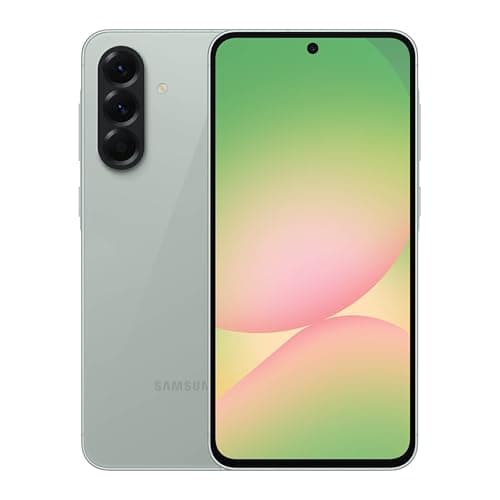
The first thing you will notice when you pick up the Galaxy A56 5G is how much it resembles a flagship phone. Samsung has equipped this mid-ranger with a metal frame and Gorilla Glass Victus on both the front and back, which gives it a decidedly premium feel in hand. The phone measures 162.2 x 77.5 x 7.4mm and weighs 198 grams, making it noticeably thinner and lighter than last year's Galaxy A55, which came in at 8.2mm thick and 213 grams. That 0.8mm reduction and 15-gram weight savings matter more than you might expect. The A56 feels substantially more comfortable to hold during extended one-handed use, and it slides into pockets with less resistance.
Samsung has retained the "Key Island" design language introduced with the A55, which refers to the slightly raised bump on the right side rail that houses the volume rocker and power button. It is a subtle touch, but it makes finding the buttons by feel much easier, especially if you are wearing gloves or using the phone in the dark. The buttons themselves have a satisfying click with minimal wiggle, which is an area where budget phones often feel mushy.
The rear panel is available in Graphite, Light Gray, Olive, and Pink color options. The unit I examined in Awesome Olive has a sophisticated, understated look, but it is worth noting that the glossy back panel attracts fingerprints with alarming speed. Within minutes of handling, the back looks like it has been through a shift at a greasy spoon diner. A case is basically mandatory if that sort of thing bothers you, and thankfully Samsung includes a basic clear case in the box.
The IP67 dust and water resistance rating is a welcome inclusion at this price point. It means the A56 can survive submersion in up to one meter of fresh water for 30 minutes. While that is not quite as rugged as the IP68 rating found on the Galaxy S series, it is more than adequate for accidental drops in sinks, rain exposure, or using the phone poolside. Many competitors in this price range, including the Google Pixel 8a, offer similar protection, so Samsung is not ahead here, but at least it is not falling behind.
Display
The Galaxy A56 5G features a 6.7-inch FHD+ Super AMOLED panel with a 120Hz refresh rate. This is a gorgeous display for a $499 phone. Colors are vibrant without being overly saturated, blacks are truly black thanks to the AMOLED technology, and the 120Hz refresh rate makes scrolling through social media feeds, web pages, and app drawers feel buttery smooth.
Where this display really punches above its weight is brightness. Samsung claims a typical peak brightness of 1,200 nits, but independent testing from PhoneArena measured a peak of 1,715 nits at a 20% APL (average picture level) and 1,129 nits at full-screen brightness. That is a significant improvement over the Galaxy A55's already-respectable 1,510 nits peak. For context, the Google Pixel 8a hits about 1,903 nits at 20% APL, while the iPhone 16e manages only 791 nits. The A56 splits the difference nicely, offering excellent outdoor visibility without quite matching the Pixel's headroom.
The only display downside worth mentioning is color accuracy. While the Delta E for color reproduction is a solid 2.35 (anything under 3 is generally considered good), the grayscale Delta E comes in at 7.4, which is noticeably worse than the A55's 3.73. What does this mean in practice? Grayscale elements, like white backgrounds with text or monochrome images, may show slight color casts or unevenness. Most users will not notice this in everyday use, but if you edit photos or do color-sensitive work on your phone, it is something to be aware of.
The slim bezels around the display are a notable improvement over the A55. Samsung has managed to reduce the chin at the bottom and the borders on the sides, giving the A56 a more modern, immersive look. The punch-hole selfie camera cutout is small and unobtrusive, sitting centered at the top of the display.
Performance and Benchmarks
Under the hood, the Galaxy A56 5G is powered by Samsung's Exynos 1580 chipset, built on a 4nm process. This is paired with 8GB of LPDDR5 RAM and 128GB or 256GB of UFS 3.1 storage. The Exynos 1580 represents a solid generational leap over last year's Exynos 1480 in the A55, but it is important to set expectations: this is a mid-range chip, and it performs like one.
In Geekbench 6 testing, the A56 scores approximately 1,358 in single-core and 3,867 in multi-core. That is a respectable improvement over the A55's 1,161 and 3,464, but it trails the Google Pixel 8a's Tensor G3 scores of 1,581 and 4,093 significantly. The iPhone 16e, with its A18 chip, absolutely demolishes both at 3,328 single-core and 8,132 multi-core. In terms of raw CPU performance, the A56 is competitive within the Android mid-range but cannot hold a candle to Apple's silicon.
The GPU situation is more encouraging. The Exynos 1580's integrated graphics show a major improvement in 3DMark Wild Life Extreme testing, scoring about 1,325 compared to the A55's 982. That is a roughly 35% improvement in graphics performance. In real-world terms, this means the A56 can handle casual games like Clash Royale, Call of Duty Mobile at medium settings, and Genshin Impact at low settings reasonably well. The phone features a vapor chamber cooling system that helps maintain performance during extended gaming sessions, and it shows. In the Wild Life Extreme Stress Test, the A56 achieved an impressive 94.9% stability score, meaning it throttles very little even under sustained load.
However, there is a significant weak point. Tom's Guide's Adobe Premiere Rush video transcoding test, which measures how long it takes to export a 4K video, took 3 minutes and 19 seconds on the A56. That is the worst result they have recorded on any modern phone. The Pixel 8a did it in 56 seconds, and the iPhone 16e finished in just 21 seconds. If you edit video on your phone with any regularity, the A56 will test your patience.
Daily performance for typical tasks like email, web browsing, social media, and messaging is perfectly fine. One UI 7 on top of Android 15 feels snappy and responsive, with smooth animations and no noticeable lag in standard applications. The 8GB of RAM is sufficient for keeping a dozen or so apps in memory, though heavy multitaskers may wish Samsung had offered a 12GB variant in Western markets.
Camera System
The Galaxy A56 5G features a triple-camera setup on the rear: a 50-megapixel main sensor with an f/1.8 aperture, a 12-megapixel ultrawide sensor with an f/2.2 aperture, and a 5-megapixel macro sensor with an f/2.4 aperture. Up front, there is a 12-megapixel selfie camera.
The 50-megapixel main camera is the star of the show. In good lighting conditions, it captures detailed, well-balanced photos with accurate colors. Samsung's image processing tends to produce slightly cooler tones compared to the Pixel 8a's warmer, more saturated look, but neither approach is objectively wrong. The A56's main sensor benefits from pixel binning, which combines four pixels into one for improved light sensitivity, resulting in 12.5-megapixel final images that look sharp and clean. Dynamic range is decent, though highlights can blow out in high-contrast scenes where a flagship like the Galaxy S25 Ultra would handle things more gracefully.
Low-light performance is surprisingly good for a mid-range phone. The dedicated Night mode does a solid job of brightening dark scenes while maintaining reasonable detail and color accuracy. It is not going to rival the Pixel 8a's computational photography magic, but casual users will be happy with the results. The main camera also supports 2x digital zoom, which crops into the center of the 50-megapixel sensor to produce 12.5-megapixel images. Results are serviceable in good light but fall apart quickly as lighting diminishes.
The 12-megapixel ultrawide camera is a noticeable upgrade over the A55's 12-megapixel ultrawide, delivering brighter and more consistent images. It is still a step down from the main sensor in terms of detail and dynamic range, and distortion at the edges of the frame is visible, but for landscape shots and group photos, it gets the job done.
The 5-megapixel macro camera is the weakest link in the system, and honestly, it should not exist. Dedicated macro sensors on mid-range phones are almost universally disappointing, and the A56 is no exception. Images are soft, lack detail, and the fixed-focus design makes it difficult to get a sharp shot. You are much better off using the main camera's 2x digital zoom for close-up shots. The Pixel 8a's approach of cropping from its higher-resolution main sensor produces far superior results.
The front-facing 12-megapixel camera is actually a downgrade in resolution from the A55's 32-megapixel sensor, but Samsung claims the new sensor performs better in low light. In practice, selfies look good with accurate skin tones and decent detail. The lower resolution means less cropping flexibility, but for social media sharing, the quality is perfectly adequate.
Video recording tops out at 4K at 30 frames per second on both the main and front cameras. Stabilization is acceptable for casual use but not as smooth as what you would get from a Pixel or iPhone. The dedicated 4K 30fps cap means no 60fps option, which is a notable omission in 2025.
Battery Life and Charging
The Galaxy A56 5G packs a 5,000mAh battery, which is the same capacity as the A55. Combined with the more efficient Exynos 1580 chipset and the 120Hz AMOLED display, battery life is excellent. In PhoneArena's battery tests, the A56 lasted 7 hours and 3 minutes in an overall usage rating, compared to the A55's 6 hours and 36 minutes and the Pixel 8a's 5 hours and 51 minutes. Web browsing endurance is particularly impressive at 17 hours and 46 minutes.
In real-world usage, the A56 comfortably gets through a full day of moderate to heavy use with 20 to 30 percent battery remaining at bedtime. Light users could potentially stretch to two days on a single charge. Video playback is also strong at over 9 hours, making this a great device for binge-watching on the go.
The big headline feature here is the upgrade to 45W wired charging. This is a flagship-grade charging speed that Samsung previously reserved for its Galaxy S and Note series. It represents a massive improvement over the A55's 25W charging. A full charge from zero takes about 1 hour and 15 minutes, with a 55 percent charge achieved in just 30 minutes. That means a quick top-up over breakfast can easily get you through the morning.
There are two notable omissions in the charging department: no wireless charging and no charging brick in the box. The lack of wireless charging is disappointing but not surprising at this price point. The absence of a charging brick, however, is a cost-cutting measure that feels stingy, especially since Samsung includes a cable. If you do not already own a USB-C Power Delivery charger, factor an additional $15 to $25 into your purchase price.
Software and AI Features
The Galaxy A56 5G runs Android 15 out of the box with Samsung's One UI 7 on top. This is one of the cleanest, most polished Android skins available, and it is packed with useful features. The interface is smooth, intuitive, and highly customizable, with options for theme packs, icon packs, color palettes, and home screen layouts.
Samsung has introduced what it calls "Awesome Intelligence" for the A series, which is a curated selection of Galaxy AI features rather than the full suite found on the S25 series. The included AI features are genuinely useful. Circle to Search with Google is arguably the most practical, letting you circle any on-screen element to instantly search for it. Object Eraser removes unwanted people or objects from photos with a single tap. Best Face selects the best expression from a burst of group shots and seamlessly swaps faces to ensure everyone looks their best. Auto Trim intelligently edits video clips to highlight the most interesting moments. There is also a Custom Filter Creator and AI editing suggestions in the gallery app.
One UI 7 also introduces the Now Bar, which functions similarly to Apple's Dynamic Island. It appears on the lock screen to show currently active tasks like music playback, timers, navigation directions, and health tracking metrics. It is a small touch that adds a lot of polish to the daily experience.
Samsung is also making a serious commitment to longevity with this device. The Galaxy A56 5G is guaranteed six generations of Android OS upgrades and six years of security updates. That puts it among the best-supported mid-range phones on the market, trailing only Google's Pixel lineup with its seven-year pledge. For someone who keeps their phone for three or four years, this guarantee provides significant peace of mind.
Pre-installed bloatware is minimal compared to some competitors. There are a handful of Samsung apps like Samsung Health, Samsung Pay, Samsung Members, and the Galaxy Store, but most are genuinely useful and can be uninstalled if not needed.
Real-World Usage Scenarios
To give you a better sense of how the Galaxy A56 performs in actual daily use, let me walk through a few common scenarios.
Social Media and Content Consumption: The 6.7-inch Super AMOLED display with its 120Hz refresh rate is a joy for scrolling through Instagram, TikTok, and Twitter. Text is crisp, videos look vibrant, and the smooth refresh rate makes the experience feel premium. The stereo speakers, while not the loudest in class, provide adequate volume for watching YouTube or Netflix in bed. The 5,000mAh battery means you can easily get through hours of social media browsing without worrying about running out of juice.
Navigation and Commuting: Using Google Maps for turn-by-turn navigation is a smooth experience. The display gets bright enough to remain readable in direct sunlight, which is a common pain point with cheaper phones. GPS lock is fast and accurate. The IP67 water resistance provides peace of mind if you get caught in the rain during a bike commute or accidentally splash the phone while filling up the windshield washer fluid.
Work and Productivity: One UI 7's multitasking features, including split-screen and pop-up windows, work well on the spacious 6.7-inch display. The phone handles email, Slack, Teams, Google Docs, and video calls without breaking a sweat. The 8GB of RAM is sufficient for keeping your work apps in memory, though you may notice apps reloading if you switch between a dozen or more tabs in Chrome. The fingerprint sensor embedded in the power button is fast and reliable, unlocking the phone every time without the finicky behavior that plagues some under-display optical sensors.
Photography at Family Events: The main camera does a solid job capturing family gatherings and outdoor events in good lighting. The portrait mode creates convincing bokeh effects, though edge detection around hair and glasses is not as precise as what you would get from a Pixel or iPhone. The ultrawide camera is great for group shots where you cannot step back far enough. Low-light performance at indoor evening events is acceptable, with Night mode helping to salvage dimly lit scenes, but do not expect flagship-level results.
Gaming: Light games like Candy Crush, Clash Royale, and Alto's Odyssey run flawlessly at 120Hz. Mid-tier games like Call of Duty Mobile run smoothly at medium graphics settings with a stable frame rate. Demanding titles like Genshin Impact and Fortnite struggle even at low settings. The vapor chamber cooling system helps prevent thermal throttling, but the chipset simply does not have enough graphical horsepower for modern AAA mobile games at acceptable quality levels.
Comparison to Competitors
The Galaxy A56 5G enters a crowded field, and how it stacks up depends heavily on what you prioritize.
vs Google Pixel 8a ($499): The Pixel 8a offers superior camera performance thanks to Google's computational photography, better color accuracy on the display, and a more powerful Tensor chip for CPU tasks. However, the A56 counters with a larger and brighter display, faster 45W charging, longer battery life, and a more premium build with metal and glass versus the Pixel's plastic construction. If cameras matter most, get the Pixel. If battery life and display size are your priorities, get the A56.
vs Apple iPhone 16e ($599): The iPhone 16e is in a different price bracket, starting at $599 versus the A56's $499. It offers dramatically better CPU and GPU performance, a more polished ecosystem, and better video recording. But the A56 gives you a larger 120Hz display versus the iPhone's 60Hz panel, a bigger battery with faster charging, and more storage for less money. The choice largely comes down to ecosystem preference and budget.
vs Samsung Galaxy A55 ($499 at launch): If you currently own an A55, the upgrades are meaningful but probably not worth the upgrade cost. You get faster charging (45W vs 25W), a brighter display, improved GPU performance, longer software support, and a slimmer design. But you lose the microSD card slot and get a lower-resolution selfie camera. A55 owners should wait for the A57 or consider an S-series upgrade instead.
Verdict
The Samsung Galaxy A56 5G is one of the most well-rounded mid-range phones available in 2025 and still holds strong through 2026. It delivers a premium design, a gorgeous display, excellent battery life, and flagship-level 45W charging at a price that undercuts many competitors. The seven-year software support commitment ensures it will stay secure and up to date for years to come.
It is not without compromises. The Exynos 1580 chipset is underwhelming for demanding tasks like video editing and heavy gaming. The macro camera is a waste of space. The lack of a microSD slot will frustrate power users who relied on expandable storage in previous A-series phones. And the selfie camera resolution took an unexpected step backward.
But here is the thing: for the majority of people who use their phones for social media, messaging, web browsing, streaming video, and the occasional photo, the A56 delivers everything they need and then some. It looks and feels like a much more expensive phone, and it handles daily tasks with ease. The battery will comfortably last a full day, and when it does run low, the 45W charging gets you back up and running faster than almost anything else in this price range.
If you are willing to sacrifice raw processing power for a more complete overall package, the Samsung Galaxy A56 5G is an easy recommendation. It is the mid-range phone that does not feel like a compromise, and at $499, it offers genuinely impressive value in a market where prices keep climbing.
Related Reviews
For more smartphone coverage, check out our in-depth reviews:
- Samsung Galaxy S25 Edge Review — Samsung's slimmest flagship
- Nothing Phone (3) Review — A flagship that refuses to blend in
You can find the Samsung Galaxy A56 5G on Amazon at the link below. Pricing fluctuates regularly, so it is worth checking current deals before purchasing.
Pros
- Premium metal and glass design with IP67 water resistance
- Stunning 6.7-inch 120Hz Super AMOLED display with excellent brightness
- 45W fast charging is a massive upgrade over previous A-series phones
- Excellent battery life comfortably lasting a full day
- 6 years of OS upgrades and security updates
Cons
- Exynos 1580 chipset struggles with gaming and video editing
- No microSD card slot unlike previous A5x models
- 5MP macro camera produces poor quality images
- No wireless charging support
Final Verdict
The Samsung Galaxy A56 5G delivers a premium metal-and-glass design, gorgeous 120Hz AMOLED display, excellent battery life, and flagship-grade 45W charging for just $499, making it one of the best mid-range phones available despite middling performance.