Samsung Galaxy Watch 8 Review: The Best Standard Galaxy Watch Gets a Bold New Look
The Samsung Galaxy Watch 8 brings a bold new cushion design, Google Gemini integration, AI-powered health coaching, and a stunning 3,000-nit AMOLED display. It is the most comfortable and capable standard Galaxy Watch Samsung has ever made, though battery life remains a one-day affair.
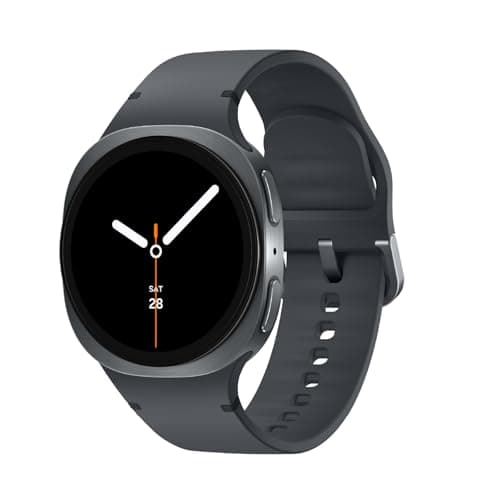
Samsung has been iterating on its smartwatch formula for years, but the Galaxy Watch 8 represents something genuinely different. Instead of the familiar circular case that has defined Samsung's wearable lineup since the original Galaxy Gear, the Watch 8 adopts what the company calls a "cushion" design — a squircle shape that borrows heavily from the rugged Galaxy Watch Ultra while carving out its own identity. After spending weeks with the 40mm Bluetooth model, I can say this is the most comfortable Samsung smartwatch I have ever worn, and the software improvements — particularly around Google Gemini integration and AI-driven health coaching — make it a compelling option for anyone shopping for a premium Wear OS smartwatch in 2026.
Design and Build Quality
The first thing you notice about the Galaxy Watch 8 is the shape. It is not quite round and not quite square — Samsung describes it as a cushion, and the description fits. The case measures 40.4 by 42.7 by 8.6 millimeters, making it 11 percent thinner than the Galaxy Watch 7. That reduction in thickness is immediately noticeable on the wrist. The watch sits flatter against your skin, which improves sensor contact and makes it far more comfortable for sleep tracking.
The Armor Aluminum case is available in Graphite or Silver, and both options look understated and premium. The 40mm model weighs only 30 grams (roughly 46 grams with the sport band attached), so you barely notice it during the day. This is a smartwatch you can wear for 24 hours straight without wanting to take it off, and that matters more than any spec sheet feature.
Samsung has switched to a proprietary strap system called Dynamic Lug, borrowed from the Galaxy Watch Ultra. The new mechanism makes swapping bands easier in theory — you press two flush buttons on the underside of the lugs to release the strap — but it also means none of your existing Galaxy Watch bands are compatible. Aftermarket options are limited at launch, though that will almost certainly change as third-party manufacturers catch up. On the positive side, the Dynamic Lug system does hold the watch more securely against your wrist during workouts, which contributes to better heart rate sensor accuracy.
Durability is robust. The Galaxy Watch 8 carries an IP68 rating for dust and water resistance, 5 ATM water resistance (suitable for swimming in shallow water), and MIL-STD-810H certification for shock and temperature extremes. The display is protected by sapphire crystal, which resisted scratches admirably during my testing, though the aluminum case itself is relatively soft and picked up a few micro-abrasions over the review period.
Display
The Super AMOLED display is one of the Galaxy Watch 8's strongest features. Peak brightness has been bumped from 2,000 nits on the Watch 7 to 3,000 nits, and the difference is striking. Under direct California sunlight, I never once found myself squinting at the screen. The always-on display mode is perfectly readable outdoors, and indoors the automatic brightness adjustment is smooth and responsive.
The 40mm model uses a 1.34-inch panel with a resolution of 438 by 438 pixels, while the 44mm version gets a 1.47-inch display at 480 by 480 pixels. Both are sharp, with deep blacks and vibrant colors that make watch faces pop. The higher brightness also means the watch is easier to read at a quick glance while running or cycling, which is exactly when you need it most.
One design trade-off worth noting: the new cushion shape means the bezel area around the screen is larger than before. On the standard Galaxy Watch 8, this bezel is mostly empty space — it is not functional like the rotating bezel on the Classic model. The screen itself is the same size as the Watch 7's, housed in a physically larger case. This gives the standard Watch 8 a slightly disproportionate look that the Classic model avoids thanks to its functional bezel ring. If the visual symmetry matters to you, the Classic is the better pick. For everyone else, the regular Watch 8's display quality is excellent and the larger bezel is easy to overlook after a day of use.
Performance and Software
Under the hood, the Galaxy Watch 8 runs the same Exynos W1000 processor found in the Watch 7. That might sound like a disappointment, but in practice the chip handles everything smoothly. The 3nm, 5-core design is more than adequate for Wear OS 6, and I experienced no lag or stuttering during normal use. Animations are fluid, apps open quickly, and Google Gemini responds to voice queries with minimal delay.
The big software story here is Wear OS 6 running Samsung's One UI 6 Watch skin. The interface has been redesigned around a new card-based system that replaces the old tile grid. Swiping left or right cycles through customizable information cards — weather, heart rate, upcoming calendar events, energy score — and the layout is more glanceable than before. The app drawer can be displayed as a grid or a list, and you can reorganize it to put your most-used apps front and center.
Samsung's One UI 6 Watch is colorful and modern, with a consistent design language that extends to every menu and settings screen. The notification management is excellent: you can reply to messages with voice dictation, smart replies, or a full on-screen keyboard, and the watch handles incoming calls with clear audio from the built-in speaker.
The Wear OS app ecosystem has matured nicely on Samsung watches. Google Maps works flawlessly for turn-by-turn navigation on your wrist. Spotify and YouTube Music allow offline playlist downloads for phone-free listening over Bluetooth earbuds. WhatsApp and Telegram offer full message threading and voice note playback. The Google Play Store on the watch gives you access to thousands of third-party apps, though the selection still trails the Apple Watch's App Store by a significant margin. For most daily tasks — checking messages, controlling music, viewing calendar events, setting timers — the Galaxy Watch 8 handles everything without needing to pull out your phone.
Google Gemini Integration
The Galaxy Watch 8 is the first smartwatch to ship with Google Gemini built in. Long-pressing the top button activates Gemini directly from the watch, without needing to pull out your phone. The assistant can answer questions, draft and send text messages, set reminders, control smart home devices, navigate to locations, and pull up photos from your Google Photos library.
I was skeptical that a wrist-based AI assistant would be useful, but Gemini won me over. Asking "what's the weather looking like this afternoon?" or "remind me to pick up groceries at 6 PM" feels faster and more natural than tapping through menus. The most impressive part is contextual awareness — you can ask about a specific landmark, then follow up with "show me photos of it" or "how far away is it?" without repeating the landmark name.
The catch is that Gemini requires an internet connection, either through Wi-Fi or LTE. If you have only the Bluetooth model and leave your phone behind, Gemini goes silent. The LTE model ($50 more) solves this, though it adds another monthly carrier fee. Still, for most daily scenarios — wearing the watch while your phone is nearby or on Wi-Fi — Gemini is genuinely useful and represents a meaningful step forward for voice interaction on wearables.
Galaxy AI Health Features
Samsung has packed several AI-driven health tools into the Galaxy Watch 8, and this is where the software really differentiates itself from the competition.
The Running Coach is the headline feature. After a 12-minute fitness assessment that measures your baseline, the watch creates a personalized training plan designed to prepare you for a 5K or marathon. During runs, the watch provides real-time audio feedback on pace every 30 to 60 seconds, delivered through the watch's speaker so you do not need headphones. The coaching is motivational without being annoying, and having a structured program tied to your actual fitness level is more effective than generic run tracking alone. The Running Coach is not perfect — it tends to err on the side of caution, and experienced runners may find the pace recommendations conservative — but for beginners and intermediate runners, it is a genuinely useful training companion.
Bedtime Guidance is another standout. The watch analyzes your sleep pressure (essentially your accumulated sleep debt), circadian rhythm, heart rate variability, skin temperature, and environmental factors to recommend an optimal bedtime. It tracks work nights and weekend nights separately, so the recommendations adapt to your schedule. I found myself following the watch's bedtime suggestions more often than I expected, and my sleep consistency improved measurably over the review period. The sleep animal categories — the watch assigns you an animal based on your sleep patterns — are a fun touch, but the real value is in the structured multi-week plans that help you build better sleep habits step by step.
The Antioxidant Index is a first-of-its-kind feature that uses the optical sensor to measure carotenoid levels in your skin, which correlates with your dietary antioxidant intake. You remove the watch and press your thumb to the sensor for a few seconds. The score ranges from 0 to 100, and the watch offers dietary suggestions based on your results. The technology is genuinely impressive, but the practical usefulness is still evolving. My scores consistently landed in the "Low" range, and the advice ("eat half a pear today") felt generic. This is a feature with potential, but in its current form, it is more of a conversation starter than a daily tool. I suspect Samsung will refine the recommendations as it collects more user data and improves the algorithm, and the underlying sensor hardware is sound. For now, consider it a preview of where wearable health sensors are heading rather than a must-use feature.
Vascular Load detection monitors your cardiovascular efficiency during sleep, tracking how well your heart pumps blood overnight. After three nights, it establishes a baseline and flags deviations. I found this more useful than the Antioxidant Index because the results came with context — "your exercise routine is consistent but your sleep patterns are irregular" — that helped me understand the interplay between different health metrics.
The Energy Score combines sleep quality, activity levels, heart rate variability, and stress into a single daily number. It is similar to Oura Ring's Readiness Score and serves the same purpose: telling you whether to push harder or take it easy on any given day. Samsung Health does not require a subscription for any of these features, which is a meaningful differentiator against Fitbit and some other competitors.
Health and Fitness Tracking
The Galaxy Watch 8 retains Samsung's BioActive sensor array, which includes optical heart rate, electrical bioimpedance analysis (BIA), temperature, and SpO2 monitoring. In testing against a chest strap and the Apple Watch Ultra 2, the Watch 8's heart rate readings stayed within 5 beats per minute of the reference devices across running, cycling, and indoor rowing. That is excellent accuracy for an optical wrist-based sensor.
Automated workout detection has improved significantly over the Watch 7. The watch correctly identified walking, running, cycling, and elliptical sessions within a minute or two of starting, and it rarely missed a workout. Dual-frequency GPS (L1 and L5 bands) delivered precise tracking on runs through tree-covered paths and between downtown buildings. The GPS locked on quickly — usually within 5 seconds — and route maps looked accurate when reviewed in Samsung Health afterward.
Sleep tracking remains best-in-class. The Galaxy Watch 8 reliably detected sleep and wake times, identified REM, light, and deep sleep stages, and recorded SpO2, skin temperature, and respiratory rate throughout the night. The sleep stage breakdowns closely matched data from a dedicated sleep tracking ring I wore simultaneously. The automatic sleep detection is more reliable than before, and I saw no gaps in night-time data, which was a problem I experienced with the Galaxy Watch 7.
The watch also supports ECG (for atrial fibrillation detection), blood pressure monitoring (requires periodic calibration with a traditional cuff), and sleep apnea detection. These features require the separate Samsung Health Monitor app and are region-dependent, but they add clinical-grade depth to the health tracking suite that most competitors do not match.
Battery Life
The Galaxy Watch 8's battery life is the one area where expectations need to be managed carefully. The 40mm model has a 325mAh battery, and the 44mm version gets 435mAh. In my testing with the 40mm model, with the always-on display enabled, notifications coming in consistently, and one GPS-tracked workout per day, the watch averaged about 26 hours between charges. With the always-on display disabled, that stretched to roughly 38 to 40 hours — enough to cover a full day and the following night, with charging needed on the second evening.
This is essentially the same battery life as the Galaxy Watch 7, despite an 8 percent larger battery capacity. The new features — especially Gemini and the AI health tracking — seem to consume the gains. Charging is reasonably fast: 20 minutes gets you to about 45 percent, and a full charge from empty takes roughly 65 minutes.
Compared to the competition, the Galaxy Watch 8's battery life is merely adequate. The Apple Watch Series 10 manages about two days with careful use. The OnePlus Watch 3 pushes past three days. The Huawei Watch 5 can last over a week. Samsung's wearable is firmly in the "charge every day" camp, and anyone coming from a multi-day fitness tracker like a Fitbit or a Garmin will need to adjust their habits.
The 44mm model's larger 435mAh battery fares slightly better. In PCMag's testing, the 44mm lasted 26 hours with the always-on display enabled and 39 hours with it disabled. The Classic model, with its 445mAh cell, managed an impressive 40 hours in Tom's Guide's testing. If battery life is your primary concern, the Classic or the 44mm standard model are the better choices over the 40mm version.
That said, the charging routine is easy enough to integrate into your day. I charged the watch while showering in the morning and while getting ready for bed, and I never ran into a situation where the watch died at an inconvenient time. The fast charging means even a 15-minute top-up during the day can get you through the evening.
Samsung Galaxy Watch 8 vs the Competition
The Wear OS smartwatch market in 2026 is more competitive than it has ever been. The Pixel Watch 3 matches the Galaxy Watch 8 on price at $349 and offers a more seamless experience for non-Samsung Android phone users, but its battery life is also around a day, and its 2,000-nit display is noticeably dimmer. Google's Fitbit integration is polished, but it requires a Fitbit Premium subscription for detailed insights, whereas Samsung Health is fully free.
The Apple Watch Series 10 starts at $399 (or $429 for the larger size) and is the best smartwatch for iPhone users, but it is incompatible with Android phones entirely, which eliminates it as an option for the vast majority of Samsung's potential buyers. Apple's watch offers a bigger app ecosystem and marginally better battery life, but the Galaxy Watch 8 matches or exceeds it on display brightness and health sensor depth.
Against its own predecessor, the Galaxy Watch 7, the Watch 8 represents a meaningful upgrade if you value the new design, Gemini integration, and AI coaching features. If you own a Galaxy Watch 6 or Watch 7 and are happy with the battery life and performance, there is not enough here to justify the upgrade. But if you are coming from a Watch 4, Watch 5, or any non-Samsung wearable, the Watch 8 is easily the best standard Galaxy Watch Samsung has made.
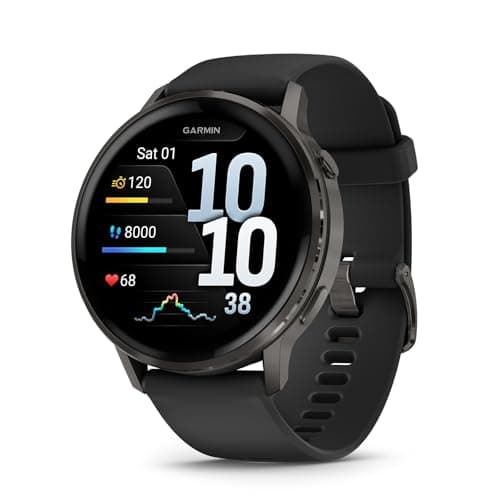
For those considering alternatives outside the Samsung ecosystem, the Garmin Venu 4 offers multi-week battery life and excellent fitness tracking, but its smartwatch features are more limited — no LTE option, fewer third-party apps, and no voice assistant integration at the level of Gemini. The OnePlus Watch 3 is a strong contender with better battery life at a similar price, but it lacks the depth of Samsung's health sensor suite, including the BioActive array's ECG, BIA, and temperature monitoring. No Wear OS watch in 2026 matches the Galaxy Watch 8's combination of display quality, health sensor depth, and AI integration at this price point.
Price and Value
The Galaxy Watch 8 starts at $349.99 for the 40mm Bluetooth model and $379.99 for the 44mm Bluetooth version. LTE adds $50 to either size. That is a $50 increase over the Galaxy Watch 7's launch price, which stings a bit given that the core processor and RAM are unchanged from last generation.
However, the Galaxy Watch 8 is frequently available at a discount. At the time of writing, the 40mm model is selling for around $289 on Amazon, which is a more compelling price point. At that price, the Galaxy Watch 8 is an excellent value proposition — you get the brightest display in its class, deep health tracking, Google Gemini integration, and one of the most comfortable wearable designs available, all without a subscription fee.
The Galaxy Watch 8 Classic starts at $499 and adds a stainless steel case and a physical rotating bezel that makes navigation more tactile and keeps the screen fingerprint-free. The Classic also has a larger 46mm case and a 445mAh battery that Tom's Guide measured at 40 hours per charge — a meaningful improvement over the standard model. If your budget allows, the Classic is the better watch, but the standard Galaxy Watch 8 covers all the essentials at a more accessible price.
Verdict
The Samsung Galaxy Watch 8 is the best standard-issue Galaxy Watch Samsung has released. It fixes the design stagnation that had crept into the lineup, introduces genuinely useful AI features that go beyond gimmicks, and delivers rock-solid health and fitness tracking that does not require a subscription. Google Gemini on the wrist is more useful than I expected, and the bright, sharp display is a joy to use in any lighting condition.
The battery life remains the biggest compromise. One day of charge is the trade-off for all the sensors and features packed into this thin, lightweight case, and it is a trade-off that will rule out the Watch 8 for some buyers. The proprietary band system and the $50 price increase are frustrating but manageable drawbacks.
For Android users — and particularly Samsung phone owners who can access the full suite of Galaxy AI features — the Galaxy Watch 8 is the smartwatch to beat in 2026. It is comfortable enough to wear 24 hours a day, capable enough to replace a dedicated fitness tracker, and smart enough to make you wonder how you managed without a wrist-based AI assistant. At its discounted street price, it is an easy recommendation.
The Galaxy Watch 8 is available now on Amazon and directly from Samsung.
Related: Apple Watch SE 3 Review · Fitbit Air Review · Apple Watch Series 11 Review
Pros
- Stunning 3,000-nit Super AMOLED display is the brightest in its class
- New cushion design is comfortable, lightweight, and sits flat on the wrist
- Google Gemini integration is genuinely useful for hands-free tasks
- AI-driven Running Coach and Bedtime Guidance deliver personalized insights
- Full health sensor suite with no subscription required
Cons
- Battery life still requires daily charging
- Proprietary Dynamic Lug system kills compatibility with existing bands
- Some Galaxy AI features require a Samsung phone to work fully
Final Verdict
The Samsung Galaxy Watch 8 brings a bold new cushion design, Google Gemini integration, AI-powered health coaching, and a stunning 3,000-nit AMOLED display. It is the most comfortable and capable standard Galaxy Watch Samsung has ever made, though battery life remains a one-day affair.