Apple iPhone Air Review: The Thinnest iPhone Ever, Compromise and All
At 5.64mm and 165 grams, the iPhone Air is Apple's boldest design in a decade — impossibly thin and light, with a great display and A19 Pro power, but a single camera and modest battery demand real compromises.
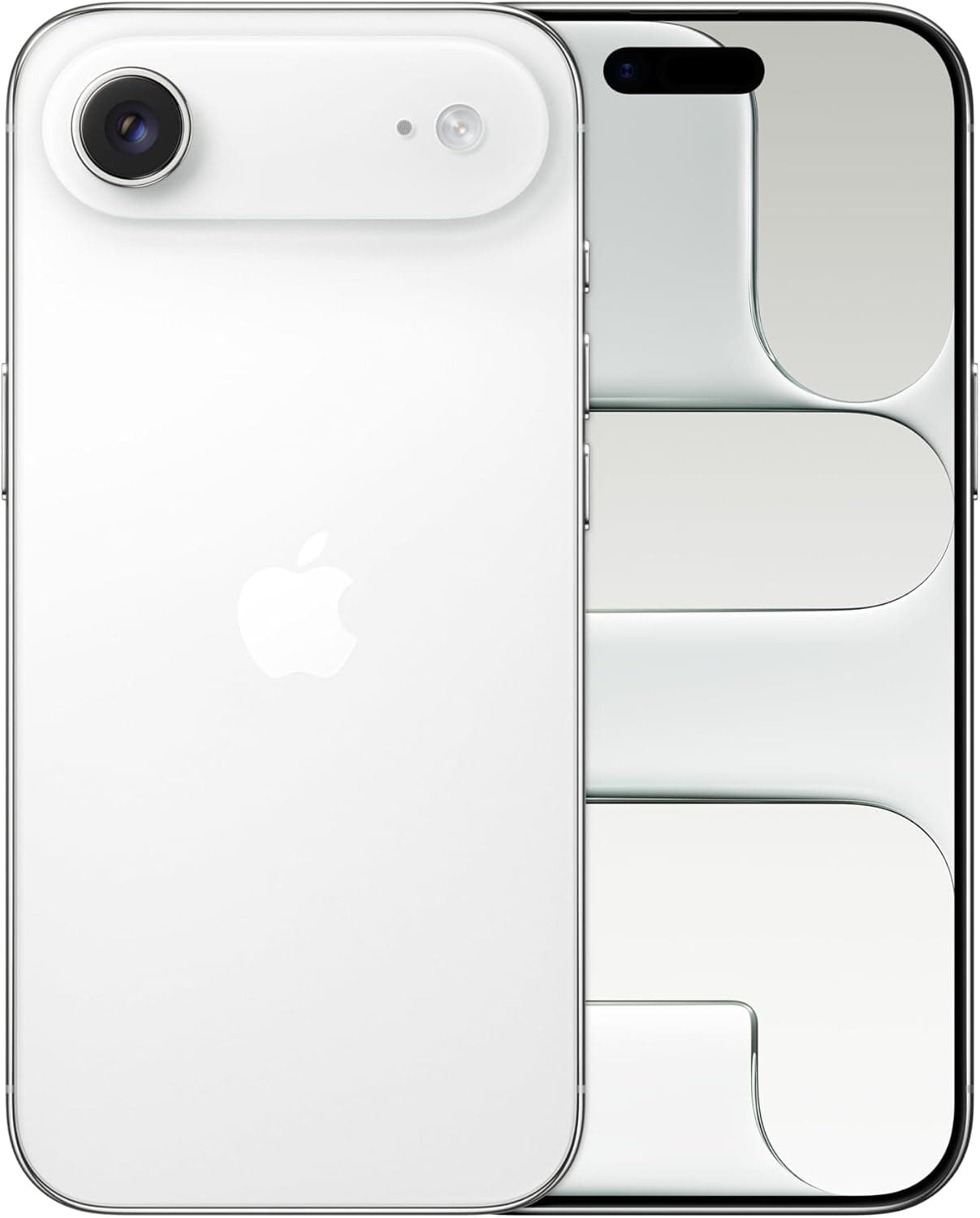
The Apple iPhone Air is the most talked-about iPhone in years, and for once the hype is justified by the hardware. At 5.64mm thick and 165 grams, it is the thinnest, lightest full-size iPhone Apple has ever built, and it represents the biggest design departure since the iPhone X removed the home button in 2017. It is also a phone of deliberate trade-offs: a single rear camera, a smaller battery than its siblings, and a price that starts $200 above the standard iPhone 17. After spending real time with it, the iPhone Air is simultaneously Apple's most exciting design in a decade and one of its most polarizing products. Whether it is right for you depends entirely on how much you value the form factor — and how willing you are to pay a premium for thinness.
Design and Build Quality
There is no way to talk about the iPhone Air without starting with its physical presence. At 5.64mm, it is thinner than every iPhone ever made, including the 6.9mm iPhone 6 from 2014, and it shaves nearly 31 percent off the thickness of the iPhone 17 Pro. It is also light — 165 grams, which is 41 grams lighter than the 17 Pro despite housing a larger 6.5-inch display. The first time you pick it up, the phone feels almost unreal, like holding a slab of glass that should not be able to contain a battery, a processor, and a camera. TechRadar called it "the sexiest iPhone I've ever tested," and that is not hyperbole.
The construction is where the Air surprises. Apple uses a grade 5 titanium frame with a polished finish, sandwiched between Ceramic Shield 2 glass on the front and a new Ceramic Shield back panel that Apple says is four times more crack-resistant than previous back glass. The result is a phone that feels far more substantial than its dimensions suggest. In TechRadar's testing, the Air survived a drop onto concrete pavers without a scratch, and Apple's internal testing showed the frame bending under 130 pounds of simulated force and springing back with no visible stress marks. The titanium frame also resists dents and scratches better than the aluminum on the standard iPhone 17, which matters if you carry your phone loose in a bag.
The rear design is the Air's signature. The camera bump — Apple calls it the "Camera Plateau" — is a raised horizontal block that spans the top corner of the back panel, housing the single 48MP lens, the flash, and the microphone array. It is a distinctive look that draws comments wherever the phone goes, and it gives the Air a visual identity that separates it instantly from every other iPhone on the table. The plateau is also practical: it keeps the phone from rocking when placed flat on a desk, and it gives your index finger a natural resting point.
The buttons are all here despite the thinness: the Action Button and volume controls on the left, the power button and the redesigned, thinner Camera Control on the right. The phone is IP68 rated, eSIM-only in every region (the SIM tray was sacrificed to save space), and it has a mono speaker at the top plus a bottom-firing speaker. The eSIM-only decision will be a non-issue for most American buyers, where carriers have fully embraced eSIM, but international travelers who swap physical SIMs frequently should note it.
Display
The Air's 6.5-inch Super Retina XDR OLED panel is excellent, and it is the largest display on any non-Pro iPhone. The resolution is 2736 x 1260 at roughly 460 pixels per inch, it supports ProMotion with a 120Hz adaptive refresh rate, and it peaks at 3,000 nits outdoors with HDR content. The always-on display is present, and the panel includes the same Ceramic Shield 2 front glass and anti-reflective coating as the rest of the 17 lineup. In practice, this is a flagship-grade display: colors are punchy, text is razor-sharp, outdoor visibility is superb, and the 120Hz ProMotion makes everything feel fluid. The slightly taller, slightly wider panel compared to the iPhone 17's 6.3-inch screen makes video, games, and reading feel noticeably more expansive, and the thin bezels keep the phone from feeling large despite the bigger display.
The display is also where iOS 26's Liquid Glass design language shines. The new translucent, glass-like UI elements — notification panels that refract light over the wallpaper, floating menu bars, and frosted-glass control surfaces — look absolutely at home on a phone that is literally a slab of glass. Apple's designers clearly had the Air in mind when they built Liquid Glass; the two feel made for each other in a way no other iPhone matches. If you are upgrading from an older iPhone, the combination of the 120Hz panel and the new OS design is the first thing you will notice, and it is a very good first thing.
Performance
Under the hood, the iPhone Air packs Apple's A19 Pro chipset with a 12GB of RAM, which is more memory than the standard iPhone 17 and the same silicon family as the 17 Pro. On paper, this makes the Air the most powerful non-Pro iPhone Apple has ever sold, and in practice it is indistinguishable from the Pro models for almost everything. Apps launch instantly, multitasking is effortless, and the phone handles demanding games, 4K video editing in iMovie, and heavy AI workloads without breaking a sweat. The A19 Pro is built for Apple Intelligence, and the 12GB of RAM gives the local AI features generous headroom — on-device photo cleanup, writing tools, notification summaries, and the new Visual Intelligence all run quickly and smoothly.
There is one performance caveat worth knowing: the thin chassis means less room for thermal management, and the phone can get warm under sustained heavy loads. TechRadar noted that long gaming sessions or extended 4K recording push the titanium frame into noticeably warm territory. It never throttles into unusability — the A19 Pro is efficient enough that day-to-day use stays cool — but it is a physical reality of the design, and marathon gamers should keep it in mind. For everyone else, the Air is fast enough that the performance question never comes up.
Battery Life and Charging
Here is the Air's most significant compromise. The phone packs a 3,149mAh battery, which is smaller than the 3,692mAh in the iPhone 17, and the real-world results reflect that. Apple rates the Air for up to 27 hours of video playback and 22 hours of streamed video, versus 30 and 27 hours respectively for the iPhone 17. In daily use, the Air gets most people through a full workday, but it is not a phone you can push hard and expect to reach bedtime with margin to spare. TechRadar's testing found the phone "could make it through a workday but not consistently to bedtime" under heavy use, and AppleVis's long-term review called battery life the phone's clearest weakness.
Charging is similarly modest. The Air supports 20W wired charging, which takes it from empty to 50 percent in about 30 minutes, and 20W wireless charging. That is slower than the iPhone 17's 40W wired charging and slower than most Android flagships in 2026, and it is a direct consequence of the thin design — there is simply less room for charging hardware and thermal dissipation. Apple sells a $99 MagSafe battery pack designed specifically for the Air that adds roughly 65 percent more battery life while adding minimal bulk, and for travelers it is almost a required accessory. The math is simple: if you are a heavy user, the Air will make you think about battery in a way Pro Max owners never do.
Camera
The iPhone Air has exactly one rear camera: a 48MP Fusion wide lens with a 26mm equivalent focal length and an f/1.6 aperture. There is no ultrawide, no telephoto, no LiDAR. This is the phone's most obvious compromise, and it is the one that will give photographers the most pause. The good news is that the single lens is excellent. The 48MP sensor captures sharp, natural images with Apple's class-leading computational processing, and the 2x sensor-crop zoom produces genuinely usable 12MP-equivalent shots that hold up surprisingly well. Portraits are a strength — the depth estimation from the single lens is good enough for convincing subject separation, and TechRadar's review called the camera's portraits "impressive." Low-light performance is solid, and the 18MP front camera is the same excellent sensor found across the 17 lineup, with Center Stage video framing for calls.
The bad news is the flexibility you give up. No ultrawide means no wide-angle group shots, no dramatic landscape frames, and no close-up macro mode. No telephoto means you are limited to the 2x crop and up to 10x digital zoom, which falls apart quickly beyond 3x or so. For the majority of users — people who shoot their daily life with the main camera and never think about focal length — the single lens is a non-issue, and Apple's computational photography closes most of the gap. But if you are someone who shoots wide-angle architecture, takes macro photos of food and plants, or zooms into distant subjects at concerts and sporting events, the Air will frustrate you where the $200-cheaper iPhone 17 with its dual cameras will not.
Video is a different story, and it is excellent. The Air shoots 4K at up to 60fps and 1080p slow motion at up to 240fps, with the same stabilization and HDR processing as the Pro models. The redesigned Camera Control button is thinner but works the same way — a half-press locks focus and exposure, a slide zooms, and a full press captures. For vloggers and casual creators, the Air is a genuinely capable video machine, and its light weight makes it easier to hold steady for long takes than heavier Pro phones.
iOS 26 and Apple Intelligence
The iPhone Air ships with iOS 26, and the new operating system is the best argument for the phone yet. Liquid Glass is the most dramatic visual overhaul since iOS 7, and it transforms the entire interface into translucent, light-responsive surfaces that feel like the phone's hardware made manifest. Beyond the looks, iOS 26 brings a redesigned Phone app with live translation during calls, customizable Messages backgrounds with typing indicators and polls, and a smarter Visual Intelligence that can identify objects, translate text, and add events to your calendar from a long-press of the Camera Control.
Apple Intelligence is the through-line. The Air's A19 Pro and 12GB of RAM make it one of the best iPhones for on-device AI: writing tools that rewrite and summarize your text, notification summaries, photo cleanup, and the new AI-powered photo editing tools shown off at WWDC 2026 all run locally and quickly. The full conversational Siri overhaul is still rolling out, and Apple Intelligence features are not yet front and center on every screen the way Apple's marketing suggests, but the foundation is here and the Air is built to run it for years. With Apple's standard five-plus years of iOS updates, the Air will keep getting smarter long after the hardware itself is old news.
Comparison With the Rest of the Lineup
The iPhone Air sits in an awkward but fascinating spot in Apple's 2026 lineup. Against the iPhone 17 at $799, the Air costs $200 more while offering a bigger, faster display, a faster chip, more RAM, and a dramatically better design — but it gives up the ultrawide camera, has worse battery life, and charges more slowly. For most people, the iPhone 17 is the rational buy. The Air is the emotional buy, and Apple is clearly counting on the fact that some percentage of buyers will pay for the design. Against the iPhone 17 Pro at $1,099, the Air is $100 cheaper and lighter and thinner, but the Pro brings the triple camera system with 8x optical zoom, the larger battery, and the faster charging — a much more complete phone for the same money.
What the Air does that nothing else in Apple's lineup does is occupy the design-forward space. It is the phone you buy because you want to hold it, because it feels like the future, because it disappears in your pocket and still delivers a 6.5-inch screen. Samsung's Galaxy S25 Edge tried the same trick at 5.8mm and sold it as a style statement; the Air undercuts it on thickness and pairs it with Apple's ecosystem and update support. There is no direct Android equivalent that matches the Air's combination of thinness, build quality, and software polish, which is why it has become the most talked-about phone of the year.
Real-World Use Cases
The iPhone Air rewards people who carry their phone everywhere and notice what is in their pocket. Commuters and city dwellers who walk or take transit will appreciate a phone that genuinely disappears in a pocket, and the light weight makes one-handed use more comfortable for long stretches. Travelers get the eSIM convenience and a phone that is easy to hold for hours of navigation and photos — assuming they pack the MagSafe battery for long days. People who read and watch video on their phone get the big, bright 120Hz display in the lightest possible package. And anyone who has ever looked at a Pro Max and wished it were lighter will find the Air revelatory.
The Air is also a phone that changes how other people react to your phone. It is a conversation starter, a device people ask to hold and inspect, and the first iPhone in years that feels genuinely new rather than incrementally updated. That is worth something, even if it is hard to quantify. It is also, per TechRadar's long-term testing, a phone that people often mistake for a Google Pixel at a glance — a small irony for the company that invented the modern smartphone aesthetic.
Ecosystem and Accessories
The Air slots into Apple's ecosystem exactly as you would expect, with a few wrinkles worth knowing. MagSafe works as advertised — the magnet array is strong enough for car mounts, chargers, and wallets — and the $99 MagSafe Battery Pack Apple designed specifically for the Air is the accessory to buy if you plan to travel. It adds about 65 percent more runtime and clips on flush with the back, preserving the Air's slim profile in a way third-party battery cases never could. Cases are plentiful now that the phone has been out for a year, but the thin profile means some cases add proportionally more bulk than they would on a normal phone, so it is worth trying a case before committing.
The Air also pairs perfectly with the rest of the modern Apple stack: AirPods Pro 3's adaptive audio, the Apple Watch Series 11's tight integration, and the new Continuity features in iOS 26 all work without friction. Face ID is the same excellent system found across the lineup, and the titanium frame plays nicely with the whole accessory ecosystem. One note: because the Air is eSIM-only, setting up a new carrier or traveling internationally requires a bit more planning than a phone with a physical SIM tray, though the eSIM transfer tools in iOS 26 make switching between profiles painless.
Who the Air Is For
The clearest way to decide on the iPhone Air is to answer one question: how much do you notice your phone in your pocket? If the answer is "constantly," the Air is transformative — 165 grams and 5.64mm genuinely disappear in a jeans pocket, and you will stop carrying your phone in your hand just to avoid the weight. If the answer is "I never think about it," the Air's main selling point is wasted on you, and the iPhone 17's extra camera and better battery are worth more than thinness you will not feel. There is no wrong answer, but the Air's value proposition is entirely tied to that one question, which is why it has generated more debate than any iPhone in years.
The iPhone Air is a design triumph with a set of compromises you need to accept before you buy. If you value the thinnest, lightest full-size phone Apple has ever made, if you shoot mostly with the main camera, if you are a moderate user who can make a day on a charge, and if you are willing to pay $999 for a phone that is more about presence than specs, the Air is the most exciting iPhone in years and you will love it. If you need a second camera, if battery life is your top priority, if you want the fastest charging, or if you simply want the most phone for your money, the iPhone 17 is the better buy — and the iPhone 17 Pro is the better flagship.
The Air is not a phone for everyone, and Apple knows it. It is a phone for people who feel the weight of their phone every day, who care about design as much as specs, and who are willing to trade some capability for the pleasure of carrying something beautiful. At the current Amazon price of $828.50 for the 256GB unlocked model, the value equation is more favorable than at launch — you are getting a phone that was $999 at release for less than the iPhone 17's retail price. You can check the current price on Amazon here: Apple iPhone Air on Amazon.
Final Thoughts
The iPhone Air is the boldest thing Apple has done to the iPhone in nearly a decade, and it proves the company can still surprise people. It is impossibly thin, beautifully built, fast where it counts, and the best argument yet that design can be a feature. It is also a phone that asks you to accept real trade-offs — a single camera, modest battery life, slower charging — and to pay a premium for the privilege. For the right buyer, none of that matters, because the Air delivers something no other phone does: the feeling that you are holding the future. For everyone else, the iPhone 17 remains the smarter choice. That the Air can be both the most exciting iPhone in years and a hard phone to recommend is exactly what makes it the most interesting phone Apple has made in a long time. Try it in a store before you judge it — holding it for thirty seconds explains the whole story.
Related: Samsung Galaxy S26 Review · Google Pixel 10 Pro XL Review
Pros
- Impossibly thin and light titanium design
- Excellent 6.5-inch 120Hz ProMotion display
- A19 Pro chip with 12GB RAM is plenty fast
- iOS 26 Liquid Glass looks made for this hardware
Cons
- Single rear camera, no ultrawide or telephoto
- Battery life is a workday phone, not an all-day phone
- Slow 20W charging and no SIM tray (eSIM only)
- Runs warm under sustained heavy loads
Final Verdict
At 5.64mm and 165 grams, the iPhone Air is Apple's boldest design in a decade — impossibly thin and light, with a great display and A19 Pro power, but a single camera and modest battery demand real compromises.