Beyerdynamic MMX 150 Wireless Review: Audiophile Gaming Sound Meets Everyday Versatility
The Beyerdynamic MMX 150 Wireless brings the legendary German audio brand's signature sound quality to a wireless gaming headset at $229.99. With exceptional midrange clarity, velour earpads, and 50-hour battery life, it's a compelling option for gamers who prioritize audio fidelity over flashy features.
Beyerdynamic has been building headphones since 1924, which means they've had over a century to figure out what makes a great pair of headphones. Their studio classics like the DT 770 Pro and DT 900 Pro X are practically legendary in audio circles, and their MMX line has earned a reputation as some of the best-sounding gaming headsets on the market. The MMX 150 Wireless is their attempt to bring that pedigree to a more accessible price point while cutting the cord. After spending significant time with it across PC gaming, music listening, and even a few work calls, here's the full picture.
At $229.99, the MMX 150 Wireless enters one of the most competitive segments in gaming audio. It faces the Razer BlackShark V3 at $150, the HyperX Cloud III Wireless at $180, and the SteelSeries Arctis Nova Pro Omni Review: The $400 Gaming Headset That Does Everything Arctis Nova 7 at $200, all of which offer strong feature sets at similar or lower prices. To stand out, the MMX 150 leans on what Beyerdynamic does best: sound quality and comfort. The question is whether that's enough in a market where features like ANC, software EQ, and multi-platform support are table stakes for many buyers.
Design, Build, and Comfort
The MMX 150 Wireless marks a significant departure from Beyerdynamic's usual build philosophy. While the flagship Samsung Galaxy S26 Ultra Review: The Privacy-First Flagship That Redefines Android Excellence MMX 300 and MMX 330 Pro use all-metal construction that feels like it could survive a drop from a second-story window, the MMX 150 trades metal for plastic to save weight and cost. The result is a headset that weighs just 336 grams — 100 grams lighter than the MMX 330 Pro — and it shows in the comfort department.
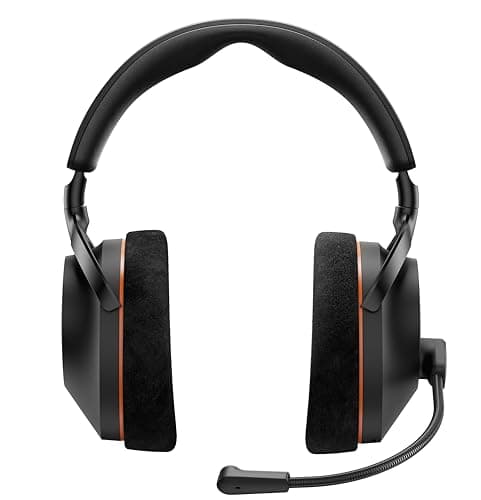
The earcups are the highlight of the design. Beyerdynamic has fitted the MMX 150 with generously padded velour earpads filled with memory foam, and they are exceptionally comfortable. The velour material breathes far better than the pleather found on most gaming headsets in this price range, which means your ears stay cooler during extended sessions. After four hours of continuous use, I had no discomfort or heat buildup — something I cannot say about the SteelSeries Arctis Nova Pro Omni or the Razer BlackShark V3 Pro, both of which use leather-like materials that trap heat over time. The velour also has a nice tactile quality that feels soft against the skin, and it doesn't develop that sticky feeling that pleather gets after prolonged use in warm conditions.
The clamping force is notably light. This is the least clamp-intensive Beyerdynamic headset I've ever worn, and it makes a real difference for long sessions. The headband is padded with memory foam and covered in a soft fabric that doesn't create a hot spot on the top of your head. The adjustment sliders have a satisfying ratcheting mechanism with clear detents, so you can easily find and remember your preferred size. The overall fit is secure enough that the headset stays in place during head movements, but relaxed enough that you can wear it for hours without feeling pressure points.
However, the build quality outside of the earcups and headband is where the MMX 150 shows its budget-conscious origins. The outer earcup housings are made of a textured plastic that feels grainy and thin to the touch. It's not cheap in the way that sub-$50 headsets feel cheap, but it's noticeably less premium than the metal construction of Beyerdynamic's higher-end models. The volume wheel on the left earcup is a bright orange plastic piece that feels flimsy when rotated and looks jarringly game-like against the otherwise understated, mature design. The wheel has a notched resistance that provides tactile feedback, but the plastic-on-plastic interaction doesn't feel smooth or precise.
The LED ring around the volume wheel is constantly illuminated with a bright green glow that indicates connection status, and it's surprisingly distracting in a dark room. There's no way to disable it through hardware, which feels like an oversight. If you game in a dark environment, that persistent green glow will catch your peripheral vision. I eventually covered it with a small piece of electrical tape, which is not something you should have to do on a $230 headset.
The microphone is detachable, which is a welcome feature that adds versatility — you can remove the mic and use the MMX 150 as a standard pair of wireless headphones for music or travel. The mic connection point uses a proprietary locking mechanism that feels secure, with no wobble or accidental disconnection during use. The port is located on the left earcup and is covered by a small rubber plug when the mic is removed, which is a nice touch that prevents dust from entering.
Sound Quality: Where Beyerdynamic Earns Its Reputation
The MMX 150 Wireless uses 40mm dynamic drivers with a frequency response of 20Hz to 20kHz. These aren't the STELLAR.45 drivers found in the pricier MMX 300 and MMX 330 Pro, but they still deliver the kind of detailed, well-resolved audio that Beyerdynamic is known for. The tuning philosophy here prioritizes clarity and detail over raw excitement, which makes the MMX 150 a headset that rewards careful listening rather than one that tries to impress with boosted bass or exaggerated treble.
The midrange is the standout performer. Vocals, acoustic instruments, and in-game dialogue are rendered with exceptional clarity and presence. In games like Baldur's Gate 3, character voices have a richness and texture that cheaper gaming headsets simply cannot reproduce. The midrange has a tactile quality that makes sound effects — the clink of a sword, the rustle of foliage, the creak of a door — feel more real and immediate. This is where the Beyerdynamic heritage shines through most clearly, and it's the primary reason to choose this headset over its competitors.
Bass response is clean but subdued. There's good mid-bass punch — kick drums and explosions have satisfying thump — but sub-bass extension is limited. If you're looking for the chest-thumping rumble of an explosion in Battlefield or the deep bass of EDM music, the MMX 150 will disappoint without EQ. The bass is present, but it's polite rather than powerful. MajorHifi's review noted that "bass frequencies are clean but are not a prominent element" and that "heavy EQ required for satisfying low-end." I found that a gentle 3-4dB boost around 100Hz through the beyerdynamic app's EQ significantly improved the bass response without causing distortion or muddying the midrange. The drivers handle the EQ boost cleanly, without breaking up or distorting at moderate volume levels.
The treble is where Beyerdynamic's signature tuning comes through most clearly. The MMX 150 has a bright, detailed top end that provides excellent clarity and airiness. Cymbals have sparkle, footsteps have texture, and the overall presentation feels open and spacious — impressive for a closed-back headset. However, the treble can be aggressive, particularly in the upper registers. PC Gamer's review noted that there's "a bit of distortion that is enough to be distracting" in the high frequencies, and I agree. The treble peaks can make sibilant sounds harsh, and listeners sensitive to bright headphones may find the MMX 150 fatiguing over long listening sessions. The wired connection via USB-C seems to help slightly, suggesting that some of the harshness may be related to the wireless DAC implementation rather than the drivers themselves.
The soundstage is wide for a closed-back gaming headset. It doesn't match the expansive presentation of open-back headphones like the Beyerdynamic DT 900 Pro X, but it creates a convincing sense of space that works well for both gaming and music. The separation between instruments and sound effects is excellent — in busy game scenes with multiple audio layers (gunfire, dialogue, environmental sounds, music), the MMX 150 keeps everything intelligible and well-separated. Imaging is precise — I could accurately locate enemy positions in Counter-Strike 2 and track movement in Call of Duty without confusion. The spatial accuracy is competitive-grade, which is exactly what you want from a gaming headset at this price.
Connectivity and Wireless Performance
The MMX 150 offers three ways to connect: a low-latency 2.4GHz USB-C dongle for gaming, Bluetooth 5.3 for mobile and general use, and a wired 3.5mm connection for universal compatibility. This triple-threat connectivity approach is becoming standard in the gaming headset market, and Beyerdynamic executes it well. The dongle is compact enough to leave plugged into your PC or console without getting in the way, and it includes a USB-A adapter for devices that don't have USB-C ports. The dongle is presynced to the headset out of the box, so there's no pairing process required — just plug and play.
Wireless performance is excellent. The 2.4GHz connection is rock-solid with no dropouts, stuttering, or hissing even at distances of 30 feet with two walls between the headset and dongle. The signal penetration is impressive — I could walk to my kitchen, grab a drink, and still hear my game audio without interruption. Latency is imperceptible — there's no noticeable delay between audio and on-screen action, which is critical for competitive gaming where split-second reactions matter.
Bluetooth 5.3 supports multipoint connection, allowing you to stay connected to your phone for calls while gaming over the dongle. The transition between sources is seamless, with the headset prioritizing the active audio source intelligently. When a call comes in while you're gaming, the headset automatically switches to the phone audio and then returns to game audio when the call ends. This works reliably and is one of the most useful quality-of-life features for anyone who uses their headset for both gaming and daily communication.
The wired 3.5mm connection is a nice fallback for devices that don't support wireless — the Nintendo Switch in handheld mode, for example, or an Xbox controller. Beyerdynamic includes both a USB-C to USB-C cable and a USB-C to 3.5mm cable in the box, which is generous and thoughtful compared to competitors who often skimp on accessories.
One notable limitation: Xbox support is wired-only via the 3.5mm connection. The wireless dongle and Bluetooth do not work with Xbox consoles. This is a significant drawback for Xbox gamers who want a pure wireless experience. The Razer BlackShark V3 Pro and SteelSeries Arctis Nova 7 both offer Xbox-compatible wireless versions at similar or lower prices.
Microphone Quality
The detachable META VOICE microphone is an electret condenser with a cardioid pickup pattern. It performs well for a gaming headset microphone, delivering clear voice transmission with good intelligibility. The cardioid pattern does an effective job of rejecting background noise — my mechanical keyboard typing and ambient room sounds were mostly filtered out during Discord calls and recording tests. The microphone arm is flexible and holds its position well, with a good range of adjustment to find the optimal placement near your mouth.
The microphone sounds more natural than the SteelSeries Arctis Nova Pro Omni's ClearCast Pro, which has a slightly processed quality due to its AI noise cancellation. The MMX 150's mic captures voice with a warmer, more organic tonality that sounds less digitally processed. However, it's more susceptible to plosives (popping sounds from P's and B's) and sibilance than some competitors. A simple foam windscreen would have been a welcome inclusion, and I'd recommend picking up a third-party one if you plan to use the mic extensively for voice chat or streaming.
The mute function is handled through a button on the left earcup rather than by flipping the mic up, which is slightly less convenient in the heat of gameplay but works reliably. There's an audible tone and a visual indicator when mute is activated, so you won't accidentally broadcast something you didn't intend to.
One nice feature is the sidetone function, which pipes some of your own voice through the headset so you can hear yourself speak naturally. This prevents the "shouting into a void" feeling that some people experience when wearing closed-back headsets. The sidetone level is adjustable through the beyerdynamic app.
Battery Life and Charging
Battery life is rated at up to 50 hours on a full charge, which is excellent for a wireless gaming headset. In real-world usage with mixed 2.4GHz and Bluetooth use at moderate volume levels, I got approximately 45 hours before the low-battery warning appeared. That's nearly two weeks of daily gaming sessions without charging, which is genuinely impressive and puts it ahead of most competitors. The Razer BlackShark V3 Pro offers about 30 hours, the HyperX Cloud III Wireless gets about 120 hours (but uses standard AA batteries), and the SteelSeries Arctis Nova 7 manages about 38 hours.
Fast charging support means 15 minutes of charging provides several hours of playback. The USB-C charging port is on the left earcup, and the included cable is plenty long enough to charge while in use if needed. The battery indicator in the beyerdynamic app gives a percentage readout, and there's an audible low-battery warning that gives you about 30 minutes of warning before shutdown.
Unlike the SteelSeries Arctis Nova Pro Omni's hot-swappable battery system, the MMX 150 uses a built-in rechargeable battery that requires the headset to be plugged in to recharge. This is the standard approach for most gaming headsets, and the 50-hour battery life means you won't need to charge frequently. A full charge from empty takes about 2.5 hours via USB-C. But once the battery does eventually degrade after a few years of use, replacement will require service or soldering, which is something to consider if you plan to keep the headset for the long term.
Software and App Support
The beyerdynamic app is available for iOS and Android and provides basic EQ control, battery monitoring, and firmware updates. The EQ includes several presets for different game genres — FPS, RPG, MOBA — as well as a custom mode with adjustable bands. It's functional but limited compared to the PC-based Sonar software offered by SteelSeries or the THX Spatial Audio app from Razer.
One significant omission is the lack of a Windows application. The MMX 150 has no desktop software for EQ adjustment, microphone tuning, or audio routing. If you want to customize the sound signature, you need to do it through the mobile app and save it to the headset's onboard memory. This works, but it's less convenient than having real-time control on your PC. Competitors like SteelSeries and Razer offer full-featured desktop apps that provide far more granular control, including parametric EQ, microphone noise gate adjustment, and virtual surround sound configuration.
The mobile app also allows for firmware updates, which is important for maintaining compatibility and performance over time. During my testing period, a firmware update was released that improved Bluetooth connection stability, and the update process was straightforward through the app.
Gaming Performance
In games, the MMX 150 performs exactly as its tuning suggests: excellent for competitive play with a focus on clarity and positioning, less engaging for cinematic single-player experiences that benefit from punchy bass.
In Counter-Strike 2, the spatial accuracy is exceptional. I could pinpoint enemy footsteps with precision, distinguishing between surfaces (concrete vs. wood vs. dirt) and distance with good accuracy. The treble emphasis helps with this — the high-frequency detail makes subtle audio cues stand out from the mix. Footsteps that would be buried in the mix on a bassier headset are clearly audible here. This is a headset designed for gamers who take their competitive play seriously.
In single-player games like Cyberpunk 2077 and Elden Ring, the MMX 150 delivers detailed, immersive audio with excellent soundstage width. Dialogue is clear and centered, environmental sounds have good spatial placement, and the overall presentation is engaging. The lack of bass impact is felt in action-heavy sequences — explosions and gunfire lack the visceral punch that makes them exciting. A dragon's roar in Elden Ring sounds detailed and layered, but it doesn't have the gut-shaking presence that a bassier headset would provide. EQ can help, but the driver's physical limitations mean it will never match the bass response of a headset like the Audeze Maxwell 2 or even the Razer BlackShark V3 Pro.
Passive noise isolation is very good thanks to the closed-back design and plush velour earpads. While there's no active noise cancellation, the physical isolation is sufficient to block out most ambient noise — PC fan noise, keyboard sounds, and general household activity. I'd estimate it blocks about 70% of ambient noise, which is competitive with other closed-back gaming headsets in this price range. The velour pads create a good seal around the ears without the pressure that pleather pads often create.
Comparison to Competitors
Against the HyperX Cloud III Wireless ($180), the MMX 150 offers better sound quality and a more premium audio experience, but the HyperX has better build quality, a more versatile feature set, and a lower price. The Cloud III Wireless is the safe choice; the MMX 150 is the audiophile's choice. The HyperX also has a significantly longer battery life (120 hours vs 50 hours on the MMX 150), though it uses standard AA batteries rather than a built-in rechargeable pack.
Versus the Razer BlackShark V3 Pro ($250), the MMX 150 is lighter and more comfortable for long sessions, with better midrange clarity. The BlackShark V3 Pro counters with ANC, a better default tuning for mixed use, a more robust build, and a significantly better microphone. At similar prices, the BlackShark V3 Pro is the more complete package for most gamers who want a feature-rich, do-everything headset.
Compared to the SteelSeries Arctis Nova 7 ($200), the MMX 150 has better sound quality and longer battery life, but the Arctis Nova 7 offers a more comfortable suspension headband, a better mic, and access to the Sonar software ecosystem. The Nova 7 is the better overall gaming headset; the MMX 150 is the better headphone that also works for gaming.
Against the Beyerdynamic MMX 330 Pro ($350), the MMX 150 is lighter, wireless, and significantly more affordable, but it sacrifices the 330 Pro's superior STELLAR.45 drivers, metal build, and audiophile-grade sound quality. The MMX 150 is a more practical daily driver; the 330 Pro is for those who prioritize pure audio performance above all else.
Final Thoughts
The Beyerdynamic MMX 150 Wireless is a headset that grows on you. My first impression was mixed — the flimsy plastic controls, the bright green LED, and the subdued bass all gave me pause. But after using it for a week, I started to appreciate what Beyerdynamic got right: the comfort is exceptional, the midrange clarity is addictive, the battery life is liberating, and the detachable mic adds real versatility for non-gaming use.
It's not a headset that tries to do everything. It doesn't have ANC, it doesn't have a desktop app, it doesn't have a multi-platform base station, and it doesn't have gamer-ified RGB or aggressive styling. What it does have is Beyerdynamic's audio DNA, a level of comfort that rivals headsets costing twice as much, and a battery that lasts through a work week of gaming without breaking a sweat.
If you've been looking for a wireless gaming headset that treats audio seriously without breaking the bank, the MMX 150 Wireless deserves a spot on your shortlist. It's not the most feature-rich headset in its class, but for the things that matter most — sound, comfort, and endurance — it delivers where it counts. The build quality concerns and the lack of ANC hold it back from greatness, but the core audio experience is compelling enough to recommend for gamers who prioritize sound quality above all else.
Pros
- Exceptional midrange clarity with Beyerdynamic's signature sound
- Extremely comfortable velour earpads for marathon sessions
- Detachable microphone adds versatility for non-gaming use
- Bluetooth 5.3 with multipoint for simultaneous phone and gaming audio
- Reliable wireless range with excellent signal penetration
Cons
- Subdued bass requires EQ for satisfying low-end response
- Distracting green LED ring on volume wheel cannot be disabled
- No active noise cancellation at this price point
- Plastic build and flimsy controls feel cheap for $230
- No Windows software for EQ or audio customization
Final Verdict
The Beyerdynamic MMX 150 Wireless brings the legendary German audio brand's signature sound quality to a wireless gaming headset at $229.99. With exceptional midrange clarity, velour earpads, and 50-hour battery life, it's a compelling option for gamers who prioritize audio fidelity over flashy features.