Turtle Beach Stealth Pro II Review: Multi-Device Wireless Freedom for Serious Gamers
The Turtle Beach Stealth Pro II delivers genuine wireless multi-device freedom with a clever transmitter system, excellent hot-swappable batteries, and detailed 60mm drivers, though build quality and buggy software hold it back from perfection.
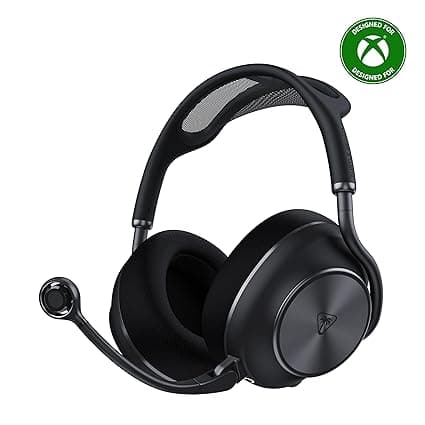
The premium gaming headset market has been quietly consolidating around a few dominant players—SteelSeries, Astro, and Logitech have traded blows for years, each refining their formulas with incremental updates that rarely surprise anyone. But Turtle Beach, a company long associated with mid-range and entry-level gaming audio, has been cooking something genuinely interesting in its higher-end laboratory. The original Stealth Pro was already a strong contender when it launched, offering competitive sound and a comfortable fit at a reasonable price. The new Stealth Pro II, however, takes nearly everything that worked about the original and addresses almost every meaningful complaint, adding a genuinely innovative feature: true wireless multi-device connectivity that doesn't chain your consoles and PC to a single base station. After spending two weeks with the $349.99 Turtle Beach Stealth Pro II, using it across PC, PlayStation 5, and Bluetooth-connected devices in various real-world scenarios, I can confidently say it's one of the most versatile gaming headsets available right now—even if it's not without its frustrations and quirks.
Design, Build Quality, and First Impressions
The Stealth Pro II represents a significant visual and structural departure from its predecessor. Where the original Stealth Pro had a somewhat utilitarian, gamer-aesthetic design with angular lines and prominent branding, the Stealth Pro II adopts a far more sophisticated, almost minimalist silhouette. It takes clear aesthetic cues from Apple's AirPods Max, with a streamlined circular earcup design, a fabric-suspended headband that floats above a metal arch, and a refined matte finish that looks more like a premium pair of lifestyle headphones than a traditional gaming headset. The result is a headset that doesn't scream "gamer" when you wear it outside your gaming den—it could almost pass for high-end audio gear from Sony or Bose.
The build quality, however, tells a more complicated story. Turtle Beach uses a combination of metal yokes and soft-touch plastic for the earcups, which feels solid enough to survive daily use. The earcups themselves rotate and swivel with satisfying smoothness, and the detachable boom microphone clicks into place securely with no wobble. But the headband mechanism raises some genuine long-term durability concerns. The fabric suspension strap is noticeably thinner than what you'd find on the AirPods Max or the SteelSeries Arctis Nova Pro, and it doesn't inspire the same confidence that it will hold up after years of daily stretching and adjustment. The metal slider that adjusts the earcup height has a slightly rough, grinding feel when you move it—it works, but it lacks the precision-engineered, buttery-smooth confidence you get from headsets at or above this price point.
The earpads themselves are genuinely excellent. They use sculpted memory foam with a breathable fabric cover, and the shape is contoured to match the natural curve of the human skull around the ear—a thoughtful ergonomic touch that most headset manufacturers overlook entirely. The clamping force is firm, which creates a strong seal that contributes meaningfully to the headset's impressive passive noise isolation. That firm clamping force, combined with the 393-gram (13.86-ounce) weight, starts to become noticeable after extended sessions. At around the two-hour mark, the weight settles in, and by the four-hour mark, I found myself wanting a brief break. This isn't unusual for a premium wireless headset in this class—the Astro A50 X weighs about the same—but the weight distribution leans more heavily on the headband than on the earcups, which limits marathon comfort for all-day gaming sessions.
True Multi-Device Wireless Freedom
The headline feature of the Stealth Pro II—and the single strongest reason to consider it over the competition—is its wireless multi-device architecture. To understand why this matters, you need to understand how most premium gaming headsets handle multi-platform connectivity. Typically, a headset like the Astro A50 X or the SteelSeries Arctis Nova Pro uses a base station that you physically plug your devices into. You connect your PC, PlayStation, and Xbox to the base station with HDMI or optical cables, and the headset communicates wirelessly with that station. This works fine if your entire gaming setup lives on a single desk in a single room. But what if your PC is in a home office on the second floor and your PlayStation is hooked up to the living room TV downstairs? With traditional solutions, you're either moving cables or buying a second headset.
The Stealth Pro II solves this problem with an elegant system of independent wireless transmitters. The headset comes with a USB-A dongle transmitter and the Crossplay charging dock, which also functions as a transmitter. You plug the dongle into your PC and the dock into your PlayStation via USB, and the headset can switch between them wirelessly with the press of a dedicated button on the right earcup. You can connect up to four transmitters total, meaning your Xbox Series X, Nintendo Switch, and even your Steam Deck can all be part of the same wireless ecosystem. The switching is genuinely near-instantaneous—I measured less than two seconds to transition from a PS5 game to a Discord call on PC, with the headset automatically adjusting its EQ profile based on which source was active.
In real-world use, this feature is transformative. I have my gaming PC in a home office on the second floor and a PS5 connected to the living room TV. With the Stealth Pro II, I can start a competitive gaming session on the PC, walk downstairs, press the CrossPlay button, and continue on the PlayStation without missing a beat. The headset also supports simultaneous Bluetooth 5.3 and 2.4GHz wireless, so you can take a phone call or listen to a podcast through your phone while maintaining high-quality game audio from your console or PC. The Bluetooth implementation supports LC3+ and LDAC codecs, which means you get near-lossless audio from compatible Android devices—a rare feature in the gaming headset space. The range on both wireless bands is solid: I got about 40 feet of clear signal through two walls before any audio dropouts occurred during testing.
Audio Performance and Sound Quality
The Stealth Pro II is built around 60mm Eclipse dual drivers—a dedicated woofer and tweeter in each earcup—delivering a frequency response that spans 10Hz to 40kHz. On paper, that's a wider range than most gaming headsets, and in practice, it translates to a soundstage that's noticeably broader and more spatially detailed than what you'll get from standard 40mm or 50mm drivers. The separation between the low and high frequency drivers gives the audio a clarity and airiness that single-driver designs struggle to match, particularly in complex game environments where multiple audio layers compete for your attention.
Out of the box, the tuning is aggressively optimized for competitive gaming. The bass is elevated and punchy, giving explosions and gunfire visceral weight and impact. Kick drums in game soundtracks hit with satisfying authority, and the low-end rumble of engines in racing games or hovercraft in sci-fi titles adds genuine atmosphere to the experience. The treble, however, is pushed forward even more aggressively to emphasize footsteps, reload sounds, equipment swaps, and other positional audio cues that competitive players rely on. The midrange, unfortunately, gets somewhat buried in this process. Voices and environmental details that sit in the mids can sound noticeably recessed compared to the boosted low and high frequencies, which means dialogue in cinematic games can feel less present than the sound effects around it.
This treble-forward tuning can be a double-edged sword in practice. While it does make subtle audio cues—footsteps on different surfaces, distant gunfire direction, ability activation sounds—significantly easier to pick out in competitive titles like Call of Duty Black Ops 7, Valorant, or Apex Legends, it also makes certain sound effects genuinely sibilant at higher volumes. I noticed this most acutely in Apex Legends, where the crack of a Wingman shot could occasionally hit a harsh, piercing note that made me instinctively wince. Cymbals, hi-hats, and higher-pitched voices in game cutscenes share this tendency. The good news is that the headset's noise floor is exceptionally low—in quiet moments, the audio channel is truly silent, with no hiss, static hum, or electronic artifacts bleeding through from the wireless connection. That's a mark of quality engineering that you simply don't get at this price point from most competitors.
Dolby Atmos support is built in and license-free—you don't need to purchase a separate license or subscription, which is a welcome change from the Windows Sonic and DTS Headphone:X licensing models that some competitors use. The Atmos implementation makes a meaningful difference in titles that support spatial audio properly. In Cyberpunk 2077, the Atmos rendering created a genuinely convincing sense of three-dimensional space, with rain sounding like it's falling from above rather than just washing over the stereo field from left to right. The broad soundstage also enhances immersion in single-player titles—Horizon Forbidden West sounds expansive and alive, with mechanical dinosaur footsteps registering with directional precision that makes combat feel more immediate and tactical.
The active noise cancellation is good but not exceptional by the standards of the broader headphone market. It handles low-frequency drone sounds—air conditioning units, computer fans, refrigerator hum, traffic rumble—very effectively, cutting them down to a barely perceptible whisper. It's less effective against higher-frequency noise like human voices, keyboard chatter, or television audio bleeding in from another room. The passive isolation from the clamping force and memory foam earpads is actually so strong that I frequently found myself using the headset with ANC disabled entirely, relying solely on the physical seal. One design quirk worth noting: the hardware ANC button on the left earcup only cycles between ANC-on and Transparency mode. To disable noise cancellation entirely and use purely passive isolation, you must open the Swarm II software. This adds friction to what should be a hardware-level control.
Microphone Performance and Communication
The detachable 9mm boom microphone is one of the best microphones I've tested on a gaming headset at this price point. It captures voice audio with a warm, full-bodied tonality that comes close to—but doesn't quite reach—true broadcast quality. In recorded test samples, my voice sounded natural and present, with good plosive handling and minimal sibilance from the microphone itself. The flip-to-mute mechanism is intuitive and satisfying, with a physical click at the mute point that provides positive confirmation without needing to look at a status indicator. In multiplayer games like Overwatch 2 and Valorant, teammates consistently reported that I sounded clear and easy to understand, with no background noise seeping through during quiet moments.
The AI-powered noise reduction processing does a solid job of filtering out environmental sounds—mechanical keyboard typing, mouse clicks, fan noise, and general room echo are all significantly attenuated when the feature is active. However, there's a trade-off: the microphone actually sounds noticeably better with the AI processing turned off. The noise reduction introduces a subtle compression effect that makes your voice sound slightly less natural, with a faint digital edge that careful listeners will notice. For competitive gaming scenarios where clear, immediate communication matters above all else, the raw microphone signal is the preferable option.
Battery Life and Charging System
Battery life is one of the Stealth Pro II's strongest features and a significant upgrade from the original Stealth Pro. The headset comes with two hot-swappable batteries in the box, each rated for 40 hours of playback. In my real-world testing with ANC enabled, volume set to a comfortable 60 percent, and a mix of gaming and music listening, I averaged around 41 hours and 8 minutes per battery—marginally better than the rated specification. When one battery runs low, you simply pop it out of the magnetic left earcup compartment, drop it into the Crossplay charging dock, and slot in the fresh spare from the dock. The entire swap takes about five seconds.
There's one important catch: the headset powers off completely the moment you remove the battery. There's no super-capacitor or internal power buffer to maintain the wireless connection during the swap, which means you lose all audio and connectivity for those five seconds. It's a minor inconvenience in practice—you wouldn't want to attempt a hot-swap in the middle of a firefight—but it's worth knowing about if you're planning to rely on continuous uptime. The Crossplay dock charges a depleted battery to full in approximately two hours, and with the dual-battery system, you effectively have infinite battery life as long as you remember to rotate the batteries.
Software and Firmware Experience
The Swarm II software suite is, unfortunately, the weakest link in the Stealth Pro II experience. Multiple review units—including the one tested by Tom's Hardware and my own sample—experienced significant software stability issues. My unit was stuck in an infinite "Update Available" loop that blocked access to the 10-band EQ settings for the first three days of testing. The software crashed to desktop on four separate occasions during the review period, and one firmware update stalled for nearly 30 minutes before completing. When the software is working correctly, Swarm II offers useful functionality: a 10-band parametric EQ for fine-tuning audio response, programmable hotkeys on the left earcup, custom audio profiles that can auto-launch when specific games start, and configurable mic monitoring levels. The interface is clean and relatively intuitive, with no mandatory account creation or data collection paywalls—a refreshing change from the software suites of some competitors. But the instability is hard to overlook when you're paying $350 for a premium product and can't reliably adjust the EQ.
The SuperHuman Hearing feature deserves separate mention. It's Turtle Beach's branded version of a "footstep amplifier" or "sound boost" mode, and it works by aggressively pushing the treble frequencies and compressing the dynamic range to make quiet sounds like footsteps, weapon swaps, and ability activations more audibly distinct. It's genuinely useful in competitive shooters and tactical games where milliseconds of positioning awareness can decide engagements. Outside of competitive gaming, however, it makes everything sound unnatural and compressed, with music becoming fatiguing and voices taking on an artificial, tinny quality. I recommend mapping this to a programmable hotkey so you can toggle it on and off quickly depending on the game you're playing.
Real-World Gaming Scenarios
To test the Stealth Pro II thoroughly, I ran it through a variety of gaming scenarios that mirror how different types of players might use it. In competitive multiplayer sessions of Call of Duty Black Ops 7, the SuperHuman Hearing mode proved genuinely useful for directional awareness—I could clearly hear footsteps approaching from behind and to the left, and the spatial separation of gunfire directions was noticeably more accurate than with my regular Logitech G Pro X headset. The wide soundstage and elevated treble made reload sounds and ability activations stand out from the environmental noise floor, giving me a slight but measurable edge in reaction time.
In single-player narrative games like Horizon Forbidden West, the Stealth Pro II's expansive soundstage created an immersive audio environment that made the game world feel larger and more alive. Ambient environmental sounds—wind through trees, distant machine calls, water flowing in streams—were rendered with clear spatial positioning that enhanced the sense of being in a real, breathing world. Dialogue, however, felt slightly recessed compared to the environmental audio, which occasionally required a volume bump during cutscenes.
Music listening was a mixed experience. The bass-forward tuning made electronic and hip-hop tracks sound energetic and engaging, with kick drums and bass lines hitting with satisfying weight. Acoustic and vocal-forward material was less flattering—the recessed midrange made some vocals feel distant, and the treble emphasis added an unwelcome sharpness to cymbals and acoustic guitar strums. This is, of course, a gaming headset first and a music headphone second, so these trade-offs are expected, but they're worth noting if you plan to use this as your daily driver for all audio.
Positioning and Target Audience
The Stealth Pro II is purpose-built for a specific type of gamer: the person who games across multiple platforms, has devices in different rooms or locations, and values convenience and audio quality equally. If you maintain a multi-platform setup—PC in the office and console in the living room, or Xbox in the bedroom and PC at a desk—the wireless multi-transmitter system is genuinely unlike anything else available on the market today. The convenience of pressing one button to switch your audio source, without moving cables or changing headsets, is the kind of quality-of-life improvement that's hard to give up once you've experienced it.
It's harder to recommend the Stealth Pro II if you primarily game on a single platform and don't need the multi-device flexibility. At $349.99, a meaningful portion of that cost goes to the wireless transmitter ecosystem, and if you don't use it, you can get comparable audio performance and more reliable software from SteelSeries or Logitech for less money. The build quality concerns about the headband and slider mechanism are also worth factoring into any long-term purchase decision—this headset doesn't inspire the same five-year durability confidence that the Astro A50 X or the SteelSeries Arctis Nova Elite does.
Competitor Comparison
Against its direct competitors, the Stealth Pro II occupies an interesting middle ground. The Astro A50 X at $399.99 offers a slightly more polished device-switching experience through its HDMI-based base station, but that same base station requires physical cables from every device, which defeats the purpose if your devices live in different rooms. The SteelSeries Arctis Nova Elite at $599.99 is in a different price tier entirely, with a premium fabric-suspended design that's more comfortable for marathon sessions and a parametric EQ that works reliably, but it doesn't offer a single feature that justifies its $250 premium over the Stealth Pro II's price. The Logitech G Pro X 2 Lightspeed at $249.99 is lighter, more comfortable for extended wear, and has more reliable G Hub software, but it lacks the multi-device wireless flexibility entirely and doesn't support simultaneous Bluetooth and 2.4GHz audio mixing.
Final Verdict
The Turtle Beach Stealth Pro II is a headset of genuine innovation and notable compromise. The wireless multi-transmitter system is a creative solution to a real problem that multi-platform gamers have been dealing with for years, and it works well enough in practice to be genuinely useful. The audio quality, stability quirks aside, is detailed and immersive, with a spacious soundstage that brings games to life. The hot-swappable battery system is a practical design triumph that eliminates one of the most persistent frustrations with wireless headsets. But the questionable build quality of the headband, the unreliable and crash-prone software experience, and the occasionally harsh treble tuning prevent the Stealth Pro II from being the unqualified champion it could have been.
Turtle Beach has proven that it can compete at the premium end of the gaming headset market with real innovations rather than just incremental spec bumps. The Stealth Pro II is a strong step forward for the company, and for the specific buyer who needs cross-platform wireless flexibility above everything else, it's the best option currently available at any price.
Related: SteelSeries Arctis Nova Elite · Sony INZONE H6 Air · Audeze Maxwell 2
Pros
- Genuinely innovative wireless multi-transmitter system for seamless device switching across rooms
- Dual hot-swappable 40-hour batteries provide effectively infinite uptime
- Detailed 60mm Eclipse dual drivers with wide soundstage and Dolby Atmos support
- Excellent detachable boom mic with warm, natural voice reproduction
- Very low noise floor with silent background during quiet scenes
Cons
- Headband build quality raises durability concerns with thin suspension strap and rough slider mechanism
- Swarm II software suffers from frequent crashes, update loops, and stability issues
- Treble-forward tuning can sound sibilant on cymbals and high-pitched sound effects
- Heavy at 393g with weight distribution that becomes noticeable after 2+ hours
Final Verdict
The Turtle Beach Stealth Pro II delivers genuine wireless multi-device freedom with a clever transmitter system, excellent hot-swappable batteries, and detailed 60mm drivers, though build quality and buggy software hold it back from perfection.