Bose QuietComfort Headphones (2nd Gen) Review: The $359 ANC Champion That Brings Flagship Features Down to Earth
Bose brings Immersive Audio, USB-C lossless playback, and a smarter six-microphone ANC system to its mainstream QuietComfort line at $359 — the best value in premium noise cancelling this year.
For more than two decades, Bose's QuietComfort name has been shorthand for one thing: the best noise cancellation money can buy. It started in 2000 with aviation headsets, hit its consumer stride with the QC35 in 2016, and quietly went mainstream with the first-generation QuietComfort Headphones in 2024. Now Bose is back with the QuietComfort Headphones (2nd Gen), a $359 over-ear pair that takes almost everything people loved about the flagship QuietComfort Ultra and brings it down to a price that makes sense for normal people. Preorders opened August 8, 2026, and the first units ship August 13 — which makes this one of the most significant mainstream headphone launches of the year, and arguably the most important Bose product since the QC Ultra debuted in 2023.
The headline is a feature Bose calls Immersive Audio, its TrueSpatial virtual-surround processing that works with any audio source, not just Dolby Atmos content. The second headline is USB-C lossless playback at 24-bit/48kHz, which turns the QuietComfort line into a genuine wired hi-fi option for the first time. And underneath both sits a reworked six-microphone noise-cancelling system that Bose says is smarter about real-world fit than anything it has shipped before. At $359, that package undercuts every flagship ANC headphone on the market while promising to deliver most of what makes them expensive. The question is where Bose drew the line between this pair and its own $449 Ultra, and whether the savings are worth the compromises. After digging through the full spec sheet, the early hands-on impressions, and Bose's own engineering notes, the answer is more interesting than you might expect.
The QuietComfort Line Finally Gets Its Second Act
To understand why the QC 2nd Gen matters, you need to know where Bose has been. The company spent most of 2025 in an unusual place: licensing its acoustic know-how to other brands. The "Sound by Bose" program produced the Baseus Inspire earbuds and, more notably, the Skullcandy Crusher 1080, which shipped in July 2026 as the first non-Bose headphone to carry Bose's QuietControl adaptive noise-cancelling tech. For a brand that built its reputation on doing everything in-house, it was a strange interlude — and plenty of Bose loyalists worried the company had stopped caring about its own hardware.
The QuietComfort Headphones (2nd Gen) is Bose's answer to that worry. It is a from-the-ground-up refresh of the standard QuietComfort formula, not a renamed carryover. Bose kept the $359 price of the first-gen model, which is remarkable in a year when flagships keep creeping toward $500, then poured the engineering budget into the places that matter: ANC, spatial audio, connectivity, and comfort. The result is a headphone that narrows the gap with the Ultra line so effectively that Popular Science's Tony Ware called it a product that "narrows the gap" — Bose's own marketing goes further, positioning the QC 2nd Gen as the pair that makes the Ultra's headline features feel like luxuries rather than necessities.
That positioning is the smartest thing about this launch. Bose isn't asking you to pay $449 for the Ultra anymore; it's asking you to look at the $359 pair and decide whether CustomTune ear calibration, on-head detection, and a bit more metal in the build are worth the extra $90. For most people, the answer is going to be no — and Bose knows it.
Design, Comfort and Build
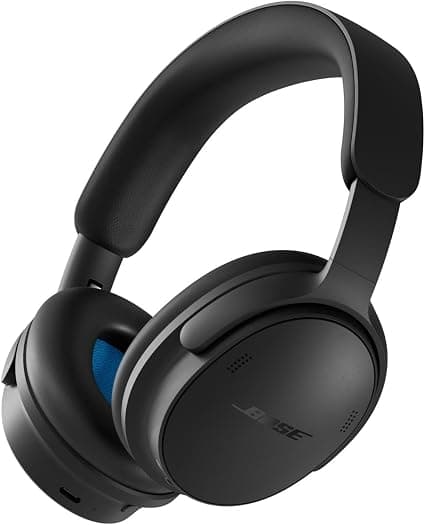
The QC 2nd Gen looks like a QuietComfort, which is to say it looks like nothing else on the market. Bose has always favored a rounded, almost organic silhouette over the angular slabs that Sony and Sennheiser ship, and that identity carries over. What has changed is the detail work. The earcups are now oval rather than round, which Bose says creates a more seamless profile and, more importantly, a better acoustic seal across a wider range of head shapes. The cushions are plush synthetic leather with a softer fill than the first-gen pair, and the sliders have been reworked so the adjustment action is smoother and holds position more positively.
The weight is a genuinely impressive 0.5 pounds (about 240 grams by the spec sheet Bose published alongside the announcement). That puts it in the same featherweight class as the Sony WH-1000XM6 and noticeably lighter than the aluminum-clad Apple AirPods Max 2, which tips the scales at over 13 ounces. Bose also says it optimized the clamping force — early hands-on coverage from SoundGuys specifically flagged the revised clamp as a highlight, noting the pair feels secure without the vice-like pressure that some ANC headphones use to fake a seal. Combined with the softer headband padding, this is shaping up to be one of the most comfortable long-session pairs Bose has ever made.
Controls are physical buttons rather than touch panels, which longtime Bose owners will recognize as a feature, not a bug. The button placement has been made more intuitive — the multifunction button, volume rocker, and power/Bluetooth button are arranged so you can find them by touch without hunting. Bose also kept the action clicky and positive. There is no touch surface to accidentally trigger when you adjust the cups, which is a genuine quality-of-life win for commuters who wear headphones one-handed on a crowded train.
Color options are where Bose gets a little playful. The core lineup is Black and White Smoke, but the launch also includes three limited-edition shades: Eucalyptus Green with yellow interior accents, Dewdrop Mint with teal details, and Rosewood Mauve with fuchsia touches. If you have ever wanted your noise cancelling to match your sneaker rotation, this is the pair to do it with.
Immersive Audio: Spatial Sound Without the Ecosystem Tax
The single biggest feature on the QC 2nd Gen is Immersive Audio, Bose's TrueSpatial processing that takes ordinary stereo and virtualizes it so the music sounds like it is coming from speakers in front of you rather than drivers pressed against your ears. The genius of Bose's implementation is that it does not require special content. Dolby Atmos tracks, 360 Reality Audio mixes, and other object-based formats are nice to have, but Immersive Audio works on anything — a Spotify playlist, a YouTube video, a podcast feed, a phone call, a game on your Switch. Bose describes the effect as placing you in the sweet spot of a classic two-channel speaker system, which is a surprisingly good description of what the best virtual-surround processing does.
There are three modes, each with a distinct job. Still mode pins the perceived soundstage in front of you, so the music stays put no matter how you turn your head — this is the mode that debuted on the QuietComfort Ultra in 2023 and it remains the best way to listen to albums that were mixed for speakers. Motion mode lets the soundstage track your head movements, which sounds gimmicky on paper but is genuinely immersive when you are watching a movie or playing a game; the audio behaves like a physical room around you. Cinema mode, which joined the Ultra line in 2025, centers dialogue and widens the soundtrack, making it the go-to for video content and podcasts.
The practical upshot is that the QC 2nd Gen gives you the spatial audio experience that Apple sells with head tracking and that Sony sells with 360 Reality Audio, but without requiring you to live inside one ecosystem or hunt for Atmos-mastered content. It just works, on everything, all the time. The one cost is battery life: with Immersive Audio engaged, the rated runtime drops from 24 hours to 18. That is a meaningful trade, but it is also the same trade the Ultra makes, and 18 hours still covers a full day of work plus a commute.
Noise Cancellation: QuietControl Gets Smarter
Noise cancellation is the reason anyone buys a Bose, and the QC 2nd Gen does not disappoint on paper. The system uses six microphones in a hybrid arrangement — feedforward mics outside the cups catch incoming noise before it reaches your ears, while feedback mics inside the cups handle what leaks through. What is new is the adaptive feedforward tuning. Bose says the QC 2nd Gen continuously compensates for acoustic seal gaps caused by glasses arms, thick hair, hats, or an imperfect fit. Previous generations would simply let noise bleed through those gaps; this one adjusts the cancellation in real time to keep the isolation consistent.
That is a subtle but genuinely useful improvement, because the biggest real-world complaint about ANC headphones is that they work beautifully in a review lab and noticeably worse on your actual head. Bose's glasses-wearer compensation is the kind of feature that does not show up in a spec-sheet comparison but changes the daily experience.
The Aware Mode has also been reworked. Bose smoothed out the ActiveSense response so sudden loud noises — a train pulling into a platform, a car horn, a jackhammer — get softened instead of chopped off. The effect is meant to feel natural, like the world is being gently turned down rather than aggressively muted. For anyone who has been startled by the abrupt clamping of aggressive transparency systems, this is a welcome refinement.
How does it stack up against the competition? Based on Bose's history and the hardware on board, the QC 2nd Gen should land in the top tier of ANC performers at its price — ahead of the Sennheiser Momentum 5 Wireless on raw isolation, in the same conversation as the Sony WH-1000XM6, and just a half-step behind Bose's own QuietComfort Ultra Headphones (2nd Gen), which add CustomTune ear-canal calibration for a more personalized cancellation profile. The reviewers who went hands-on with pre-production units have been uniformly impressed, and several have noted that the QC 2nd Gen gets closer to the Ultra's ANC than the $90 price gap suggests.
Sound Quality: The Case for USB-C Lossless
Bose has never been a codec-chasing brand. There is no LDAC and no aptX Adaptive on the QC 2nd Gen, and if that sentence makes you twitch, hear Bose out: the company's argument is that wireless codec support matters less than what happens between the source and the driver, and that its own DSP does more for the listening experience than a higher-bitrate Bluetooth pipe. It is a defensible position, and the QC 2nd Gen backs it up with a genuinely new wired option.
The USB-C port on the QC 2nd Gen now supports 24-bit/48kHz playback — CD-quality lossless, in other words — which means you can plug the included USB-C cable into a laptop, a phone, or a desktop DAC and listen to Apple Music Lossless or Spotify's lossless tier at full fidelity. Bose includes a 3.5mm-to-USB-C cable in the box as well, so you can use the analog output of an in-flight entertainment system or a legacy music player. This is the first time the standard QuietComfort line has offered true wired hi-fi, and it closes the gap with the Momentum 5, which has supported USB-C audio for a generation now.
The sound signature is classic Bose: warm, smooth, and forgiving, with a slight emphasis on the mid-bass and a relaxed treble that never gets sibilant. Bass heads will want more thump — this is not a Crusher — but for pop, rock, hip-hop, podcasts, and movies, the tuning is close to ideal for all-day listening. The 2nd Gen adds a three-band EQ in the Bose app, which is a bigger deal than it sounds: the first-gen QuietComfort shipped without user EQ, and its absence was a running complaint in reviews. Now you can nudge the bass up or tame the treble to taste, and the DSP applies the curve cleanly without the distortion that cheap EQ implementations introduce.
Battery, Connectivity and Charging
Battery life is rated at up to 24 hours with noise cancelling on, which drops to 18 hours with Immersive Audio running. Both figures are respectable but not class-leading — the Momentum 5 Wireless stretches to 57 hours with ANC, and the Sony WH-1000XM6 manages around 36. Where Bose fights back is charging speed and convenience. A 15-minute charge delivers up to 2.5 hours of playback, a full charge takes about three hours, and the QC 2nd Gen supports listening while charging, which matters more than it sounds: a mid-flight battery warning on an older pair means watching the percentage tick down for the rest of the trip; on this pair it means pulling out a USB-C cable and carrying on.
Connectivity is Bluetooth 5.4 with multipoint, so you can keep the pair bonded to a phone and a laptop simultaneously and hop between them as audio starts and stops. Call quality benefits from the same six-microphone array that powers the ANC — the mics do double duty, with beamforming for your voice and cancellation for everything else. Bose does not publish a mic-quality spec sheet the way some brands do, but the multi-mic architecture is the same family as the one that made the Ultra a reliable choice for Zoom calls.
The App and Everyday Software
The Bose app remains one of the cleaner companion apps in the category. The QC 2nd Gen gets the full suite: mode selection for ANC, Aware, and Immersive Audio; the three-band EQ; firmware updates that Bose says will add features over time; and per-source settings so you can, say, run Immersive Audio for music but keep plain ANC for podcasts. There is also a standby timer and battery health reporting, small touches that add up over years of ownership.
One feature worth calling out specifically is the bidirectional USB-C port. PopSci's announcement coverage highlighted that the port now works as a wired headset interface: plug the QC 2nd Gen into a laptop and the microphone array stays fully active, turning the pair into a wired headset for Zoom, Microsoft Teams, or Google Meet. That is a genuinely useful capability for office workers who have watched their wireless headset battery die at 2:47 p.m. on a call-heavy day, and it is the kind of feature that rarely shows up in marketing but reshapes how you use the product.
Bose QC 2nd Gen vs the Competition
The $359 price puts the QC 2nd Gen in an interesting spot, because it is not quite competing with the flagships — it is undercutting them.
Against the Bose QuietComfort Ultra Headphones (2nd Gen), which we reviewed when it launched and still rate as the ANC king, the QC 2nd Gen gives up CustomTune ear calibration, on-head detection, a 30-hour battery, and aluminum accents in the build. In exchange you save $90. The ANC hardware is closely related, Immersive Audio is the same three-mode implementation, and the QC 2nd Gen actually matches the Ultra on USB-C lossless. If you do not need CustomTune's personalized calibration or the auto-pause convenience of on-head detection, the savings are hard to argue with. If you want the full flagship experience, our Bose QuietComfort Ultra Headphones (2nd Gen) review remains the reference point.
Against the Sony WH-1000XM6, which sells for around $449, the QC 2nd Gen is $90 cheaper with comparable ANC and a more comfortable fit for many head shapes, but Sony counters with LDAC, a 36-hour battery, and Sony's broader feature set — Speak-to-Chat, adaptive sound control, and the excellent Sony Sound Connect app. It is a genuine toss-up that comes down to ecosystem and tuning preference; our Sony WH-1000XM6 review lays out the case for Sony's flagship.
Against the Sennheiser Momentum 5 Wireless, the QC 2nd Gen wins on price ($359 vs around $399) and ANC, while Sennheiser wins on battery (57 hours), user-replaceable cells, and Dolby Atmos with head tracking. If you want a review that digs into the Momentum 5's strengths, our Sennheiser Momentum 5 Wireless review is worth a read.
And against the Apple AirPods Max 2 at $549, the QC 2nd Gen is $190 cheaper, significantly lighter, and more comfortable for long sessions — but it cannot match the AirPods Max 2's seamless integration with Apple devices, its aluminum build, or its transparency mode, which remains the best in the business. Our Apple AirPods Max 2 review covers the full picture if you are weighing the premium route.
Finally, there is a new internal challenger worth mentioning: the Marshall Milton A.N.C., which we reviewed this week. At $230 it is $129 cheaper than the Bose, but it is an on-ear design with a bass-forward Marshall tuning and battery life Bose cannot touch. If you want the ANC of a full-size over-ear pair, the Bose is the safer pick; if you want something lighter and more stylistically distinctive, the Milton is a compelling alternative.
Who Should Buy the Bose QuietComfort Headphones (2nd Gen)
The QC 2nd Gen is aimed squarely at the person who wants flagship noise cancellation without paying flagship prices. That includes:
- Frequent flyers and commuters who spend hours a day trying to make the world quieter, and who will use the 24-hour battery, the 15-minute fast charge, and the listen-while-charging capability more than any other feature.
- Office workers who live on video calls and want a pair that doubles as a wired headset when the Bluetooth battery runs dry.
- Students and first-time premium headphone buyers who want the QuietComfort experience at a price that does not require a second mortgage.
- Anyone who has tried spatial audio on other platforms and found the content requirements annoying — Immersive Audio works on everything, which is its superpower.
- Bose loyalists who were worried about the licensing detour and want proof the company still cares about its own hardware.
Who Should Look Elsewhere
- If CustomTune's personalized ear calibration and on-head detection sound essential, spend the extra $90 on the Bose QuietComfort Ultra Headphones (2nd Gen).
- If you are a spec-sheet reader who needs LDAC or aptX Adaptive on the wireless side, Sony and Sennheiser serve you better — the QC 2nd Gen's lossless story is wired-only.
- If battery life is your top priority, the 57-hour Momentum 5 Wireless runs circles around everything Bose makes.
- If you want the absolute quietest room available at any price, the Ultra line is still the ceiling; the QC 2nd Gen is the 95-percent solution at 80 percent of the price.
The Bottom Line
The Bose QuietComfort Headphones (2nd Gen) is the most important mainstream headphone launch of 2026, and it earns that billing on the strength of a simple idea: take the features that made the flagship Ultra great, keep the price at $359, and let the Ultra's extras justify themselves. Immersive Audio that works with any source, USB-C lossless playback, a smarter six-microphone ANC system, and a genuinely comfortable redesigned shell add up to the best value proposition in premium noise cancelling right now. It is not the most feature-packed pair in the category, and the battery life will not win any marathons, but for the vast majority of buyers it is the only flagship-adjacent ANC headphone that makes financial sense. Preorders are open now, units ship August 13, and you can check current pricing on Amazon. If you have been waiting for Bose to make the QuietComfort formula affordable again, your wait is over.
Pros
- Best-in-class noise cancellation for the price
- Immersive Audio works with any audio source
- USB-C lossless playback plus wired headset mode
- Lightweight all-day comfort with plush oval earcups
Cons
- 18-hour battery with Immersive Audio enabled
- No CustomTune calibration or on-head detection
- Plastic build lacks the Ultra metal accents
Final Verdict
Bose brings Immersive Audio, USB-C lossless playback, and a smarter six-microphone ANC system to its mainstream QuietComfort line at $359 — the best value in premium noise cancelling this year.