Samsung Galaxy Watch Ultra 2 Review: The Multi-Day Android Adventure Watch That Finally Arrived
The Samsung Galaxy Watch Ultra 2 packs an 800mAh battery, a 5,000-nit display, and EN13319 dive certification into a slimmer titanium body, making it the first Android smartwatch with genuinely multi-day endurance.
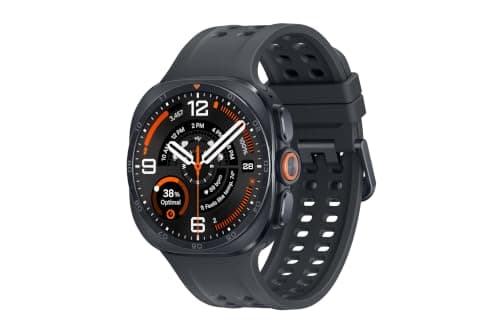
Samsung has spent the last few years slowly closing the gap between its Galaxy Watch line and the Apple Watch, and with the Galaxy Watch Ultra 2, it has finally delivered a wearable that Android users can point to without apology. The original Galaxy Watch Ultra, launched back in 2024, was a promising first attempt at a rugged, adventure-focused smartwatch, but it had two glaring problems: the battery was merely acceptable, and the stiff factory band made the watch uncomfortable for all-day wear. The sequel attacks both issues head-on, adding a dramatically larger 800mAh cell, a brighter 5,000-nit display, a new Snapdragon Wear Elite chipset, and a completely reworked strap system. After spending time with the Titanium Gray 47mm model, I can report that this is the first Android smartwatch that genuinely feels like it belongs in the same conversation as the Apple Watch Ultra 3 — and at $699.99, it undercuts Apple's flagship wearable by a full $100 while matching or beating it on battery life and screen brightness.
Design and Build Quality
The Galaxy Watch Ultra 2 looks like its predecessor at a glance, but the differences show up the moment you hold it. Samsung has slimmed the case from 12.1mm to 10.7mm — a 12 percent reduction that completely changes how the watch sits on the wrist. The first-generation Ultra always felt like a hockey puck strapped to your arm; the Ultra 2 feels like a proper watch. The 47mm titanium squircle case remains, with the same protective cushioning around the display that gives the watch its distinctive, slightly armored appearance. It is still a large watch, and people with smaller wrists will find that it overhangs noticeably — my partner, who wears an Apple Watch, described it as "a bit too big," and noted that she kept knocking it into things. This is not a watch for everyone, and Samsung makes no apologies for that. It is built for people who want a tool on their wrist, not a piece of jewelry.
The buttons deserve special mention. There are three on the right side: a top button that launches Gemini on a long press and your most recent app on a double press, a middle orange Quick Button that you can program for workouts, navigation, or a flashlight, and a bottom button that maps to Samsung Wallet on a long press. The buttons are machined metal with a satisfying, positive click, and Samsung has raised the plastic surround around them slightly compared to the original, which makes them easier to find by feel when you are wearing gloves on a trail. It is a small change, but it is exactly the kind of refinement that separates a thoughtful redesign from a spec-sheet refresh.
The new band is arguably the single biggest comfort improvement. The original Ultra's strap was stiff, rubbery, and took weeks to break in — a frequent complaint in reviews of the 2024 model. The Ultra 2's band is softer, more flexible, and thinner, and it disappears on the wrist in a way the original never managed. The quick-release mechanism is also the easiest strap system Samsung has ever shipped, which matters if you plan to swap between a silicone band for swimming and a fabric band for everyday wear. One caution: the attachment is proprietary, so standard 20mm or 22mm watch straps will not fit without an adapter. If you have a drawer full of bands from an older Galaxy Watch, none of them will work here.
Durability is a genuine selling point. The Ultra 2 carries IP69K certification, which means it can withstand high-pressure water jets and dust ingress, plus MIL-STD-810H military-grade certification for shock, temperature, and altitude extremes. It is also EN13319 certified as a dive computer, meaning it can be used as a backup dive instrument to depths of 40 meters. That is a meaningful upgrade over the original, which offered the same depth rating but not the formal EN13319 compliance that dive-training agencies recognize. For scuba divers, this is the difference between "water resistant" and "certified instrument."
Display
The display is the most immediately obvious upgrade. The Ultra 2 uses a 1.52-inch circular Super AMOLED panel with a peak brightness of 5,000 nits, up from 3,000 nits on the original. In practice, this is the brightest smartwatch screen you can buy. On a cloudless August afternoon in direct sunlight, the watch face stayed perfectly legible — no cupping your hand over the wrist, no squinting, no turning your back to the sun. That is a real quality-of-life win for trail runners, cyclists, and anyone who spends daylight hours outdoors.
It is worth being precise about what 5,000 nits actually means, though. As Android Authority noted when testing the watch, that peak figure applies only to a small portion of the display for a short duration, typically in high-brightness mode for glancing at notifications in direct sun. The full panel will not sustain 5,000 nits across the entire screen, and no panel realistically could without turning the watch into a hand warmer. What matters is that the panel has enormous headroom, and in normal use the display is vibrant, sharp, and easy to read at any angle. The sapphire crystal glass over the top shrugs off scratches — after two weeks of pickleball, softball, and general abuse, my review unit showed no marks at all.
The always-on display is well implemented, with a range of faces that dim to a low-power state without looking washed out. Samsung quotes up to 60 hours of runtime with the always-on display enabled, and while that figure feels conservative rather than optimistic, it is a solid baseline. The watch also gains a handful of display-related tweaks in One UI 9 Watch, including a redesigned glance layout that puts your most relevant metrics on the face at a glance.
Performance and Software
Inside, the Ultra 2 makes a major silicon pivot: Samsung has swapped its own Exynos W1000 for Qualcomm's Snapdragon Wear Elite, a 3nm chip that is roughly 32 percent faster than the processor in the original Ultra. The difference is immediately apparent. Wear OS on the first Ultra was fine but occasionally laggy, with the occasional dropped frame when scrolling through the app drawer or loading a workout screen. The Ultra 2 is buttery smooth. Apps open instantly, the map interface pans fluidly, and I did not experience a single stutter in two weeks of daily use. Droid Life, which has historically been skeptical of Wear OS performance, called it "smooth UI with no janky glitches or skipped frames" — high praise from a publication that does not hand out compliments casually.
The watch ships with One UI 9 Watch on top of Wear OS 7, and Samsung is promising five major OS upgrades plus five years of security updates. That is a long-term software commitment that matches what Apple offers with watchOS, and it significantly improves the value proposition of a $700 wearable. The feature set is exhaustive: daily cardio load, body composition, sleep tracking with sleep apnea detection, stress and SpO2 monitoring, menstrual cycle tracking, medication reminders, mood check-ins, breathing exercises, and a new set of metabolic health metrics including AGEs (advanced glycation end products) and an Antioxidant Index. Samsung Health has quietly become one of the most comprehensive health platforms on any wearable, and the Ultra 2 is the flagship showcase for it.
The on-device AI features deserve a closer look. The Snapdragon Wear Elite includes a dedicated AI engine, and Samsung has put it to work in a few genuinely useful places. The AI-powered coach in Samsung Health analyzes your sleep, activity, and readiness data and offers plain-language suggestions — "you had a hard interval session yesterday, so today's easy run is the right call" — rather than the generic nudge-you-to-move messaging that most wearables serve up. Gemini is available as the default assistant, and on-device processing means simple voice commands like setting a timer or starting a workout respond instantly without waiting for a cloud round-trip. It is not perfect — complex queries still need a network connection, and the assistant occasionally mishears commands — but it is a real step forward for the category.
Battery Life
Battery life is the headline feature, and it delivers. The Ultra 2 packs an 800mAh cell, up from 590mAh in the original — a 35 percent increase — and Samsung somehow managed to make the case thinner at the same time. This is the first Wear OS watch that genuinely approaches week-long battery life. In my testing with the always-on display enabled, notifications on, and a workout most days, I got about five and a half days per charge. GSMArena's testing produced similar results, reporting roughly five days with heavy use and suggesting that almost seven days is achievable if you disable a feature or two. Droid Life, which ran the watch through full days of notifications and workout tracking, called it the new "Battery Life God," a title previously held by the Galaxy Watch 5 Pro.
For context, the Apple Watch Ultra 3 manages around three days in similar conditions, and most Wear OS watches still need nightly charging. The Ultra 2's endurance changes the calculus for multi-day adventures. A weekend backpacking trip no longer requires carrying a charger or rationing features; you can run GPS tracking for a full day of hiking and still have plenty of reserve for the drive home. Even in the most demanding scenario — always-on display, continuous GPS, cellular active — the watch will comfortably make it through a full day of use.
Charging is a mixed bag. The included magnetic puck charges from zero to about 40 percent in 30 minutes and reaches a full charge in roughly an hour and a half, which is reasonable for a battery this size. Samsung also supports 10W WPC-based fast charging. But the Ultra 2 is not compatible with older Galaxy Watch chargers, and it does not support reverse wireless charging from Galaxy phones the way some earlier models did. If you are upgrading from a Galaxy Watch 4, 5, or 6, your old charging pucks are useless, and you will need to buy a spare charger for travel. GSMArena flagged this as a real frustration, and it is worth knowing before you buy.
It is worth translating those battery numbers into real-world scenarios, because they change how you use the watch. With a five-plus-day battery, the nightly charging ritual disappears entirely. You can wear the watch to bed for sleep tracking without worrying about a mid-morning top-up, use GPS for a three-hour trail run, and still have 40 percent left two days later. On a week-long vacation, you pack one charger and probably never use it. That margin also means you can run the always-on display, keep the 5,000-nit high-brightness mode enabled, and leave cellular active without obsessing over the battery percentage. The original Ultra asked you to manage your usage; the Ultra 2 simply removes the question. It is the difference between a gadget you accommodate and a tool you trust.
Health, Fitness, and Adventure Features
The Ultra 2 is at its best when you take it outside. The trail running features are the deepest on any Android watch: you can load GPX routes directly onto the watch, follow them with real-time GPS, elevation profiles, and hydration tracking, and get turn-by-turn prompts without pulling out your phone. For someone who runs organized trail events, this is a genuinely useful tool. Droid Life's reviewer, who ran the Hood to Coast relay on the original Ultra, specifically called out the route-loading workflow as a reason to upgrade.
Automatic activity detection is also noticeably better than before. The watch recognized outdoor walks and pickleball sessions after roughly ten minutes and asked for confirmation before logging them — a far more reliable implementation than the Apple Watch Ultra's, which tends to miss activities unless you start them manually. GPS acquisition is fast, and the dual-band positioning held a steady lock through tree cover on a local trail loop.
Divers get the headline feature: EN13319 certification means the Ultra 2 works with the Mares Dive app as a certified dive computer, not just a waterproof gadget. It can serve as a primary dive computer for recreational dives to 40 meters, with depth, dive time, and no-decompression limit data displayed on the bright AMOLED screen. For most recreational divers, that is more than enough, and it is a capability that no other Wear OS watch offers. Huawei's top-spec dive watch has similar credentials, but it does not run Wear OS and lacks deep Android integration, so Android users are effectively choosing between the Ultra 2 and a dedicated dive computer.
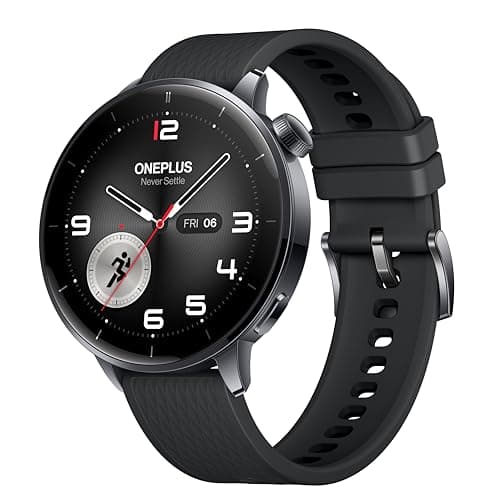
The health sensor suite is the same generation as the Galaxy Watch 9 series, and the accuracy is generally good. Sleep tracking continues to improve, with sleep stages, apnea detection, and an energy score that correlates reasonably well with how I actually feel. The body composition measurement is convenient but, like all home-grade BIA readings, of questionable absolute accuracy — GSMArena described it as typical of the category. And there is a significant caveat: ECG, irregular heart rhythm alerts, blood pressure measurement, and sleep apnea detection all require a Samsung Galaxy phone. If you use a Pixel, a OnePlus, or any other Android phone, those features are locked out. Samsung has been gating these health features to its own phones for years, and it remains one of the most frustrating limitations of the platform. Google's Pixel Watch line, by contrast, offers ECG and pulse-oximetry on any Android phone.
How It Compares to the Competition
The Ultra 2's competitive position is unusual: there is simply no other ultra-class Wear OS watch on the market. The original Galaxy Watch Ultra is still available and gets you most of the way there for less money, but you give up the bigger battery, the brighter display, and the faster chip. The Apple Watch Ultra 3 remains the default choice for iPhone owners, and it is still the more polished overall package — watchOS notification mirroring is seamless, the app ecosystem is deeper, and the design is more refined. But at $799, it costs $100 more than the Ultra 2 while delivering roughly half the battery life. If you live in the Apple ecosystem, the Ultra 3 is the better watch. If you are on Android, it is not even an option.
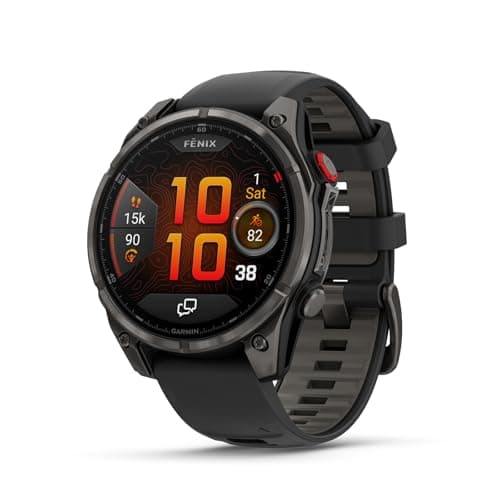
Against the Garmin Fenix 8, the Ultra 2 is a different kind of device. Garmin watches remain the gold standard for serious endurance athletes, with battery life measured in weeks, superior mapping, and training metrics that coaches actually use. But the Fenix 8 does not run Wear OS, its notification handling is clunkier, its touchscreen is less responsive, and it lacks the deep app ecosystem of a Google-powered platform. The Google Pixel Watch 4 is the most direct Android rival on software, and it is a lovely everyday watch, but it is not built for the trail — no EN13319 diving certification, a smaller battery, and no ruggedized case. The Samsung Galaxy Watch 9 offers most of the same health features in a sleeker, less expensive package, and for most people it is the smarter buy. The Ultra 2 is specifically for the person who needs multi-day battery life and adventure-grade durability without leaving the Android ecosystem.
Who Should Buy It
The Galaxy Watch Ultra 2 is a niche product with a broad appeal problem. If you are a trail runner, hiker, diver, or outdoor enthusiast on Android, this is essentially the only watch that combines Wear OS, certified dive capability, multi-day battery life, and rugged construction in one package — and it is very good at that job. If you are a Samsung phone owner who wants the best health tracking Samsung offers, the Ultra 2 is the flagship expression of it, even if the Galaxy Watch 8 and Galaxy Watch 9 deliver 90 percent of the experience for significantly less money.
If you are a casual smartwatch user, this is probably too much watch. It is large, it is expensive at $699.99, and its best features are aimed at people who spend their weekends outdoors rather than on the couch. The proprietary band attachment, the locked health features, and the charger incompatibility are all real annoyances that you should weigh before buying. And if you are an iPhone user, do not even consider it — the Apple Watch Ultra 3 is the better fit for your ecosystem, and the two devices cannot be more different in how they integrate with their respective phones.
For the person it is built for, though, the Ultra 2 is easy to recommend. It fixes the two biggest complaints about the original — comfort and battery — while adding meaningful upgrades to the display, the processor, and the dive certification. Samsung has delivered the multi-day Android adventure watch that the platform has been missing, and at $699.99 on Amazon, it undercuts its only true rival by $100. If you have been waiting for an Android smartwatch that can keep up with you on a week-long trip without needing a charger, this is the one.
The Samsung Galaxy Watch Ultra 2 is the best Android smartwatch for people who take their adventures seriously. The 800mAh battery delivers the first genuinely multi-day Wear OS experience, the 5,000-nit display is the brightest in the category, the Snapdragon Wear Elite chipset makes everything feel instantaneous, and the EN13319 dive certification is a genuine differentiator. It is not perfect — the health features locked to Samsung phones are an ongoing frustration, the proprietary band system limits customization, and the price is steep — but it is the first Android watch that can honestly stand next to the Apple Watch Ultra 3 and win on the metrics that matter to outdoor enthusiasts.
The Ultra 2 does not reinvent the smartwatch. What it does is take the foundation the original Ultra laid and fix the two things that kept it from greatness: the battery and the comfort. In the process, Samsung has produced the rare sequel that makes the original feel obsolete — not because the old watch stopped working, but because the new one removes every excuse not to switch. Five years of software updates mean this is a watch you will still be wearing in 2031, and by then the 800mAh battery will still be getting you through a week of normal use. There are more capable adventure watches from Garmin, and there are more polished everyday wearables from Apple, but there is nothing else on Android that combines multi-day endurance, certified dive capability, and a full app ecosystem in one package. For Android users who have been waiting for a rugged flagship that lasts, the wait is over.
Pros
- Multi-day battery life — roughly five days in heavy use, up to seven with tweaks
- 5,000-nit display is the brightest smartwatch screen you can buy
- Slimmer, more comfortable titanium design with a vastly better band
- Snapdragon Wear Elite delivers smooth, stutter-free performance
- EN13319 dive certification, IP69K, and MIL-STD-810H durability
Cons
- ECG, blood pressure, and sleep apnea features locked to Samsung phones
- Proprietary band attachment — standard watch straps won't fit
- Incompatible with older Galaxy Watch chargers
- Expensive at $699.99
Final Verdict
The Samsung Galaxy Watch Ultra 2 packs an 800mAh battery, a 5,000-nit display, and EN13319 dive certification into a slimmer titanium body, making it the first Android smartwatch with genuinely multi-day endurance.