Sony A7V Review: Sony's Do-It-All Full-Frame Mirrorless Powerhouse
The Sony A7V arrives with a new 33MP partially stacked sensor, blackout-free 30fps burst shooting, AI-powered autofocus, and improved 7.5-stop IBIS. It is the most well-rounded mid-tier full-frame hybrid camera Sony has ever made.
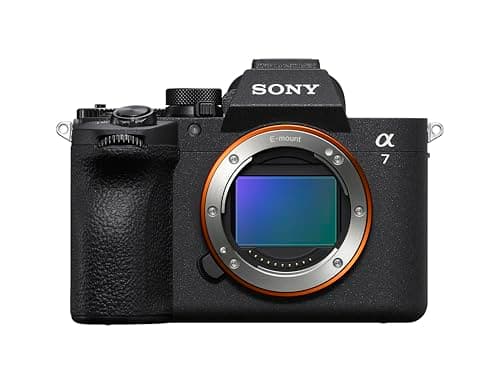
Sony has finally delivered the follow-up photographers have been waiting for. The Sony A7V arrives as the long-awaited successor to the wildly popular A7 IV, and it brings meaningful upgrades that address nearly every complaint photographers had with its predecessor. After spending significant time with the A7V, it's clear that Sony set out to build the most well-rounded mid-tier full-frame hybrid camera on the market — and they largely succeeded. With a new 33MP partially stacked sensor, the dedicated BIONZ XR2 processor, blackout-free 30fps burst shooting, and enhanced AI-powered autofocus, the A7V feels like a camera designed by people who actually listened to what photographers wanted.
Design and Build Quality
Sony made incremental but welcome changes to the A7V's body design. The magnesium alloy chassis is rugged and extensively weather-sealed, giving you the confidence to shoot in challenging conditions without worrying about dust or moisture. Sony rates the mechanical shutter for an impressive 500,000 actuations, so this body will last through years of heavy use.
The grip has been slightly reshaped, though it still isn't quite as deep or comfortable as what you will find on competing Canon or Nikon bodies. If you are coming from the A7 IV, you will notice the subtle improvement, but those with larger hands may still wish for a more substantial purchase point. The button layout remains familiar to anyone who has used a recent Sony Alpha camera, with customizable controls that let you tailor the shooting experience to your preferences.
The most significant physical upgrade is the new 3.2-inch 4-axis multi-angle touchscreen LCD. This articulating mechanism tilts up and down like a traditional tilting screen but also swings out to the side for vlogging or low-angle portrait orientation shooting. It is genuinely the best of both worlds and a massive improvement over the A7 IV's single-axis tilting screen. The touch responsiveness is solid, making menu navigation and focus point selection feel natural and immediate.
The electronic viewfinder uses a 3.68-million-dot OLED panel with 0.78x magnification and supports up to 120fps refresh rates. While it is perfectly usable and comparable to what other cameras in this price bracket offer, it doesn't stand out as exceptional the way some competitors' EVFs do. The refresh rate boost at 120fps makes tracking fast-moving subjects noticeably smoother, which is a welcome addition for action and wildlife shooters.
Sensor and Image Quality
The headline feature of the A7V is its new 33-megapixel partially stacked Exmor RS CMOS sensor. This is not a full stacked sensor like the one found in the flagship A1, but the partial stacking still delivers dramatic improvements in readout speed — approximately 4.5 times faster than the A7 IV's sensor. This translates directly into better real-world performance across the board.
Dynamic range is where the A7V truly surprises. In testing, the camera achieves approximately 12.5 stops of dynamic range at base ISO, which puts it on par with medium format cameras like the Fujifilm GFX 100 II. That is roughly 0.75 stops better than the A7 IV and nearly two stops better than the Nikon Z6 III when shooting at high frame rates. What this means in practice is that you can recover significant detail from shadows and highlights without introducing noise or banding. Landscape photographers will particularly appreciate the latitude this sensor provides when processing RAW files.
The base ISO range extends from 100 to 51,200 for both stills and video, with expandable settings beyond that range. Noise performance is excellent through ISO 6400, with grain remaining fine and film-like rather than blotchy. Even at ISO 12,800, the results are entirely usable for print and web applications. The A7V handles high-ISO situations better than the Canon R6 III and matches the Nikon Z6 III in this regard, though it falls slightly short of the noise performance of higher-resolution sensors like the Sony A7R V when viewed at 100 percent.
Color science has seen refinement as well. Sony's latest color processing delivers more natural skin tones out of camera compared to the slightly greenish tint that earlier Sony bodies were known for. White balance accuracy is best-in-class among the mirrorless cameras Dustin Abbott has tested, which means less time correcting colors in post-production.
Autofocus Performance
The A7V inherits Sony's latest AI-powered autofocus system, driven by a dedicated AI processing unit integrated into the BIONZ XR2 processor. With 759 phase-detection points covering approximately 94 percent of the frame, the camera locks onto subjects quickly and stays locked even in challenging conditions.
Subject recognition covers humans, animals, birds, insects, cars, trains, and airplanes. The human pose estimation mode is particularly impressive — it can detect and track not just eyes and faces but full body poses, making it possible to maintain focus on a subject even when they turn away from the camera or their face is partially obscured. This is a game-changer for event and sports photographers who need reliable tracking regardless of how their subjects move.
In real-world testing, the A7V's autofocus excelled in conditions where other systems struggled. Shooting in dense coastal fog, the camera maintained focus on subjects that were barely visible to the naked eye. The system performs autofocus calculations approximately 60 times per second, which enables it to react almost instantaneously to changes in subject position or direction.
Eye AF for both humans and animals works reliably in low-light conditions down to -4 EV, so you can shoot by candlelight or moonlight and still achieve accurate focus. The touch-tracking system is responsive and intuitive — simply touch the subject you want to track on the LCD screen, and the camera handles the rest.
The weakest aspect of the autofocus system is the lack of dedicated AF joystick customization for direct area switching during burst shooting. While the system is highly automated and reliable, some photographers may miss the granular control that dedicated AF joysticks on competing bodies provide.
Burst Shooting and Buffer Depth
The A7V can shoot at up to 30 frames per second with the electronic shutter, completely blackout-free, with full autofocus and auto-exposure tracking. This is a massive leap from the A7 IV's 10fps with blackout between frames. The 1/16,000-second maximum electronic shutter speed also eliminates the need for ND filters in bright conditions.
However, the buffer depth is the camera's most significant compromise. When shooting lossless compressed RAW, the buffer fills after just 35 frames. For standard compressed RAW, you get roughly 85 frames. JPEG shooters can manage about 185 frames before the buffer fills. At 30fps, 35 frames gives you just over one second of continuous shooting before the camera slows down. This means the A7V is better suited for short, predictable bursts rather than prolonged spray-and-pray shooting.
The buffer clears reasonably quickly thanks to the CFexpress Type A and UHS-II SD card support, but if your work involves capturing long sequences of action, the Canon R6 III's deeper buffer will serve you better. The buffer limitation is the single biggest factor that prevents the A7V from being a true sports photography specialist, though for most hybrid shooters it will be entirely adequate.
Video Capabilities
For hybrid shooters, the A7V delivers meaningful video upgrades. The camera records 4K video at up to 60fps using the full width of the sensor, oversampled from 7K for exceptional detail and minimal moiré. This is a notable improvement over the A7 IV's 4K 60fps with a 1.5x crop. You also get 4K at 120fps with a slight crop for slow-motion work.
Internal recording supports 10-bit 4:2:2 color depth, and Sony's S-Cinetone and S-Log3 profiles provide excellent grading flexibility. The LUT import feature lets you load custom look-up tables directly into the camera for real-time monitoring, which is incredibly useful for run-and-gun shooters who need accurate previews without external monitors.
Active stabilization has been improved with Dynamic Active Mode that combines optical IBIS with digital stabilization for smooth handheld footage. It is not quite gimbal-smooth, but it is good enough for most vlogging and documentary work without needing additional stabilization gear. The breathing compensation feature works with compatible Sony lenses to maintain consistent field of view during focus pulls.
The A7V does not support 8K recording, RAW video output, or open-gate recording in the way that the Canon R6 III or Panasonic S5 IIX do. If your primary focus is high-end cinema production, you are better served by Sony's FX lineup or the Canon R6 III. But for most hybrid creators who shoot a mix of stills and video, the A7V's video features are comprehensive and well-executed.
Heat dissipation has been improved with a novel graphite component integrated into the image stabilization unit. This allows the camera to record 4K 60p for approximately 90 minutes before overheating, which is significantly better than the A7 IV's thermal performance.
Image Stabilization and Handling
The 5-axis in-body image stabilization has been upgraded to a 7.5-stop rating at the center and 6.5 stops at the periphery when paired with compatible lenses. This puts it ahead of the Canon R6 III's 6-stop rating and matches the Panasonic S5 II's class-leading stabilization.
In practical use, the IBIS system makes handheld shooting at shutter speeds as low as 1/2 second achievable with careful technique. For video, the stabilization provides smooth, usable footage for walking shots and handheld pans. The improvement is particularly noticeable when adapting vintage or third-party lenses, where the IBIS does an impressive job of compensating for the lack of lens-based stabilization.
Dual USB-C 3.2 ports are a welcome addition, supporting simultaneous data transfer and charging. This means you can tether the camera to a computer for studio work while keeping the battery topped up through a separate USB-C power source. The full-size HDMI port eliminates the need for fragile micro-HDMI cables, which will be appreciated by anyone who has had a micro-HDMI port fail on location.
Battery Life and Connectivity
The A7V uses the familiar NP-FZ100 battery, which Sony rates for approximately 630 shots using the EVF and 750 shots using the LCD. In real-world mixed shooting, you can expect a full day of moderate use on a single charge. The USB-C Power Delivery support means you can charge the battery internally or power the camera directly from a USB power bank, which effectively eliminates battery anxiety for long shoots.
Connectivity options include Wi-Fi, Bluetooth, and the dual USB-C ports. The wireless implementation supports remote control and file transfer through Sony's Imaging Edge Mobile app. The Bluetooth connection maintains a constant low-power link for geotagging and automatic uploads, though the app experience remains somewhat clunky compared to Canon or Nikon's offerings.
Real-World Use Cases
For wedding photographers, the A7V is close to ideal. The improved autofocus handles processional walks and candid moments with reliability, and the dual card slots provide necessary redundancy for deliverable security. The 33MP sensor gives ample resolution for large prints and cropping flexibility, while the improved IBIS makes handheld ceremony shots at shutter speeds as low as 1/15th of a second achievable without a monopod. The silent electronic shutter mode means you can shoot through a ceremony without being heard, which couples and officiants consistently appreciate.
Portrait photographers will find the Eye AF performance transformative for their workflow. The AI-driven tracking locks onto and maintains focus on the subject's eye even when they turn their head, look down, or move through the frame. This means you can concentrate on directing your subject and composing the shot rather than babysitting the focus point. The 33MP resolution provides enough detail for professional retouching while maintaining reasonable file sizes that do not bog down your editing workflow.
Landscape photographers will appreciate the exceptional dynamic range and the pixel shift multi-shot mode, which captures 16 separate images and composites them into a single high-resolution file approaching 200MP. The improved IBIS means you can shoot handheld in fading light without always reaching for a tripod, which opens up compositions that would have been impractical with the A7 IV. The lack of in-camera compositing is frustrating — you need Sony's Imaging Edge Desktop software to process pixel shift images, and Adobe Lightroom does not support the format at all, so factor that into your post-production planning.
Street and documentary shooters benefit from the compact body size relative to the sensor format, the near-silent electronic shutter, and the reliable autofocus that lets them focus on composition rather than technical adjustments. The 4-axis articulating screen is genuinely useful for waist-level and overhead shooting without drawing attention to yourself. Pair the A7V with a compact prime like the Sony 40mm f/2.5 G or the Sigma 45mm f/2.8 Contemporary, and you have a full-frame setup that is barely larger than an APS-C camera.
Event and concert photographers will appreciate the 30fps burst rate for capturing peak action and the exceptional low-light autofocus for dimly lit venues. The improved dynamic range means you can expose for highlights and recover shadow detail without introducing excessive noise. The dual card slots let you record simultaneously to CFexpress Type A and SD cards, providing immediate backup for irreplaceable moments.
For hybrid content creators who need one camera that does everything reasonably well, the A7V may be the best option on the market below flagship pricing. It handles 4K 60p video, high-resolution stills, and fast action with equal competence, and the AI autofocus eliminates the need for a dedicated follow-focus operator in many scenarios. The combination of S-Cinetone color science, 10-bit 4:2:2 recording, and the articulating screen makes it a genuinely capable one-person filmmaking tool.
Comparisons to Competitors
Against the Canon R6 III, the A7V offers superior dynamic range, higher resolution, and better IBIS, but falls short in buffer depth, video RAW support, and the overall polish of Canon's menu system and touch interface. The R6 III's deeper buffer makes it a better choice for dedicated sports shooters, while the A7V's superior image quality and AF tracking give it the edge for hybrid work.
Compared to the Nikon Z6 III, the A7V delivers better dynamic range at high frame rates, faster burst speeds, and more mature lens selection through the Sony E-mount ecosystem. The Z6 III has a more comfortable grip and Nikon's exceptional color science, but the A7V's autofocus system is more sophisticated and reliable across a wider range of shooting scenarios.
Against the Panasonic S5 IIX, the A7V offers better autofocus, higher resolution, and more lens options. The S5 IIX counters with superior video features including ProRes RAW and open-gate recording, plus class-leading IBIS. Phase-detect AF gives the Sony a clear advantage for any shooting that involves moving subjects.
Within Sony's own lineup, the A7V slots between the A7 IV and the A1. It is a meaningful upgrade from the A7 IV for anyone who needs faster burst rates, better AF, improved video capabilities, or the articulating screen. It does not replace the A1 for professionals who need 50MP resolution, 8K video, or 120fps burst with full buffer depth.
Lens Ecosystem and System Value
One of the strongest arguments for buying into the Sony A7V is the E-mount lens ecosystem. With over 180 native lenses from Sony, Sigma, Tamron, Samyang, Tokina, and Viltrox, you have more choices at more price points than any other full-frame mirrorless system. Sigma's Contemporary and Art series lenses offer exceptional optical quality at prices significantly below Sony's G Master equivalents, while Tamron's compact zoom lineup provides excellent versatility in lightweight packages that pair beautifully with the A7V body.
For portrait photographers, the Sigma 85mm f/1.4 DG DN Art delivers G Master-level sharpness and bokeh for roughly half the price. Landscape shooters can build a complete kit around Tamron's 17-28mm f/2.8, 28-75mm f/2.8, and 70-180mm f/2.8 zoom trilogy, covering ultrawide to telephoto in a kit that weighs less than many single flagship zooms. Sony's own 24-70mm f/2.8 GM II remains the benchmark standard zoom for the system, offering corner-to-corner sharpness wide open with fast, silent autofocus that takes full advantage of the A7V's AF capabilities.
The extensive third-party support also means you can enter the system with a capable lens for under $400 — something simply not possible with Canon's RF mount (which remains largely closed to third-party manufacturers) or Nikon's Z mount (which has limited third-party options compared to E-mount). Over time, the savings on lenses can easily exceed the cost of the camera body itself, making Sony the most cost-effective full-frame system for photographers who build their kit gradually.
The Lens Ecosystem Advantage
For travel photographers, the combination of the lightweight A7V body with Tamron's compact f/2.8 zoom trilogy or Sigma's i-series compact primes creates a kit that rivals APS-C systems in portability while delivering full-frame image quality. The Sony 20-70mm f/4 G is another excellent travel companion, offering wider coverage than the traditional 24-70mm range in a remarkably compact package.
Wildlife photographers benefit from Sony's telephoto lineup, including the excellent 200-600mm f/5.6-6.3 G OSS and the compact 70-350mm f/4.5-6.3 G OSS for lighter excursions. The A7V's 33MP sensor provides enough resolution for significant cropping when you need extra reach, and the AI autofocus handles birds and animals with impressive reliability.
Macro photographers have excellent options including the Sony 90mm f/2.8 Macro G OSS, the Sigma 105mm f/2.8 DG DN Macro Art, and the Laowa 100mm f/2.8 2x Ultra Macro. The A7V's 7.5-stop IBIS is particularly valuable for handheld macro work, where camera shake is magnified by the close focusing distance.
Value Proposition and Upgrade Considerations
At $2,898 for the body only, the Sony A7V is priced competitively against the Canon R6 III and Nikon Z6 III. When you factor in the cost of lenses, the Sony system becomes significantly more affordable thanks to the depth of third-party options. A complete kit with the A7V, a standard zoom, a portrait prime, and an ultrawide zoom can cost $1,000 to $2,000 less than equivalent Canon or Nikon kits with comparable native lens quality.
For existing Sony users, the upgrade decision depends largely on what you shoot. Landscape photographers upgrading from the A7 III will see transformative improvements in dynamic range, resolution, and IBIS. Portrait photographers moving from any earlier A7 body will appreciate the dramatic autofocus improvements. Event and wedding photographers will find the dual card slots, improved buffer, and reliable AF/Eye tracking make the A7V a more dependable professional tool.
A7 IV owners face a more nuanced decision. The A7 IV remains a very capable camera, and the upgrade to the A7V is most justified if you regularly shoot action that needs the 30fps burst rate, find yourself limited by the A7 IV's 1.5x crop in 4K 60p video, or need the articulating screen for your shooting style. For casual shooters and those who primarily shoot static subjects, the A7 IV still delivers excellent results and the upgrade may not be immediately necessary.
Who Should Buy the Sony A7V
The Sony A7V is ideal for enthusiast photographers and hybrid creators who want flagship-level features without flagship-level pricing. It excels as a do-everything camera for travel, events, portraiture, and documentary work where reliability, image quality, and versatility matter more than specialization in any one area.
Existing Sony users with A7 III or A7 IV bodies will find the upgrade compelling, particularly if they have been frustrated by buffer depth, autofocus limitations, or video cropping on their current camera. The A7V's improved sensor, AI autofocus, and articulating screen address the most common complaints about the A7 series while maintaining compatibility with existing E-mount lenses and accessories.
For newcomers to the Sony ecosystem, the A7V represents an excellent entry point to full-frame mirrorless photography. The extensive third-party lens ecosystem from Sigma, Tamron, and others means you can build a complete kit without paying Sony's premium prices for every lens. The camera's forgiving sensor and reliable autofocus make it a capable learning tool that will not limit your growth as your skills develop.
The A7V is probably not the right choice if your primary need is sports or wildlife photography requiring sustained high-speed bursts, or if 8K video and RAW output are non-negotiable requirements for your video workflow. In those cases, the Canon R6 III or Sony A1 will serve you better despite their higher prices or different trade-offs.
At its core, the Sony A7V is a camera built on listening to what photographers actually wanted. The partially stacked sensor delivers real-world improvements in speed and image quality that go beyond spec-sheet comparisons. The AI autofocus is genuinely confidence-inspiring in a way that specs alone cannot convey. And the improved handling touches — the articulating screen, the full-size HDMI, the dual USB-C ports — show that Sony is paying attention to the details that matter in daily use.
The Sony A7V may not be the perfect camera for everyone, but for a broad swath of photographers and hybrid creators, it comes closer than anything else in its class. It makes the hard things easy and the easy things effortless, which is really all you can ask from a camera at any price.
Related: DJI Mavic 4 Pro Review · VIOFO A229 Pro 3-Channel Dash Cam Review · VIOFO A329S 4K 60FPS Dash Cam Review
Pros
- Exceptional 33MP partially stacked sensor with 12.5 stops of dynamic range
- Blackout-free 30fps burst shooting with full AF/AE tracking
- Best-in-class AI-powered autofocus with human pose estimation
- 7.5-stop 5-axis IBIS for handheld shooting in low light
- 4-axis multi-angle articulating screen is a massive upgrade
- Full-width 4K 60p oversampled from 7K, plus 4K 120p
- Dual USB-C ports with independent charging and full-size HDMI
- Extensive E-mount lens ecosystem with 180+ native options
Cons
- Shallow buffer depth of just 35 lossless compressed RAW frames
- No 8K video or RAW video output
- EVF is adequate but not class-leading
- Grip remains less comfortable than Canon or Nikon alternatives
- Pixel shift multi-shot requires desktop software, no in-camera compositing
Final Verdict
The Sony A7V arrives with a new 33MP partially stacked sensor, blackout-free 30fps burst shooting, AI-powered autofocus, and improved 7.5-stop IBIS. It is the most well-rounded mid-tier full-frame hybrid camera Sony has ever made.