Sony RX10 V Review: The All-in-One 24-600mm Camera Worth the Nine-Year Wait
Sony's RX10 V updates the legendary all-in-one bridge camera with AI-powered autofocus, 30fps blackout-free bursts, and 10-bit 4K video — while keeping the spectacular 24-600mm F2.4-4.0 ZEISS zoom.
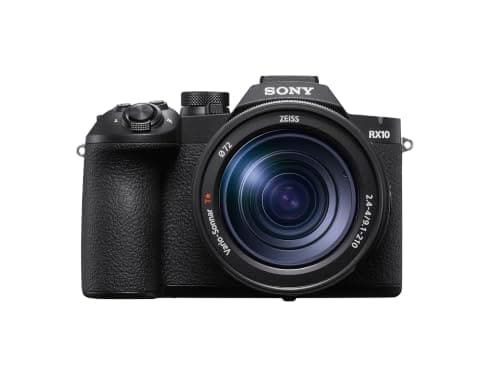
Nine years. That is how long Sony made the photography world wait between the RX10 IV and its successor. In an industry that refreshes flagship cameras every two or three years, the RX10 line sat frozen since 2017 while everything around it changed — mirrorless cameras got smaller and faster, smartphone zooms got dramatically better, and the whole idea of a "bridge camera" started to look like a relic. Sony's answer to all of that is the RX10 V, a camera that keeps the series' signature formula — a 20-megapixel 1-inch stacked sensor behind a massive 24-600mm equivalent F2.4-4.0 ZEISS zoom — and updates everything around it: a new BIONZ XR processor with a dedicated AI chip, Real-time Recognition autofocus borrowed from the Alpha line, blackout-free shooting at 30 frames per second, and 10-bit 4K video at up to 120p. At $2,298, it is not cheap, but after spending time with it, I understand why Sony took so long: it had to build a camera that makes the nine-year wait feel justified.
Design and Handling
The RX10 V looks like the RX10 IV, and that is mostly a compliment. It is a chunky, purposeful camera — a slab of metal and glass that communicates "serious tool" the moment you pick it up. This is not a pocketable compact; it is a bridge camera in the classic sense, sized somewhere between a large point-and-shoot and a small mirrorless body with a 24-70mm attached. The grip is deep and comfortable, the weight is reassuring without being back-breaking, and the controls are laid out with the logic of a camera designed for people who shoot fast. The lens barrel dominates the front, with the familiar focus ring, zoom ring, and a customizable button near the mount. Sony kept the physical aperture ring, which is a small thing that matters enormously if you are used to shooting with it.
The viewfinder is one of the best in the class: a 3.68-million-dot OLED EVF that is sharp, bright, and nearly lag-free. The rear 1.62-million-dot LCD tilts in both directions — up for low-angle wildlife shots, down for over-the-head crowd work — and it is touch-sensitive for focus point placement. The touchscreen implementation is good, though the menu system underneath it is vintage Sony: the classic tabbed interface that Sony has slowly been migrating away from on its newer Alpha bodies. It is learnable, and anyone coming from an older RX10 or an Alpha camera will feel at home, but first-time Sony users should budget an afternoon with the manual.
Ergonomically, the RX10 V makes smart use of its fixed-lens design. The zoom rocker around the shutter button gives you the same muscle-memory control as a DSLR kit lens, and the lens-mounted zoom ring offers a mechanical alternative when you want precise framing. There is no lens swapping, no sensor dust, and no "should I have brought the other lens" anxiety — the 24-600mm range is always there. That is the entire point of the RX10 concept, and the V executes it as well as any camera Sony has ever shipped. The one ergonomic complaint I will register is the placement of the video record button, which sits awkwardly near the thumb rest and is easy to hit by accident when you are gripping the camera hard. It is a minor annoyance, not a dealbreaker.
The Lens: 24-600mm of Versatility
The lens is the soul of the RX10 V, and it is one of the most remarkable optics ever put in a fixed-lens camera. The ZEISS Vario-Sonnar T* covers a 25x optical zoom range from a genuinely wide 24mm to a serious 600mm super-telephoto, with a maximum aperture of F2.4 at the wide end and F4.0 at full zoom. That aperture range matters more than the numbers suggest: F2.4 at 24mm lets you shoot interiors and evening street scenes without a tripod, while F4.0 at 600mm is exactly what a wildlife photographer needs to keep shutter speeds high enough to freeze a moving bird. The optical SteadyShot stabilization works impressively well at the long end — handheld shots at 600mm that would have been blurry mush on a lesser camera come out crisp, especially when you engage the viewfinder-assisted steady mode.
The macro capability deserves its own paragraph. At 24mm, the RX10 V focuses as close as 3cm, delivering roughly 0.42x magnification — enough to fill the frame with a flower stamen or a watch movement. At 600mm, it focuses to 72cm for a telephoto macro effect at about 0.49x, which is a fantastic way to photograph skittish insects and small wildlife without getting close enough to spook them. This dual macro capability is one of the things that made the RX10 IV a cult favorite among nature photographers, and the V inherits it unchanged. There is very little that this lens cannot photograph, from a dragonfly on a creek bank to a soccer player fifty yards away.
One quirk worth knowing: Sony says the RX10 V uses the same lens and sensor as the RX10 IV, but the lens barrel is now marked 9.1-210mm rather than 8.8-220mm. Amateur Photographer dug into this in its review and confirmed that the actual equivalent focal lengths in the EXIF data still run 24-600mm — the lens marking change appears to be a labeling revision rather than a reduced zoom range. Rest assured: you are getting the full 25x range either way.
Sensor and Image Quality
Inside the RX10 V sits the same 20.1-megapixel 1.0-type stacked CMOS sensor that powered the RX10 IV, measuring 13.2 by 8.8mm. That is a known quantity, and it is a good one. The 1-inch sensor is significantly larger than the tiny sensors in superzoom cameras from a decade ago, which is what allows the RX10 to produce genuinely clean images across its zoom range. In good light, the RX10 V's images are excellent — sharp across the frame, with pleasing color from Sony's signature rendering and more than enough resolution for large prints or aggressive crops. The 5472 by 3648 output gives you real cropping headroom at 600mm, which is a legitimate workflow advantage: shoot wide, crop in post, and you have effectively extended your reach.
Low light is where the 1-inch sensor reminds you of its limits. At ISO 3200 and beyond, noise becomes visible, and while modern noise reduction software handles it gracefully, the RX10 V will not match the high-ISO performance of an APS-C or full-frame body. DPReview's Richard Butler made exactly this point in his first-impressions coverage: compared ISO-for-ISO, the 1-inch sensor cannot match larger sensors for dynamic range and noise, but that does not mean you cannot get beautiful images — particularly when you process raw files with current denoising tools. The native range runs ISO 100-12,800, expandable to ISO 64, and the stacked sensor's fast readout keeps rolling shutter effects minimal.
The real image-quality story is the processing pipeline. The BIONZ XR engine, paired with a dedicated AI chip, brings the RX10 V's color science, noise reduction, and subject rendering up to the level of Sony's current Alpha cameras. That means the Creative Look profiles are here — shoot with the S-Cinetone or the "FL" film look and you get images that need minimal grading. It is a significant step up from the RX10 IV's processing, which was good for its era but now feels dated. The same hardware that made the A7 series famous for out-of-camera color has finally arrived in the RX10 line.
In real-world shooting, the sensor and processor combination holds up remarkably well across the zoom range. At 24mm, landscapes come out with crisp corner detail and natural color; at 600mm, distant subjects retain enough detail that a 50 percent crop still looks clean on a 4K display. The D-Range Optimizer, now available up to Level 8, does a genuinely good job of holding highlight and shadow detail in harsh midday light — the classic wildlife-shooting condition where you are fighting bright sky against dark foliage. Shooting raw, I found the files responsive to aggressive recovery, which matters when you are photographing a backlit bird and the exposure is not quite where you wanted it. This is not a camera that punishes you for using the full zoom range; it is a camera that makes you forget you are shooting at 600mm through a fixed lens.
Autofocus: The Biggest Upgrade
Autofocus is where the RX10 V earns its "V." The old RX10 IV had the excellent AF system of its day, but it was a 2017 system. The V brings the full modern Sony autofocus stack: Real-time Recognition AF with subject detection for birds, insects, cars, trains, airplanes, and general subjects, driven by 575 phase-detection points covering 70.6 percent of the frame, with the system performing up to 60 AF/AE calculations per second. In practice, this is transformative for a long-zoom camera. I photographed birds in flight at 600mm and the system locked onto the eye and held it — even when the bird turned its head and came back, the focus point reattached without hunting. That is the kind of performance that used to require a $3,000 telephoto prime on a flagship body.
The combination of the AI-driven recognition and the 25x zoom makes the RX10 V an extraordinary wildlife and sports tool. The camera identifies a subject and tracks it across the frame while you concentrate on composition. For a kid's soccer game, you can point the camera at the field, let it find and track a specific player, and shoot a burst knowing every frame will be sharp. The eye-AF also works on humans, which makes the RX10 V a viable event and portrait camera despite its bridge-camera form factor. The AF is not flawless — small subjects against busy backgrounds can still confuse it, and the insect detection occasionally grabs a leaf instead of the butterfly — but it is a generation ahead of anything the RX10 line has offered before.
Continuous shooting is equally impressive. The RX10 V fires at up to 30 frames per second with the electronic shutter, completely blackout-free, with full AF and AE tracking between frames. The mechanical shutter still tops out at 10fps for those who prefer the feel of a physical shutter or need to avoid rolling shutter on fast-moving subjects. At 30fps, the camera is effectively a video camera that happens to record stills — you can capture the exact wing position of a hummingbird or the precise moment a ball leaves a bat. The electronic shutter runs to 1/16,000s, which lets you shoot wide open in bright sunlight without ND filters.
Video: A Hybrid Camera in Disguise
Sony has positioned the RX10 V as much as a video camera as a stills camera, and the specs back that up. It records 4K at 60p using the full sensor width with no crop, and 4K at 120p with a modest 1.4x crop — slow-motion capability that was simply absent from the RX10 IV. The video is captured in 4:2:2 10-bit internally, with All-Intra compression available for serious grading, and the camera supports S-Log3 with LUT preview and S-Cinetone color. There is also Full HD at up to 240fps for extreme slow motion, plus Active Mode image stabilization and Auto Framing, which tracks a subject and reframes automatically — useful for solo creators.
For travel and wildlife videographers, this turns the RX10 V into a one-camera kit. You can shoot a 600mm 4K60 clip of a distant waterfall, swing around for a wide establishing shot at 24mm, and then capture 120fps slow motion of a dragonfly — all without changing a lens or pulling out a second body. The AF tracking works during video the same way it does for stills, which is the thing most hybrid shooters care about most. The main video limitations are the ones inherent to the design: the lens is not parfocal in the strictest sense, so focus breathing is visible on slow racking shots, and the 1-inch sensor's depth of field means you will not get the creamy background separation of a full-frame camera. For a travel camera, those are acceptable trade-offs.
The camera also covers the practical video bases that content creators actually need. There is a 3.5mm microphone jack for an external mic, a clean HDMI output for monitoring or recording to an external recorder, and a USB-C port that supports both charging and wired data transfer. The Auto Framing mode deserves a special mention for solo creators: it locks onto a person and automatically crops and reframes the 4K output to keep them centered as they move — effectively a robotic camera operator built into the firmware. Combined with the flip-out touchscreen and the 24-600mm range, you can run a talking-head channel, a travel vlog, and a wildlife series all from one camera body. No other camera at any price combines that set of capabilities without a bag full of accessories.
Battery and Real-World Use
Battery life is a pleasant surprise. The RX10 V uses the NP-FZ100 battery — the same cell used across Sony's Alpha mirrorless line, which is excellent news for anyone with existing Sony batteries — and CIPA-rated endurance comes in at approximately 630 shots on the LCD or 570 through the viewfinder. Sony claims more than a 50 percent improvement in stamina over the RX10 IV, and that tracks with my experience: a full day of wildlife shooting, mixing stills bursts and 4K video clips, left the battery meter comfortably above half. The camera charges over USB-C, and the UHS-II SD card slot keeps buffer clearing fast enough that the 30fps bursts never feel hamstrung by card speed.
The RX10 V is a camera you carry because it removes friction. One body, one lens, one battery type, one card slot — everything you need for a week of travel or a day at a game. It is not light, and it is not small, and it will never replace a full-frame system for someone who shoots professionally in challenging light. But for the person who wants one camera that does everything well — landscapes at 24mm in the morning, birds at 600mm in the afternoon, 4K60 slow motion at dusk — the RX10 V is the best all-in-one camera Sony has ever made. The nine-year wait produced a camera that feels current in every way that matters.
How It Compares to the Competition
The RX10 V occupies a nearly empty category. The Panasonic FZ1000 line and the old Nikon P1000 are the only real bridge-camera rivals, and neither matches the RX10 V's combination of 1-inch sensor, 24-600mm range, and modern AI autofocus. The P1000 offers more zoom (24-3000mm) but pairs it with a much smaller 1/2.3-inch sensor that produces noticeably worse image quality in anything but bright light, and its autofocus is a generation behind. The FZ1000 II is a fine camera at half the price, but its lens starts at F2.8-4.0 and its AF system cannot touch the RX10 V's subject recognition.
The more interesting comparison is against interchangeable-lens cameras. A Sony A7V with a 24-200mm zoom will beat the RX10 V on image quality and low-light performance, but it costs more, weighs more, and still cannot reach 600mm without a large, expensive telephoto. A Sony ZV-E10 II is a better pure vlogging camera at a fraction of the price, but it needs lenses and offers none of the reach. For the specific job the RX10 V does — maximum versatility in a single self-contained body — the alternatives are a bag full of gear or a smartphone with a digital zoom, and neither delivers the same image quality at 600mm.
For hybrid shooters, the Canon EOS R6 Mark III is a more capable video camera overall, but it starts at a higher price before you buy a single lens. And if your priority is pocketable travel shooting rather than reach, the Panasonic Lumix L10 or a compact like the DJI Osmo Pocket 4 covers different ground entirely. The RX10 V's argument is singular: it is the only camera that goes from 24mm wide-angle to 600mm super-telephoto with a constant-aperture-class lens, modern AI autofocus, and 10-bit video, all in one body you can carry on a single shoulder strap.
Who Should Buy It
The RX10 V is not for everyone, and Sony knows it. At $2,298, it costs more than an entry-level mirrorless kit and a lot more than a smartphone. It is for specific people with specific needs. The traveler who wants one camera for everything and hates switching lenses. The wildlife photographer who does not want to carry a 600mm prime and a gimbal into the field. The parent who wants to photograph a kid's sports season without investing in a full sports setup. The videographer who needs reach and slow motion in a single compact body. For all of those people, the RX10 V is arguably the only camera that does the job at all — the alternatives are either much more expensive or visibly worse.
The people it is not for are equally clear. If you shoot professionally in low light, you want a full-frame body — the 1-inch sensor will frustrate you at ISO 6400. If you want the smallest possible camera, the RX10 V is chunky by modern standards. If you already own a mirrorless system with lenses, the RX10 V is a redundant luxury rather than a necessary addition. And if your photography is entirely smartphone-driven, the $2,298 price will look absurd no matter how good the zoom is. This is a specialist tool for a specific kind of shooter, and it should be bought with that understanding.
Final Thoughts
Sony took nine years to update the RX10, and the RX10 V shows what that time bought: a camera that feels like it belongs in 2026. The lens and sensor carry over from the IV, but everything that makes a camera a joy to use — autofocus, speed, video capability, processing, battery — has been brought up to the standard of Sony's current Alpha line. The result is the most complete all-in-one camera ever made. It is expensive, and the 1-inch sensor has real limits, but for the traveler, the wildlife enthusiast, and the hybrid creator who wants one camera that does everything, the RX10 V is the camera that has been worth waiting for. Nine years is a long time, but the return of the king of bridge cameras was worth it.
Pros
- Spectacular 24-600mm F2.4-4.0 ZEISS zoom covers almost any subject
- AI-powered Real-time Recognition AF with 575 phase-detect points
- Blackout-free burst shooting at up to 30fps with full AF/AE tracking
- 10-bit 4K video up to 120p with S-Log3, S-Cinetone, and Auto Framing
- NP-FZ100 battery rated for 630 shots, over 50% better than the RX10 IV
Cons
- Same 1-inch sensor as the RX10 IV caps low-light performance
- Expensive at $2,298
- Large and heavy for a compact camera
- Fixed lens leaves no upgrade path for the sensor
Final Verdict
Sony's RX10 V updates the legendary all-in-one bridge camera with AI-powered autofocus, 30fps blackout-free bursts, and 10-bit 4K video — while keeping the spectacular 24-600mm F2.4-4.0 ZEISS zoom.